
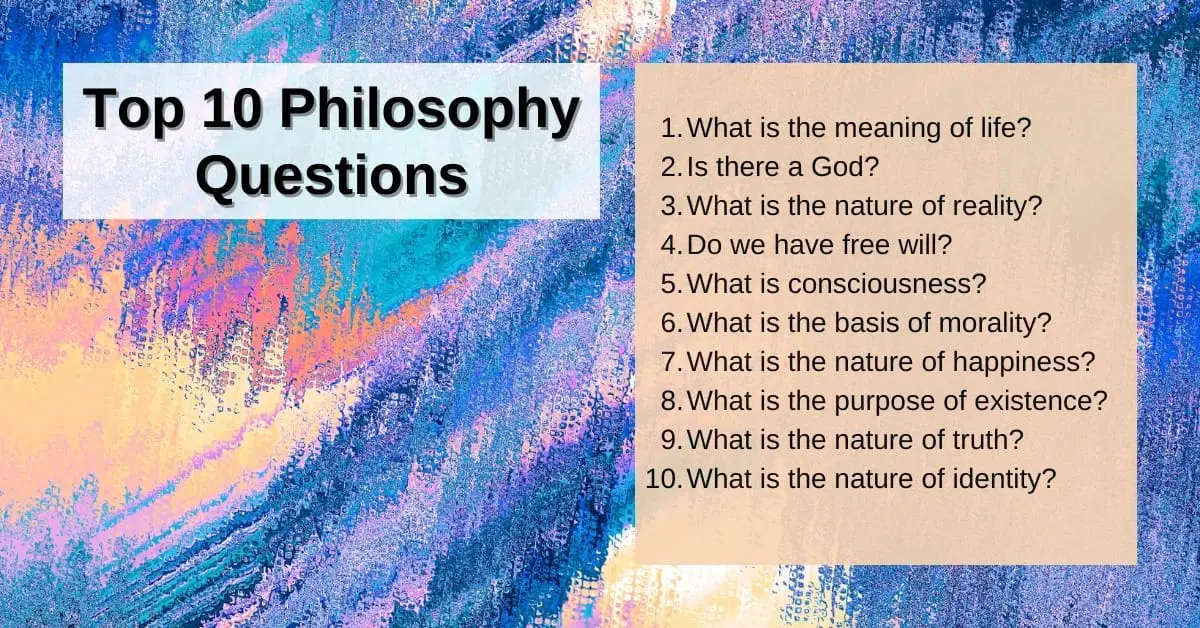
Some questions never lose their power, no matter how much time passes. From the meaning of life to the nature of truth and consciousness, philosophic
Some questions never lose their power, no matter how much time passes. From the meaning of life to the nature of truth and consciousness, philosophical questions encourage us to think beyond everyday routines and explore the deeper mysteries of existence. Whether you’re seeking personal insight or simply enjoy thought-provoking discussions, these timeless questions offer a fresh perspective on life, love, and the unknown.
1. What Is the Meaning of Life?
Few questions have fascinated humanity more than this one. Some people believe life’s meaning comes from pursuing happiness, while others find purpose through family, faith, creativity, or helping others. Philosophers like Aristotle argued that a meaningful life is built through virtue and personal growth, while existential thinkers suggested that meaning isn’t discovered,it’s created.
Interestingly, there’s no universally accepted answer. That’s exactly what makes this question so powerful. Your purpose may evolve throughout different stages of life, shaped by your experiences, values, and relationships. Instead of searching for one perfect answer, perhaps the better question is: What gives your life meaning today?
2. Is There a God?
For thousands of years, philosophers, scientists, and religious thinkers have explored this profound question. Some believe the complexity of the universe points toward a creator, while others argue that natural laws explain existence without the need for divine intervention.
Neither side has produced conclusive proof that satisfies everyone. As a result, belief often depends on personal experience, faith, reasoning, and worldview. Whether someone identifies as religious, spiritual, agnostic, or atheist, this question continues to inspire thoughtful conversations about existence, morality, and the nature of reality.
3. What Is the Nature of Reality?
Is the world exactly as we perceive it, or is reality more complicated than our senses reveal? Modern science has shown that our brains constantly interpret information, meaning what we experience isn’t always an exact reflection of the external world.
Philosophers have debated whether reality exists independently of human perception or whether our understanding of it is shaped by consciousness, culture, and language. Questions about virtual reality, simulations, and artificial intelligence have only made this discussion more fascinating. It challenges us to consider whether reality is objective, subjective, or perhaps a blend of both.
4. Do We Have Free Will?
Every day, we make choices,from what to eat for breakfast to major life decisions. But are those choices genuinely ours, or are they determined by genetics, upbringing, and circumstances beyond our control?
Supporters of free will argue that humans possess the ability to choose freely and accept responsibility for their actions. Others believe every decision is influenced by biological, psychological, and environmental factors, making free will an illusion. This debate has important implications for ethics, justice, and personal accountability.
5. What Is Consciousness?
Consciousness is one of the greatest mysteries in philosophy and neuroscience. It’s the awareness that allows you to think, feel emotions, recognize yourself, and experience the world around you.
Scientists can observe brain activity, but they still don’t fully understand how physical processes produce subjective experiences. Why do we have thoughts? Why do emotions feel the way they do? These unanswered questions continue to inspire research across psychology, neuroscience, cognitive science, and philosophy.
6. What Is the Basis of Morality?
How do we decide what’s right or wrong? Is morality based on universal principles, religious beliefs, social customs, or personal values?
Some philosophers argue that moral truths exist independently of human opinion, while others believe ethical standards evolve as societies change. Everyday situations often demonstrate how complex morality can be. What seems fair to one person may seem unfair to another. Exploring morality encourages us to examine our own values while understanding perspectives that differ from our own.
7. What Is the Nature of Happiness?
Most people want to be happy, but defining happiness isn’t as simple as it sounds. Is happiness found through pleasure, success, meaningful relationships, financial security, or inner peace?
Ancient philosophers often viewed happiness as living a virtuous life rather than pursuing temporary pleasures. Modern psychology adds another perspective, suggesting lasting happiness comes from gratitude, purpose, and strong social connections. The search for happiness remains deeply personal because what fulfills one person may not fulfill another.
8. What Is the Purpose of Existence?
This question goes beyond individual purpose and asks why anything exists at all. Why is there a universe instead of nothing? Does existence have an objective purpose, or do humans create meaning through their choices and experiences?
Existential philosophers believed people are responsible for creating purpose in an otherwise indifferent universe. Others believe existence reflects a larger cosmic or spiritual plan. Regardless of the answer, asking this question often encourages deeper reflection about goals, relationships, and the legacy we leave behind.
9. What Is the Nature of Truth?
Can truth ever be absolute, or does it depend on perspective? While factual truths can often be verified through evidence, philosophical truths are frequently more complex.
Different cultures, experiences, and beliefs shape how people interpret the same events. At the same time, critical thinking reminds us that opinions and facts are not the same. Understanding truth requires curiosity, evidence, open-mindedness, and the willingness to question our own assumptions.
10. What Is the Nature of Identity?
Who are you, really? Are you defined by your memories, personality, relationships, culture, or choices?
Identity is constantly evolving throughout life. Childhood experiences, education, careers, friendships, and challenges all shape how we see ourselves. Philosophers continue debating whether identity remains constant or changes over time. Exploring this question can help people better understand personal growth, self-awareness, and what truly makes each individual unique.
Why These Philosophical Questions Still Matter
The beauty of philosophical questions is that they rarely have simple answers. Instead, they encourage curiosity, self-reflection, and meaningful conversations. Whether you’re thinking about the meaning of life, questioning free will, or exploring the nature of truth, these timeless questions invite you to see the world,and yourself,from new perspectives. Sometimes, the value isn’t in finding the final answer but in the journey of asking better questions.
FAQs
1. What are philosophical questions?
Philosophical questions are deep, thought-provoking questions that explore fundamental aspects of human existence, knowledge, morality, reality, consciousness, and truth. Unlike factual questions, they often have multiple perspectives rather than one definitive answer.
2. Why are philosophical questions important?
Philosophical questions encourage critical thinking, self-reflection, and meaningful discussions. They help people examine their beliefs, values, and assumptions while gaining a deeper understanding of themselves and the world around them.
4. Do philosophical questions have correct answers?
Most philosophical questions do not have a single universally accepted answer. Instead, they invite people to explore different viewpoints, evaluate evidence, and develop their own reasoned conclusions based on logic, ethics, and personal experience.
5. How can philosophical questions improve everyday life?
Reflecting on philosophical questions can improve decision-making, strengthen critical thinking skills, and promote personal growth. They encourage curiosity, empathy, and open-mindedness, helping people better understand themselves, their relationships, and the challenges they encounter in daily life.
