
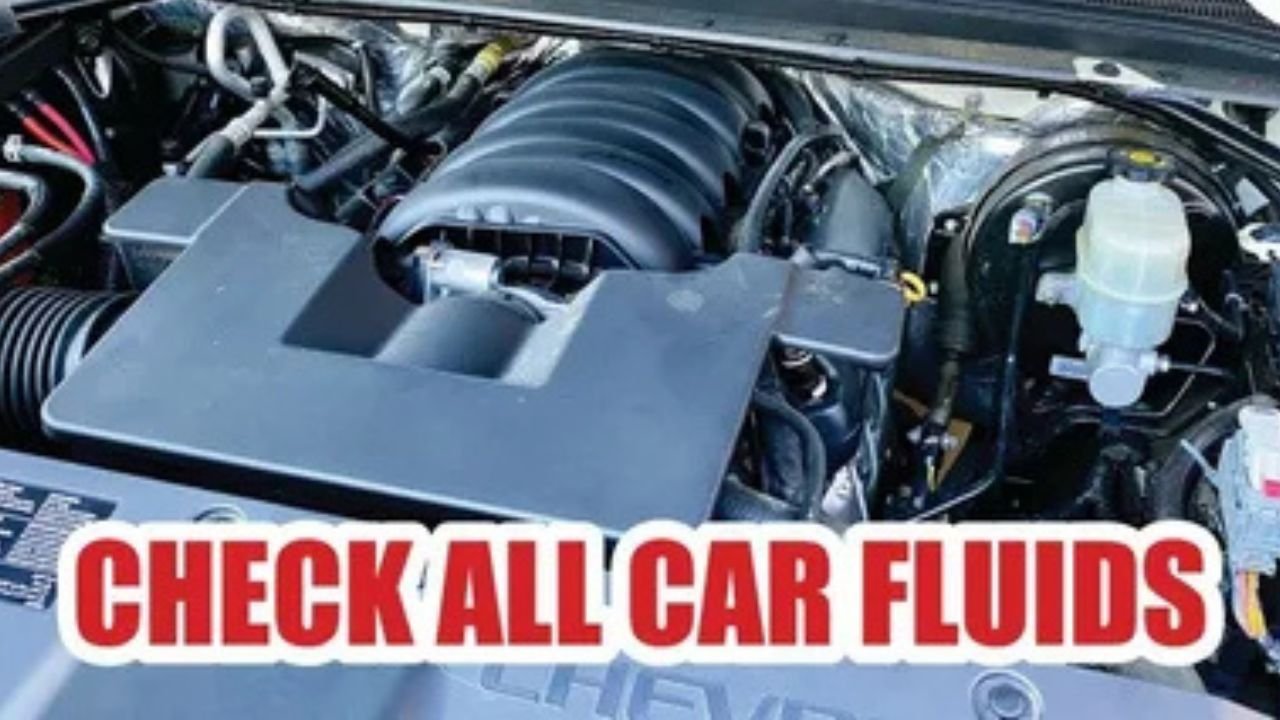
A car can appear in perfect shape, and yet secretly be missing a key component. Fluids operate quietly behind the scenes, and when a warning light il
A car can appear in perfect shape, and yet secretly be missing a key component. Fluids operate quietly behind the scenes, and when a warning light illuminates, a minor service problem might actually begin to transform into a major repair, especially if it is an oil leak or another leak.
The process of checking fluids in your car isn’t all that hard, and you don’t necessarily need to be a professional mechanic for the job. The secret to it is knowing which fluid should be checked hot and which one must be checked cold, and when the low-level indicator means that you have to add more or “call a mechanic.”
Each vehicle will vary, so always refer to the owner’s manual, which will have the final say. However, this is a good basic procedure to start with for most gas, diesel, and hybrid motorists.
Start With a Safe and Accurate Setup
Stop in firm, level ground. Fluid might pool in one corner of a dipstick or reservoir if it is placed on a hill and give a false reading. Set the parking brake, turn off the ignition, avoid wearing jewelry, and keep sleeves away from belts and cooling fans. Sometimes an electric fan will start just when the engine is stopped.
For most checks, wait for the engine to cool down. Always have a lint-free cloth, disposable gloves, a flashlight, and the owner’s manual available. Remove dust before opening a cap to avoid dust falling into the system.
Do not assume a fluid color is enough to identify a fluid. Caps are normally marked or named by a known symbol, and the accurate classification of the fluid is marked in the manual. The worst thing that can happen to a user is to put the wrong product into a reservoir, so much so that it could be better to let the level drop a little rather than put the wrong fluid in at present and cause trouble at a later time, when the user is more likely to locate the correct fluid.
How to Check Engine Oil Properly
The oil circulates through the engine to lubricate the moving parts, control temperatures, and transport dirt to the oil filter. To test, park the level, switch off, and let the oil settle in the oil sump for a few minutes.
Remove the dipstick, clean it off,f and then put it all the way back in and take it out again. The oil line should be between the low and high marks. Add manufacturer-approved oil to the oil level in small amounts at a time when the oil level is low. Test after each pour, rather than draining an entire bottle at once.
The color of the fresh oil is usually amber, but colouring may occur with use. The fact that oil is dark doesn’t mean that it’s time for a change. What is more of a concern is a burnt smell, gritty feeling, metallic debris, or having a milky tint.
Many newer vehicles have eliminated the use of a dipstick. They employ an electronic oil-level display, so check the oil level in the dashboard (as per the manufacturer’s instructions).
Check Coolant Only When the Engine Is Cold
Coolant (antifreeze) controls the temperature of the engine and helps to prevent freezing, boiling, rusting, and corrosion of the cooling system. It’s an examination that must never be hurried.
Never remove a cap on a radiator or pressurised coolant cap when the engine is hot. Flashes of hot coolant or steam may escape and cause serious burns.
After the engine has cooled completely, identify the clear expansion tank. Normally, the coolant will string between the “MIN” and “MAX” or “COLD” lines. Only use the vehicle’s recommended coolant formula or mixture if more is needed.
Coolant comes in green, pink, orange, yellow, blue, and other colours; however, do not assume that it is compatible because of the colour. Various formulas can be alike in appearance, but may employ entirely different additives.
Look for stained hoses, colored deposits around fittings, steam coming from the hoses, overheating of the components, or the sweet smell of coolant to determine if it is leaking. Repeated topping up of an overheating vehicle is not advised; it is better to shut down the vehicle safely and investigate the cause.
Treat Low Brake Fluid as a Warning Sign
The job of the brake fluid is to conduct the hydraulic force from the brake pedal to the braking parts. In most instances, its reservoir is located near the back of the engine compartment, on the driver’s side, above or close to the brake master cylinder.
The majority of brake-fluid reservoirs are made of clear plastic. This means the level can be easily and safely checked between the minimum and maximum marks without removing the cap. If the cap needs to be opened, clean around it first to prevent contamination of the vicinity or the system.
Use only the type of DOT fluid recommended in the owner’s literature. Fluids from other types: DOT 3, DOT 4, and DOT 5 fluids aren’t necessarily interchangeable. Spills of brake fluid should also be cleaned up promptly, as it will lead to damage to painted surfaces.
Low level should not be confused with empty washers. If it drops when brake pads wear out, it could also be a sign of a leak in the hydraulic system. The braking system should be either immediately, or as soon as possible, professionally inspected if it is below minimum, if there are repeated drops, if it appears unusually dark, or if the soft brake pedal is present.
Follow the Owner’s Manual for Transmission Fluid
There is a difference between one size fits all and one size fits all – except transmission fluid. Some vehicles have a dipstick,k and the transmission level is checked when it is warm with the vehicle in Park or Neutral. Others have to be tested with a fill plug at a specific temperature.
Many new modern transmissions are ‘sealed’ and are not supposed to be opened or checked.
With a dipstick installed, set the vehicle level, set the parking brake, and warm the transmission as specified, then gradually shift the selection rod through each gear. Put it back to where it is supposed to be, as stated in the documentation! Take out the dipstick, clean it, install it, and consult the range marked.
When new, automatic transmission fluid can range in color from red to pink. Burning odor, slow response, drag, abrupt shift,s or very dirty fluid requires professional diagnostics.
Do not add a so-called “universal” transmission fluid without checking the specific fluid. Even a tiny bit of fluid mismatch can impact shift quality, seals, and internal components.
Does the Vehicle Use Power Steering Fluid?
Most newer automobiles have electric power-assisted steering, and there may not be a power steering reservoir to inspect. Other systems, such as some SUVs and many trucks, are still hydraulic and require fluid.
Before rummaging under the hood, read the owner’s manual. The hydraulic reservoir can either be clear or have a cap with a small dipstick. Some manufacturers insist on a “cold reading,” and some manufacturers have separate markings for “hot fluid” and “cold fluid.”
If the level is low, top up with approved product; do not overfill the maximum level.
It is not normal for power steering fluid to go down. A leak or air getting into the system might be suspected if: Whining or groaning noises during turns; unusually heavy steering; foamy fluid; wet hoses or oily deposits around the pump.
A sudden decrease in steering assistance and/or no steering assistance at all indicates that the car is unsafe to drive. That state of affairs requires investigation or recovery, not yet another container of fluid and a hopeful trip home.
Top Up Windshield Washer Fluid Correctly
While washer fluid isn’t always the best thing to keep a motor or transmission running, it can still save the driver a view of the road. In seconds, blind vision can be caused by dust, road salt, insects, and muddy spray.
Look for the reservoir cap with a windshield and spray on it. It’s usually white or clear and is near one of the front corners of the engine compartment.
Remove the cap and fill the washer fluid reservoir with a special wash-road fluid. Allow the quantity of expansion space as recommended by the manufacturer. During winter weather, use a winter formula for the weather in which it will be used.
Regular water can freeze, promote biological growth, and be poor at dealing with grease on roads. Excessive foam may be caused by dishwashing detergent used in the household and can impact paint, seals, hoses, or the washer pump.
Be sure not to confuse the washer bottle with the coolant expansion tank. When seeing something for the first time, the two reservoirs may appear quite alike. Once filled, test washers and inspect jets for low spray.
Read Fluid Level, Condition, Smell, and Leaks Together
Just knowing the level doesn’t give you everything you need. The colour of engine oil varies from honey-like to dark brown. New transmission fluid will often be a reddish color. Coolant typically is green, orange, pink, yellow, or blue, and brake fluid is typically clear or light yellow.
These colors are not a comprehensive diagnosis; they are clues.
Check under the car after it has been left sitting overnight. An oil film, dark in colour, may indicate engine oil. A source of a red/brown slick may be the transmission and/or hydraulic power steering. If the puddle is bright coloured and smells sweet, it could be coolant. Near the passenger area, after using the air conditioner is safe to condense
Photograph any suspicious puddle, and record the location of the puddle under the vehicle. Never touch, smell, or taste an unknown vehicle fluid.
If fluids are leaking quickly, there’s a smell of fuel, brake fluid disappears, or coolant loss is occurring with overheating, it is a serious matter.
How Often Should Car Fluids Be Checked?
It’s a helpful habit for plenty of motorists to have a fast check each month. Additionally, fluids should be monitored prior to a long trip, when the temperature is not the usual temperature, after receiving a warning on the dashboard, or when the car starts to feel different.
Washer fluid may require much more frequent attention. Other factors for being cited for closer inspection include high mileage driving, towing heavy loads, frequently coming and going to small destinations, extended storage, and driving in extreme weather.
Level checking does not equal replacing the fluids. The frequency of the oil change, coolant change, brake fluid change, and transmission maintenance varies by vehicle, fluid type, conditions, and manufacturer. No single distance period can be suitable for all automobiles.
One feasible way is to tie the inspection to the next monthly fuel stop. Make a note of unusual changes. If the same reservoir needs to be topped off repeatedly, it could indicate a leak, a worn part, or an internal mechanical issue that the vehicle is experiencing.
Avoid These Expensive Fluid-Checking Mistakes
The most frequent error is topping up reservoirs without first asking the question why was the level down? Too much oil can lead to foaming, leaking, and oil pressure issues. Scalding liquid is made possible by systems that are opened during hot cooling operations. Using different types of coolants or brake fluids can harm parts. The wrong type of transmission fluid can alter a vehicle’s shift behavior.
Also, don’t assume that all engine compartments are the same. Special procedures are required for hybrid or diesel models, performance vehicles, and sealed transmissions. A familiar-looking cap might be part of something completely different.
Slow down. Always read the label and check the specification, and MUST use a clean funnel that has not been used with another fluid. Do not use the same funnel for oil, coolant, brake fluid, and transmission.
Don’t just top it up and get back on the road if a warning light comes on because the reservoir is severely low or if the vehicle’s noises are unusual. A fluid check is an inspection and is NOT a replacement for the repair of existing issues.
Every car owner should know how to check car fluids, as this can serve as an early-warning system. Check the vehicle on the park level, use the approved product, and check the marked range, following directions for hot or cold.
A quick five-minute check can save you from low oil, leaking coolant, brake problems,s or an empty bottle of washers before you’re stranded at the roadside. However, if the fluid level continues to drop, there is no need for more bottles. Proper Mechanical Inspection.
Frequently Asked Questions
When looking at car fluids, should the engine be running?
Usually not. Typically, the engine oil, coolant, brake fluid,d and washer fluid are checked when the engine is off. In certain transmissions and in hydraulic power steering, the owner’s manual must be followed (usually uses a warm/hot engine).
Can all car fluids be checked when the car is cool?
No coolant should be checked cold for safety, and some automatic transmissions require the fluid to reach operating temperature. Oil change intervals also may differ from one manufacturer to another.
If a car’s fluid is over the “full” line, what will happen?
Excessive overfilling can result in foaming, excessive pressure, leakage, or inadequate system operation. If it’s clearly over the maximum, refer to the manual or get it taken off properly.
Why is it that no matter how much fluid is added, it continues to drop?
Taking frequent fluid breaks can be a sign of external leakage, a worn part, or consumption. Mark out there and be on the lookout for stains or strange odors, and schedule an inspection instead of just stacking on top of it.
What car fluids to check before going on a road trip?
Check engine oil, coolant, brake fluid, transmission fluid (if it can be done by the owner), power steering fluid (if it has power steering), and windshield washer fluid. All tires are to be checked concurrently, including the spare.
