
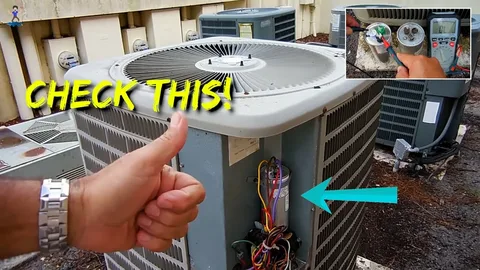
The thermostat is appropriately programmed to cool, and the fan is circulating air inside the building through the vents. The one issue is that the h
The thermostat is appropriately programmed to cool, and the fan is circulating air inside the building through the vents. The one issue is that the house doesn’t seem to be cooling off. Then it’s easy to take for granted that it’s time to replace the compressor, which costs a fortune.
When troubleshooting compressor air conditioner issues, the first step is to determine if it is the compressor that is to blame. Many of the same symptoms can occur due to a dirty filter, tripped electrical breakers, a damaged capacitor, broken contactor, blocked outdoor unit, or refrigerant problems. The compressor may work just fine,e but not start when it’s due to another component failure.
There are a few simple tests one can take that are safe for most homeowners. Not internal electrical testing, replacing capacitors, handling refrigerant, or completing sealed system repairs. The knowledge of boundaries can assist you in preventing unnecessary risk while making a more educated repair decision.
Is there a way to repair a failed AC compressor?
In some cases, yes, but it will depend on what it means to be a “compressor problem.”
If the compressor isn’t starting because of an external component, then the repair might be relatively simple. A technician can find a blown capacitor, a contactor problem, a loose connection, a thermostat problem, or an airflow restriction. If the stated part is replaced or corrected, the compressor can again operate normally.
Damage inside the compressor is something else. If there is an abnormal amount of contamination, mechanical seizure, an abnormal electrical short, or damage to the internal motor windings, the compressors are typically replaced instead of attempting a repair.
That is why it is very important to go for the correct diagnosis. A hum and/or the feeling of warm air is not an indication of compressor failure. When the technician recommends replacing a high-cost component, ensure the technician knows you want the answer and ask if other components can be excluded from the problem list.
What is the Compressor’s function in an Air Conditioner unit?
The air conditioner will not produce cold air. It extracts the heat from the interior of the house and rejects the heat in the open.
That is made possible by allowing the refrigerant to circulate through the system, which is accomplished by the compressor. Converts low-pressure refrigerant vapour into high-pressure, high-temperature refrigerant vapour. The refrigerant then flows through the outdoor condenser coil and gives off the heat. It moves through the remainder of the refrigerating cycle and re-absorbs more heat when it again enters the house.
The compressor operates with the evaporator coil, condenser coil, indoor blower, outdoor fan, thermostat, and electrical controls. That causes the compressor to cease operating, even if it’s not mech. broken.
It’s one thing that often happens: the fan blows inside, but it doesn’t cool because the refrigerant doesn’t circulate properly through the cooling cycle.
Some common indications that the AC compressor may be failing are:
There may be multiple warning signs of a failing compressor, but you shouldn’t rely on just one of them.
You may notice:
- The air coming out of the vents is at warm or room temperature
- The compressor is quiet with the fan blasting outdoors.
- Other repetitive movements that involve clicking, humming, buzzing, or rattling.
- Delayed startup
- Short cooling cycles
- Frequently tripping off the circuit breaker
- If the cooling system is vibrating in an unusual manner, it may be leaking.
- Slight cooling during hot afternoon periods
- More energy consumption with inadequate comfort
A compressor that tries to start and then tries again may emit a sound before it stops. A fault in the electrical system could cause the breaker to trip. Sometimes there is some type of internal mechanical damage that can also generate poor sounds or vibrations.
However, similarly-acting behavior can result from a bad capacitor, contactor, fan motor, wiring connection ,,or refrigerant problem. If the circuit breaker determines a short circuit again after resetting it first, do not reset it again. If you repeatedly trip the circuit breaker, it’s time for a professional electrical diagnosis.
Questions to Ask Before Pointing at the Faulty Compressor
Make some preliminary, safe checks (no equipment opening) before calling for a major repair.
The first place to check is the thermostat. Check to make sure that it is on “cool” and that the temperature setting it is on is below the room temperature. If the display is faint or blank, replace the thermostat batteries.
Next, check the air filter. If the filter is very dirty, the airflow is decreased, which may lead to overheating, icing up, or unit shutdown. Make sure supply vents and return-air grilles are open and unobstructed.
Examine the electric panel to see if any are tripped. It can be reset once. If it trips a second time, turn it off and contact a technician.
Lastly, take a look at the outdoor unit from a safe distance. Clear away loose leaves or grass nearby, but not panels. If there is ice along the refrigerant line, turn off cooling and schedule a check.
Safe Compressor Air Conditioner Repair Solutions
Circumstances are absolutely different than in the case of a complete repair that starts with diagnosis and not a guess. A professional HVAC professional will always evaluate the entire cooling system before condemning the compressor.
Testing may involve checking if the thermostat is requesting a cooling cycle, air movement, coils, electrical power, and/or control signals. The technician can then check the contactor, capacitor, wiring, terminals, a nd compressor motor windings.
The operating temps, running current, or refrigerant pressures can indicate that the compressor is starting, overheating, overloaded, or running outside normal circumstances. Once a refrigerant issue is identified, the technician should find the leak instead of topping off the refrigerant.
Repairs may range from replacing a small electrical component to fixing airflow issues, leaks, and the replacement of the compressor itself.
Homeowners should never turn around capacitors or test for live voltage, nor should they bypass safety controls or open refrigerant lines. Those tasks call for proper training and equipping.
Compressor failure Issues
The compressor tends to take the bad rap as it is the most costly part of an outdoor air conditioner. In fact, several smaller problems could keep it from working.
One of the more popular ones is a weak or failed capacitor. The capacitor aids in supplying the electrical support during the startup and operation of the compressor and fan motors. If it doesn’t work, the outdoor unit may buzz without turning on.
Power to the compressor can also be lost due to a damaged contactor. The unit may not receive electricity from several issues, including burned contacts, worn components, or even control-voltage problems.
Limited ventilation may be an option too. Protective shutdowns are caused by excessive temperatures,s which can be caused by dirty filters, clogged coils, ls or a broken fan, and can help eliminate heat from the system.
A refrigerant leak will cause cooling to be less, with additional stress put on the equipment. Other diagnoses, such as thermostat problems, control-board issues, safety-switch trouble, and damaged wiring, are equally perplexing.
What is the cost of AC Compressor repair?
One size does not fit all compressor issues. This cost is determined by what’s really gone wrong.
The cost to replace a compressor is likely to be a lot more than a relatively simple repair, such as the replacement of a contactor, a loose connection, or a repair to a simple control piece. Historically, capacitor replacement, fan-motor repairs, and refrigerant leak detection are in between.
Compressor replacement is a big repair and not simply additionally one piece. The technician may need to recover refrigerant, replace the defective compressor, check the system for contamination, change parts, vacuum, recharge the system, and test the system.
Other factors that influence the price are:
- Size of the system and its efficiency
- Compressor type
- Refrigerant type
- Part availability
- Local labor rates
- Warranty coverage
- System accessibility
- Other electrical or cooling liquid damage.
Request a written estimate specifying the price of parts, labor, refrigerant, and warranties.
Is it a compressor or a new air conditioner?
However, if the AC system is still relatively new, the other parts are still in good shape, and the compressor has a manufacturer’s parts guarantee, it might be more sensible than scrapping to repair it. A repair may also be a good choice for an external component, and not the compressor itself, that has shut off.
Consider replacement if the system has suffered a failure more than once, if it is made with parts that are hard to replace,e or if it needs multiple big repairs at the same time. When a big repair isn’t working as efficiently, it’s not equally comfortable, it’s noisier, or the warranty’s expired, it can be difficult to see the point.
Don’t only consider “system age” for the r decision. A well-maintained unit could still have many years of useful life, yet a newer system that wasn’t installed correctly can have recurrent issues.
Compare the total repair cost to the replacement equipment that seems to be appropriate. Check labour warranties, estimated energy consumption, financing agreements, and whether the contractor has discovered the actual cause of failure.
How Professional Compressor Replacement Works?
Compressor replacement is a controlled process in HVAC and not something that can be taken apart and replaced.
First, the tech checks to ensure that the compressor has actually stopped working. This includes conducting electrical tests, pressure and temperature readings, and inspection of the starting components.
The refrigerant is then appropriately recovered using the recovery machine. The technician might check with the oil and refrigerant circuit for overheating, acid, moisture,e or internal debris after the damaged compressor has been removed. With the contamination present, the filters or other protective components may need to be replaced.
The new compressor needs to be described as per the particular specifications of the system. The system is pressure tested, air and moisture removed, and a system charge made to manufacturer specifications.
Finally, the technician tests the pressure, temperatures, voltage, current, and air flow.
It is very important to determine the cause of the failure. A new Compressor puts pressure on if the above problem with the air flow, electric, installation, or refrigerant goes unresolved.
Avoid problems with the compressor in the future
While preventive maintenance will not cure all mechanical failures, it will help to eliminate unneeded stresses on the compressor.
Change/replace the air filter as required for your system and family. In households with pets, construction dust, or heavy system usage, more frequent filter changes may be necessary.
Ensure that leaves, weeds, grass slices,s and items are kept out of contact with the outdoors unit. The equipment requires an open area to give off heat. Do not block any degree of air grilles with furniture or cover any supply grilles.
Have maintenance performed before peak cooling season. A tech expert is capable of examining electrical connections, clearing coils, testing capacity operation, and determining the likely cause of leakage or restrictions in refrigerant or airflow before they become serious system failures.
Look for signs of short cycling, odd sounds, burning odors, ice accumulation, and reduced cooling. Simple warning signs are more easily manageable in the early course.
Failure of any compressor is no picnic. A springtime checkup is much more convenient than no cooling during the hottest week of summer.
Conclusion
Diagnosing the entire compressor air conditioner system is the best way to find compressor problems, and avoid replacing the most expensive part of an air conditioning. system
Warm air, humming, short cycling, or an outdoor unit that doesn’t work may indicate the compressor, but could also be a dirty filter, failed capacitor, broken contactor, fan problem, lack of accurate measurement on the thermostat, electrical problem,m or refrigerant leak.
Minimum external checks (SAFE ONLY!) Never reset a TRIP breaker, touch anything electrical, or do any refrigerant work. Have a qualified technician go through the test results, the cause of the problem, the repair cost, and the warranty.
With a careful diagnosis, one can determine if the compressor has truly gone bad or if it can be made to operate, and there is a smaller and more affordable problem stopping it.
Frequently Asked Questions
Is it possible to repair an AC compressor without replacing it?
Sometimes. If there is a capacitor, contactor, wiring, airflow, and/or control problem that allows the compressor to operate, it can now run; troubleshooting can resolve the problem. Typically, a compressor needs to be replaced if it is damaged internally, either by mechanical or electrical means.
How to tell if the compressor or the capacitor is bad?
Both issues can lead to a humming sound, slow start-ups, and inadequate cooling. A technician should test the capacitor, electrical supply, and compressor windings to determine what the failure is. Diagnosis cannot be relied upon from sound alone.
Is it possible to do a DIY replacement of an AC capacitor?
Unless one is qualified to do so, it is not recommended. A capacitor is capable of storing an electrically hazardous charge even if power is turned off. Professional testing/replacement is a safer alternative.
Why does the fan operate outside, but the compressor is not operating?
Possible causes involve a circuit capacitor failure, contactor failure, wiring failure, overload protector failure, thermostat failure, refrigerant problem, and/or an internal compressor failure. Electrical and system testing is required to help pinpoint the actual cause.
Is it cost-effective to replace a compressor?
When the system is otherwise healthy, the compressor is under warranty, and the repair cost isn’t significantly less than the cost of replacing the whole system, it can be worth considering. Replacement can be the cost-effective option if the unit experiences multiple failures or several worn/failed components.
