
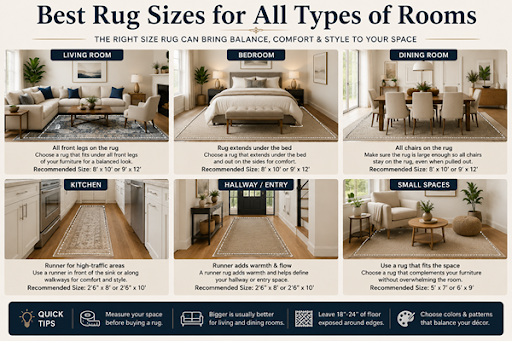
Choosing the right rug size can completely transform how a room feels. A well-proportioned rug creates balance, warmth, and flow, while the wrong siz
Choosing the right rug size can completely transform how a room feels. A well-proportioned rug creates balance, warmth, and flow, while the wrong size can make even a beautifully furnished space feel awkward or incomplete.Most people focus on color or pattern first, but size is actually the foundation of good interior design. If you plan to Buy rugs Online, you already know how difficult it can be to judge dimensions from product photos alone. What looks perfect on a screen can feel completely different once placed in your home.Understanding basic rug sizing rules removes the guesswork and helps you make confident decisions.
The Biggest Rug Sizing Mistake
One of the most common mistakes homeowners make is choosing rugs that are too small. This usually happens when the rug is selected to “fit” the room instead of supporting the furniture layout.A small rug floating in the center of a living room can make furniture look disconnected and unbalanced, even if everything else in the space is high quality.
A simple rule helps avoid this issue:
- Rugs should visually connect furniture pieces
- At least the front legs of major furniture should sit on the rug
- Leave visible flooring around the edges of the room
That last point is often ignored. Leaving around 12 to 18 inches of exposed flooring creates breathing space and prevents the room from feeling overcrowded.
Rug Sizing for Small Rooms
Small rooms require careful planning because every inch matters. The wrong rug can quickly make the space feel cramped.Ideal rug sizes for smaller spaces include:
- 5×7 rugs
- 6×9 rugs
- Round rugs for compact layouts
- Runners for narrow areas
A common mistake is placing a very small rug only under a coffee table while leaving all furniture outside it. This visually shrinks the room.Instead, try placing at least the front legs of sofas or chairs on the rug. Even partial contact creates a more unified layout.In bedrooms, extending the rug slightly beyond the bed edges helps create comfort and prevents cold flooring from being the first thing you step onto in the morning.Light-colored rugs also work well in small rooms because they create a sense of openness, while very dark or heavy patterns can make the space feel tighter.
Rug Sizing for Medium Rooms
Medium-sized rooms offer flexibility, but that often leads to overthinking.The most effective rug sizes for these spaces are:
- 7×9 rugs
- 8×10 rugs
- Medium rectangular layouts
- Layered rug styles for added texture
An 8×10 rug works especially well in most living rooms. It allows the front legs of sofas and chairs to sit on the rug while maintaining visible flooring around the edges.In dining areas, rug size becomes even more important. Chairs should remain on the rug even when pulled out. Otherwise, they catch on the edge, which becomes frustrating over time.
Rug Sizing for Large Rooms
Large rooms often feel empty without proper rug placement. This is where oversized rugs become essential rather than optional.Recommended sizes include:
- 9×12 rugs
- Larger custom oversized rugs
In open-plan spaces, rugs help define zones such as living and dining areas without the need for walls or partitions.A properly sized rug can:
- Anchor oversized furniture
- Warm up hardwood flooring
- Reduce echo in large spaces
- Make layouts feel intentional
Interestingly, a large room with a small rug often feels worse than a room with no rug at all. That happens because mismatched proportions make furniture appear disconnected.
Choosing Rugs Beyond Color
Color is usually the first thing people notice, but it should not be the deciding factor.A beautifully designed rug in the wrong size still fails to improve the room.
Before choosing, consider:
- Furniture placement
- Required floor visibility
- Room function
- Existing visual clutter
Material also plays a key role. Natural fibers feel premium but may stain more easily. Plush rugs offer comfort but require more maintenance. Low-pile rugs work best in high-traffic or dining areas because they are easier to clean.
Every option involves trade-offs.
Living Room Rug Placement Formula
Interior designers often rely on a simple rule:
Front legs on, back legs off
This means the front legs of sofas and chairs rest on the rug, while the back legs stay on the floor. This creates balance without requiring an oversized rug.
General sizing guide:
- Small living room: 5×7 or 6×9 rugs
- Medium living room: 8×10 rugs
- Large living room: 9×12 or larger
Sectional sofas usually require larger rugs because they take up more visual space. If a rug disappears under the coffee table, it is usually too small.
Bedroom Rug Placement Guide
Bedrooms prioritize comfort over symmetry.For queen beds, an 8×10 rug is typically ideal, extending beyond the sides to create a soft landing area.King beds often require larger rugs, especially in spacious rooms.Some homeowners use runners on each side of the bed, which works in narrow rooms but does not create the same unified look as a single large rug.A common mistake is placing a small rug only at the foot of the bed. This often feels disconnected from the rest of the space.
What Looks Good vs What Works in Real Homes
Online inspiration can be misleading. Many styled rooms are designed for appearance rather than daily use.For example, white or high-pile rugs may look beautiful in photos but are harder to maintain in busy households with kids or pets.
If you plan to Buy rugs Online, always check:
- Exact measurements
- Material details
- Cleaning instructions
- Customer photos and reviews
- Pile height
Real customer images often provide a more accurate expectation than studio photos.
Smart Buying Checklist
Before making a decision, ask yourself:
- Where will furniture sit on the rug?
- How much floor should remain visible?
- Will the rug define or decorate the space?
- How much maintenance is acceptable?
Answering these questions helps you avoid sizing mistakes and choose a rug that actually fits your lifestyle.
Conclusion
Rug sizing is less about guesswork and more about understanding proportion. Once you know how rugs interact with furniture and space, choosing the right one becomes much easier.A properly sized rug does more than decorate a room. It connects the furniture, balances the layout, and creates a sense of comfort that instantly improves the entire space.
FAQs
How do I know if my rug is too small?
If furniture is completely outside the rug area and it looks isolated, the rug is likely too small.
Are oversized rugs better for living rooms?
In most cases, yes. They help anchor furniture and create a more balanced layout.
Do all furniture legs need to be on the rug?
No. Often only the front legs need to sit on the rug for a balanced look.
Is a 9×12 rug suitable for medium rooms?
It depends on layout, but in many cases, slightly oversized rugs work better than undersized ones.
Should rugs match wall colors exactly?
No. Matching too closely can make the room look flat. Contrast usually creates better visual depth.
