
Cabinets can look perfect on day one and still disappoint later. A few months pass, then small problems show up. A door starts hanging unevenly. A sh
Cabinets can look perfect on day one and still disappoint later. A few months pass, then small problems show up. A door starts hanging unevenly. A shelf bends under dinner plates. Paint begins to chip near the handles. In a busy kitchen, weak cabinet materials do not stay hidden for long.That is why material choice deserves real attention before wall cabinet installation. Wall cabinets hold dishes, mugs, dry food, and sometimes small appliances. If the material is not strong enough, the cabinets may wear down faster than expected.
This guide explains how to choose cabinet materials that last longer. We’ll look at cabinet boxes, doors, finishes, hardware, common mistakes, and smart buying tips for Brookfield, WI homes.
Strong Cabinets Start With the Material Behind the Finish
A cabinet’s outside style gets most of the attention. Color, handles, and door shape are easy to notice. But the hidden material behind that finish matters more for long-term use.Cabinet boxes carry the weight. Shelves support plates, bowls, and pantry items. Doors open and close every day. If the base material is weak, even a beautiful cabinet can become frustrating.
Brookfield, WI kitchens also deal with real daily use. Busy mornings, family dinners, steam from cooking, and regular cleaning all affect cabinets. Strong materials help the kitchen stay neat, solid, and easier to maintain.
Why Material Choice Matters Before Wall Cabinet Installation
Wall cabinets need reliable support because they hang above the counter. They do not sit on the floor like base cabinets. So the material, fasteners, and structure must work together.Before installing wall cabinets, think about what those cabinets will hold. Everyday dishes can get heavy fast. Glassware, canned food, and stacked bowls add more weight than people expect.A strong material helps prevent sagging shelves, loose sides, and weak mounting points. Good planning before installation also helps the cabinets stay level and secure for years.
Cabinet Materials That Handle Daily Kitchen Use Better
Not every cabinet material performs the same way. Some materials handle weight well. Others look smooth with paint. A few are budget-friendly but may not be ideal for heavy storage.The right choice depends on your kitchen habits. A family that cooks daily may need stronger boxes and shelves. A light-use kitchen may not need the same level of durability.
Plywood for Strong Cabinet Boxes
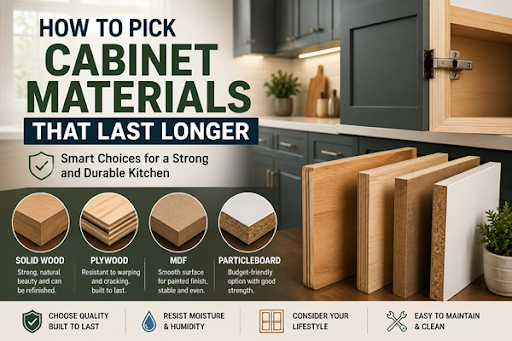
Plywood is often a strong choice for cabinet boxes. It is made from thin wood layers pressed together. Because of that layered structure, it holds screws well and resists bending better than weaker boards.It also handles normal kitchen movement better. Cabinets can face changes in temperature and humidity. Plywood usually stays more stable when built and installed properly.
Solid Wood for Doors and Frames
Solid wood works well for cabinet doors, face frames, and visible details. It gives a natural look and can last a long time with proper care. Scratches can also be repaired more easily than on some other surfaces.Still, solid wood can expand or shrink with moisture changes. That does not make it bad. It simply means the wood should be finished well and used in the right areas.
MDF for Smooth Painted Finishes
MDF is a smooth engineered material. It is often used for painted cabinet doors because it does not show wood grain. If you want a clean painted look, MDF can be a practical option.However, MDF does not like water. If it gets wet and stays wet, it can swell. So it works best in areas where moisture is controlled and edges are properly sealed.
Particleboard for Budget-Friendly Projects
Particleboard is usually more affordable. It can work for some cabinet projects, especially when cost is the main concern. It is often covered with laminate or veneer.The downside is strength. Particleboard may not hold screws as well as plywood. It can also swell if moisture gets inside. For heavy wall storage, it should be chosen carefully.
Custom Cabinets Can Match Material to Real Needs
A standard cabinet setup does not always fit the way a kitchen is used. Some people need stronger pantry storage. Others need better corners, deeper drawers, or special space for cookware.That is where custom cabinets can make sense. They allow material choices to match real needs instead of forcing the same material everywhere. You might use plywood boxes for strength, MDF doors for a painted finish, and solid wood accents for warmth.
With custom cabinet materials, you can focus your budget where it matters most. For example, stronger shelves may matter more than decorative trim. In older Brookfield kitchens, made-to-fit cabinets can also help use awkward spaces better.
Finish Quality Matters More Than People Think
A cabinet finish does more than change the color. It protects the material underneath from stains, moisture, fingerprints, and daily cleaning. A weak finish can make strong cabinets age faster.Paint gives a clean look, but it needs good prep and proper coating. Stain lets wood grain show through. Laminate can be easy to wipe clean. Veneer gives a wood look over another material.
Think about your real kitchen use. If kids grab cabinet doors with sticky hands, the finish needs to clean easily. If you cook often, steam and grease can build up near the stove. A durable finish makes daily care much easier.
Mistakes That Make Cabinets Wear Out Faster
Here’s where buyers often get stuck. They compare colors and prices, but they forget to ask what the cabinets are made from. That can lead to shelves that bend, doors that loosen, or finishes that peel too soon.Another mistake is ignoring hardware. Hinges and drawer slides carry daily movement. Cheap hardware can make even decent cabinets feel weak. Soft-close hinges and stronger drawer slides usually perform better over time.
Poor wall cabinet setup can also shorten cabinet life. If cabinets are not mounted correctly, stress can build in the wrong places. A careful upper cabinet installation helps protect both the wall and the cabinet structure.
Smart Buying Tips for Long-Lasting Cabinets
A quick check can tell you a lot. Ask about the cabinet box material first. Then check shelf thickness, drawer construction, and hinge quality. Do not judge the cabinet by the door style alone.Also, match the finish to your lifestyle. A high-gloss door may show fingerprints faster. A painted finish may need touch-ups over time. Wood stains can hide small marks better, depending on the color and grain.
For kitchen wall cabinets, plan for weight. Dishes, mugs, and pantry items need strong shelves and secure installation. If you store heavy items, ask for stronger boxes, better mounting support, and durable hardware.
Conclusion
Long-lasting cabinets are not chosen by looks alone. Material, finish, hardware, and installation all work together. If one part is weak, the whole cabinet may wear out faster.For Brookfield, WI homeowners, a smart cabinet choice starts with daily use. Think about what you store, how often you cook, and how much wear the kitchen gets.Strong materials may cost more at first, but they can save frustration later. A cabinet that stays level, cleans easily, and holds up well makes the kitchen feel better every day.
FAQs
What cabinet material lasts the longest?
Plywood is often a strong choice for cabinet boxes because it holds screws well and resists bending. Solid wood can also last for doors and frames when it is finished and maintained properly.
Is plywood better than particleboard cabinets?
Plywood is usually stronger than particleboard. It handles screws, weight, and movement better. Particleboard can work for budget projects, but it needs protection from moisture and may not be ideal for heavy storage.
Are custom cabinets worth the higher cost?
Custom cabinets can be worth it when the kitchen has awkward spaces or specific storage needs. They let you choose stronger materials, better layouts, and sizes that fit the room more closely.
What finish is best for busy kitchens?
A durable, easy-clean finish works best for busy kitchens. Laminate, quality paint, and well-sealed stain can all work well. The right choice depends on cooking habits, cleaning needs, and cabinet material.
Does installation affect cabinet durability?
Yes, installation affects how long cabinets last. Poor mounting can cause stress, gaps, and uneven doors. Proper installation helps cabinets stay level, secure, and better supported over time.
