
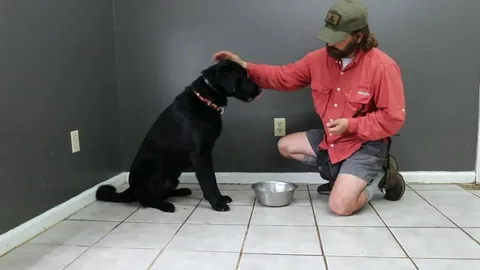
The first growl can feel surprisingly personal. One moment, your dog is happily chewing a bone; the next, their body stiffens as you walk past. Perha
The first growl can feel surprisingly personal. One moment, your dog is happily chewing a bone; the next, their body stiffens as you walk past. Perhaps they lower their head, stare at you, or carry the item into another room. It is uncomfortable, but it does not mean your dog has suddenly become “bad.”
Experienced dog trainers for resource guarding view the behaviour differently. They see a dog worried about losing something valuable, whether that resource is food, a toy, a resting place, or even a favourite person. The goal is not to overpower that dog. It is to change what the dog expects will happen when someone approaches.
With sensible management, patient training, and professional guidance when needed, many dogs become calmer and safer around valued items. Progress rarely comes from one dramatic correction. It grows through small, predictable experiences that show the dog that there is no need to defend what they have.
What Resource Guarding Really Means
Resource guarding is a behaviour intended to maintain control of something the dog considers valuable. Food bowls and chews are common triggers, but dogs may also guard stolen socks, toys, beds, doorways, water bowls, or people. Value is determined by the dog—not by how important the object seems to a human.
Guarding also exists on a spectrum. A dog might simply move away with an item. Another may eat faster, freeze, give a hard stare, lift a lip,p or growl. More serious cases can involve lunging, snapping, or biting.
It helps to view these actions as communication. The dog is effectively saying, “Please stay back.” Ignoring that message or deliberately testing the dog can increase the pressure. A safer response is to create distance, prevent another confrontation, and consider what triggered the behaviour.
Recognising the Early Warning Signs
Growling is not usually the first sign of discomfort. Dogs often communicate much earlier, but their quieter signals are easy to miss. A dog may stop chewing, hold their head low over an object, turn their body away, or watch someone from the corner of their eye.
Look for sudden stillness. A relaxed dog has soft muscles and natural movement, while a worried dog may become almost statue-like. Other signs include gulping food, pinning the ears, tightening the mouth, hovering over an item, or leaving with it whenever somebody approaches.
Noticing these details matters because training should happen before the dog feels forced to escalate. Do not repeatedly move closer to see what the dog will do. That is not an assessment; it is provocation. Record the situation instead: what was guarded, who approached, how close they came, and what the dog did.
How Dog Trainers for Resource Guarding Assess Risk
A responsible trainer begins with questions rather than immediately reaching for treats. What objects does the dog guard? Does the behaviour occur around adults, children, visitors,s or other animals? Has the dog snapped or bitten? Is the behaviour predictable, or does it seem to appear without warning?
The answers help determine whether training can begin safely. Mild guarding of one specific toy is different from a dog that charges across a room to protect food. A household with young children also requires stricter safety measures because children may not recognise warning signals or follow management rules consistently.
A trainer should also ask whether the behaviour appeared suddenly. Pain, illness, mobility problems, MS, or other medical changes can affect tolerance. In those cases, a veterinary examination belongs near the beginning of the plan—not after weeks of unsuccessful training.
Why Punishment Often Makes Guarding Worse
The instinct to take control is understandable. Someone may grab the bowl, pin the dog, shout at the growl, or repeatedly remove food to “prove” ownership. Unfortunately, these actions can confirm the dog’s fear: people approaching really do make valuable things disappear.
Punishing a growl is particularly risky. The growl is a warning, not the underlying emotion. Silencing it may produce a dog that remains uncomfortable but offers less notice before snapping.
Force can also turn a manageable problem into a repeated conflict. Instead of learning that people are safe, the dog learns to eat faster, hide objects, or defend them more intensely. Reward-based training takes another route. It teaches that human movement predicts something beneficial. The dog is not surrendering after a battle; they are making a safe, voluntary choice because experience has taught them that cooperation pays.
Begin With Management, Not Confrontation
Management prevents the dog from rehearsing guarding while new habits are being developed. It is not cheating, and it is not admitting defeat. It is basic risk reduction.
Feed dogs separately, especially in multi-dog homes. Use doors or baby gates so the dog can finish meals and long-lasting chews without interruption. Keep laundry, rubbish, and children’s toys out of reach if stolen objects regularly cause confrontations. Visitors should receive simple instructions and should never attempt to take something from the dog.
Families may also need to pause access to extremely high-value chews during early training. That does not mean the dog can never enjoy them again. It simply removes predictable flashpoints while safer responses are taught.
Most importantly, children should never be responsible for practising trades, approaching the food bowl,l or testing whether the behaviour has improved.
Teach a Relaxed “Drop” Through Trading
A reliable drop cue should be built with low-value objects before it is needed during a tense moment. Begin with a toy the dog enjoys but does not guard intensely. Present a high-value treat near the dog’s nose and calmly say “drop” once. The moment the dog releases the toy, mark the behaviour with “yes” and provide the treat.
Then comes the detail people often miss: return the toy when it is safe. If dropping an object always means losing it forever, the cue may become less reliable. Giving it back teaches the dog that releasing an item does not automatically end the fun.
Keep sessions brief and easy. Over time, practice with several ordinary toys before gradually increasing their value. Never pull the object from the dog’s mouth or repeat the cue in an increasingly threatening voice. If the dog stiffens, freezes, or growls, the exercise has become too difficult and should stop.
Change the Meaning of an Approaching Person
The deeper training process is not simply obedience. It is an emotional change. The dog currently thinks, “A person is coming, so I may lose this.” Training aims to create a new expectation: “A person is coming, and something better appears.”
Begin at a distance where the dog notices you but remains loose and comfortable. Walk past, toss a high-value treat, and continue moving away. Do not reach for the guarded object. After enough calm repetitions, the dog may begin looking pleased when someone approaches.
Distance must decrease gradually. Moving too close, too quickly, can trigger the very response the exercise is meant to change. This is why body language observation is essential. Relaxed eating and soft movement suggest the dog can cope. Freezing, gulping, staring, or covering the item indicates that more distance is needed.
Adapt the Plan to What the Dog Guards
Food-bowl guarding, toy guarding, ng and guarding a resting place should not be treated as identical problems. For food, the plan may involve dropping better treats from a safe distance without touching the bowl. For toys, structured exchanges and cooperative games may be more useful.
A dog guarding a sofa or bed may need a positively trained “go to mat” cue, along with comfortable alternative resting areas. Physically dragging the dog off the furniture can create a handling conflict on top of the original problem.
Guarding a person is more complex. It may involve anxiety, competition, learned behaviour, or aggression directed at another household member or pet. Simply pushing the dog away may increase tension. These cases generally benefit from individual professional assessment because the guarded “resource” moves, interacts,s and may unintentionally reinforce the behaviour.
Choosing a Qualified, Humane Trainer
Dog training is not regulated consistently, so a confident website does not automatically indicate suitable expertise. Ask candidates how often they handle resource guarding and aggression cases. Request a clear explanation of their methods and what they will do if the dog growls during a session.
A suitable professional should use reward-based behaviour modification, discuss management,nt and recognise when veterinary involvement is necessary. Be cautious of anyone promising an instant cure, guaranteed results, or a dog that will tolerate anything. Behaviour is influenced by context, health, learning history, and the people managing the environment.
Also,o ask whether the trainer provides private sessions. Resource guarding often needs an individual plan rather than a busy group class. Useful credentials may include recognised dog-training or behaviour-consulting certifications, but letters alone are not enough. Relevant case experience, continuing education, and transparent methods matter too.
What Real Progress Should Look Like
Success does not mean repeatedly placing the dog in difficult situations to prove the problem has vanished. A better measure is fewer guarding incidents because the environment is well managed and the dog has learned safer alternatives.
Progress might look like a dog moving away from a food bowl when called, releasing ordinary toys happily, or remaining relaxed when a person passes at an appropriate distance. Their warnings may become clearer rather than more explosive. The family should also know exactly what to do if guarding occurs again.
There may still be situations the dog should not face. That is normal. A dog can live a happy, full life without being expected to tolerate hands in their bowl or children climbing over them while they chew. Reliable routines and realistic boundaries are often signs of successful training, not failure.
When the Situation Requires Immediate Professional Help
DIY exercises are inappropriate when the dog has bitten, attempted to bite, charged at someone, or guards resources unpredictably. Professional help is also essential when children, elderly relatives, or vulnerable people share the home.
Stop any exercise if the dog freezes, snarls, lunges,s or stops eating because of stress. Create distance and secure the environment rather than trying to finish the lesson. Sudden behavioural changes should be discussed with a veterinarian, particularly when accompanied by sensitivity to touch, reduced movement, appetite changes, es or unusual irritability.
Severe cases may require collaboration between a veterinarian, a qualified behaviour consultant, and a board-certified veterinary behaviourist. Seeking that support is not an overreaction. It is a practical decision that protects the dog and everyone around them.
Conclusion
Resource guarding improves through trust, structure,e and realistic expectations—not intimidation. Families should prevent avoidable conflicts, learn the dog’s early warning signals, ls and practise low-pressure exchanges well before a dangerous object becomes involved.
Qualified dog trainers for resource guarding can assess risk, build a personalised behaviour plan, and teach owners how to respond without escalating the situation. The earlier a household gets appropriate help, the easier it is to prevent repeated confrontations from becoming established habits. Respect the growl, manage the environment, and reward cooperation. Those simple principles can create a much safer relationship.
Frequently Asked Questions
Can resource guarding be completely cured?
Many dogs improve considerably, but no professional should promise that a dog will never guard again under any circumstances. Training, management, and sensible boundaries can make incidents far less frequent and easier to handle.
Should I take my dog’s bowl away to prevent food aggression?
Repeatedly removing food may teach the dog that an approaching person is a threat. It is safer to build positive associations and practise only at a level where the dog remains relaxed.
Why does my dog guard objects only from certain people?
Dogs learn from individual experiences. One person may have taken objects away, approached too quickly,y or missed subtle warnings. Dogs may also feel less secure around children, visitors, rs or unfamiliar adults.
Is “leave it” the same as “drop it”?
No. “Leave it” usually asks a dog not to pick something up. “Drop it,” the dog is asked to release an object already in their mouth. Both skills are valuable, but should be trained separately.
How long does resource-guarding training take?
There is no fixed timeline. Mild, predictable guarding may improve relatively quickly, while severe or widespread behaviour can require months of careful work. Progress depends on safety, consistency, health, and the dog’s learning history.
