
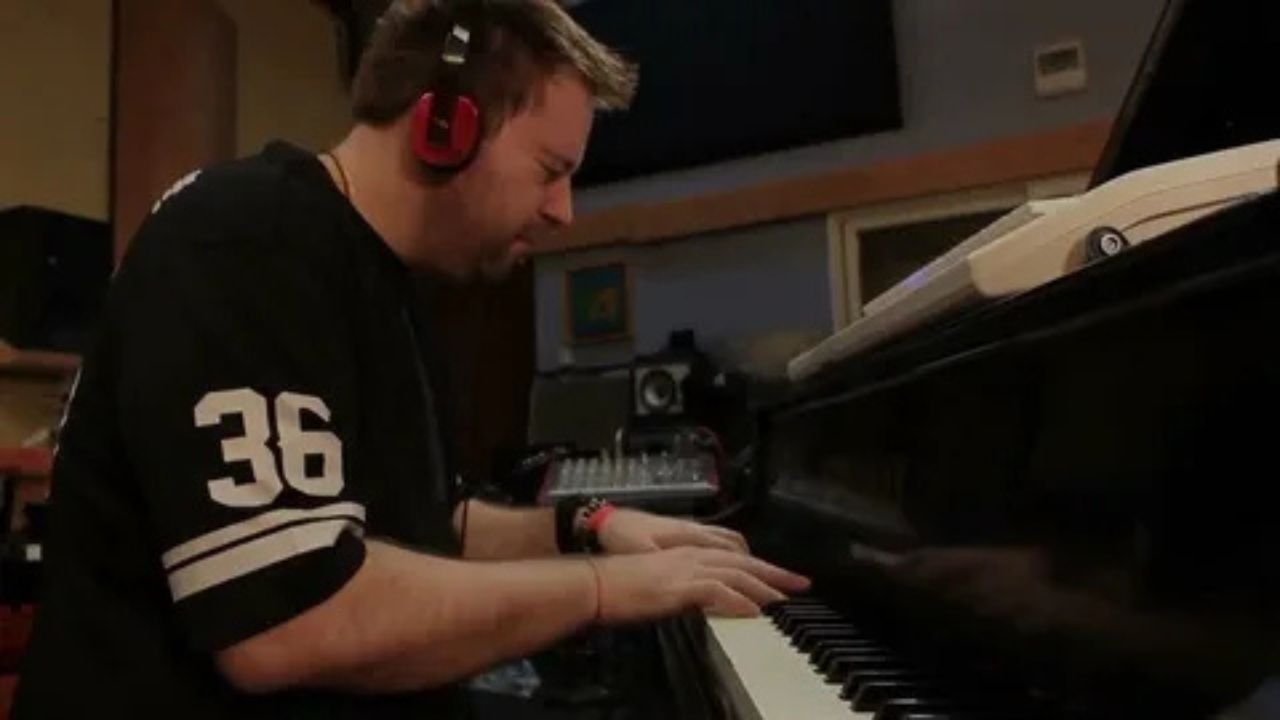
So let's put a pianist in front of a row of black & white keys and a keyboard man, and they can look like they're performing the same task. Both
So let’s put a pianist in front of a row of black & white keys and a keyboard man, and they can look like they’re performing the same task. Both employ chords, scales, rhythm, coordination, and music theory. Either can play on stage, do studio recordings, or accompany a singer. Thus, why bother with two names? The similarities aren’t the only thing.
The pianist is, usually, a personality around the instrument: The feel, power, foot, what s/he plays, and how. The keyboardist applies a variety of techniques to a number of electronic instruments to select and mold sounds for a song, band, recording, or production.
There isn’t a significant distinction between keyboardists and pianists regarding who’s more talented. It’s about specialisation, musical purpose, and how each one of us gets into our musical work under our fingers.
What Is a Pianist?
A pianist is a musician who specializes in piano; that may be an acoustic grand piano, upright piano, stage piano, or digital piano. It’s not just a set of keys. Performance is influenced by its tone, resistance, pedals, dynamic response, and physical character.
Managed finger movement, a relaxed posture, independent use of both hands in the Left Hand Piano Collection, pedaling, and producing various tones by touch are just some of the many skills pianists take years to master. Holding the right keys is certainly not enough! Depending on the music, a phrase can be soft and quiet, sharp, warm and tender, or dramatic, played by a good pianist.
This term is closely connected with pianists, but it’s not exclusive to classical music. Piano is a very well-established musical genre in jazz, blues, gospel, musical theatre, pop, accompaniment, and film scoring.
What naturally lies at the heart of the pianist’s work is one question: what kind of expression can be wrung out of the piano?
What Is a Keyboardist?
A keyboardist is a musician who plays one or more instruments that are keyboard-based (that is, controlled by pressing keys on a keyboard), such as synthesizers, electronic organs, stage pianos, workstations, arranger keyboards, or MIDI controllers. The keyboard player can execute hundreds—or even dozens—of sounds during a concert, as opposed to just playing one single “verb” (core sound).
An acoustic piano is sometimes needed for one song. The next could be some warm strings, vintage organ, sharp synth lead, electric bass, or a pad. In some cases, the keyboardist might play more than one of them at a time, using splitting or layering of the keyboard.
That versatility alters the part of the performer. The keyboardist must consider aspects of the music, such as what notes to play, what color of sound to use, the frequency range of the sound, the effects used, the sound levels, and how the sound relates to the other instruments.
So the “best” keyboard playing in a band isn’t always the most ostentatious keyboard playing. It might be a subtle effect that doesn’t really stand out, but enhances the overall chorus. That is restraint, that’s a real art.
Keyboardist and Pianist: The Main Differences
The most obvious difference is that of the breadth of the tools. The focus of pianists’ expertise is mainly the playing of pianos, and keyboardists tend to be able to shift between keyboard technologies and keyboard sound families.
What they want to do may be different as well. Traditionally, a pianist works on touch, wording (phrasing), pedaling, dynamics, repertoire/excerpts, and interpretation. A keyboard player’s time could be served to a greater degree in the selection of patches, programming layers, effects editor controls, part organization, or part adjustment in the interest of a live arrangement.
Another difference is in performance environments. The typical pianist is likely to be a soloist, an accompanist, a chamber musician, a jazz musician, a teacher, or a session player. The association of keyboardists would not occur to most listeners except in the context of bands, worship teams, touring shows, recording studios, “electronic music”, or musical theatre.
These are not rules, but tendencies. In the case of a jazz pianist, you can use synthesizers. A touring keyboardist may have to perform challenging piano parts night after night.
The titles indicate a tool by which a musician practices his primary career, and not a locked door to the other world.
Instruments, Key Action, and Playing Feel
In acoustic pianos, sound is created by physical parts like keys, hammers, strings, and the soundboard. That mechanism provides the keys with resistance as well as some tonal variation with the playing of the pianist.
Using weighted keys or a hammer and modeled or recorded piano sounds, digital pianos try to emulate that experience. They are frequently selected by pianists who are looking for headphones, portability, recording capabilities, or less maintenance.
While a weighted keybed is an option for a keyboardist, many synthesizers or electronic keyboards feature lighter synth-action or semi-weighted keybeds. These can allow for easier fast organ passage, repeated notes, synth leads & quick sound changes.
There’s not an automatic right or wrong here in terms of doing one kind of action versus another. This varies according to the component.
Playing fine classical pieces on a small, unweighted keyboard can be frustrating. It can also be uncomfortable to include rapid organ sounds on a piano with a heavy action. Expert musicians select an instrument that has a physical response appropriate for the sound and style of playing.
Technique and Expressive Control
TOUCH is a key component of playing the piano. How fast and how hard a key is pressed has an influence on the note’s sound and volume. Of course, pianists play with sustain, soft, and sostenuto pedals too to manipulate resonance, phrase, and texture.
The technique used on the keyboard may vary from sound to sound. There may need to be some traditional dynamics and pedaling on a realistic piano patch. This is not the case with the organ, which has sustained notes and another means of articulation. A pitch bend or modulation, aftertouch, or filter movement, or a foot controller may be involved with a synthesizer lead.
This can sometimes be a problem for a keyboardist when trying to perform many sounds, as with a piano” sound performance. Different phrasing is necessary with a convincing string part than a brass part. Slow chord change and careful use of the sustain pedal may be required with a pad. Any bass synth should be played with precision, rhythm, and space.
That’s where a good pianist can get very show-boaty. The performer plays notes, but briefly embraces the actions of multiple instruments too.
Music in an ensemble: performing with other members of a band versus performing as a solo musician.
A single pianist will usually accompany him with the entire arrangement. The left hand can be used for bass or harmony; the right hand can be melody, decoration, or improvisation. Because there is no band to fill the voids, the pianist must be in control of the rhythm, the dynamics, the balances, and the emotional flow all by himself.
Solo Performance Versus Playing in a Band
Heavyleft-hand chords can cause muddiness if the bass guitarist is already in control of the low frequencies. If the guitarist takes over the middle range, try moving up, using a softer sound, or playing fewer notes. A simple pad may work better than a complicated run during a vocal verse.
Another factor that comes to your consideration is as important as technique – that is, listening.
The good keyboard player leans in when the chorus needs to be broader, someone needs more support when singing, and when silence is an even more powerful statement. Sometimes, the ones that involve playing piano in bands require time to adjust, as it can be very easy to fill a song too soon with a full, solo-style piece.
Sound Design, Patches, and Music Technology
In the modern performance world, technology plays an integral role in the keyboard. Often the keyboardist will use presets, patches, samples,s and effects, as well as MIDI connections, virtual instruments, and digital audio workstations. Some use one workstation for one gig, while others construct in-depth rigs consisting of multiple keyboards, computers, pedals, controllers, etc.
A patch is a collection of saved settings and/or sounds. A keyboard player may have to switch from piano to strings in a live show and do it in a matter of seconds. That is possible with well-organized presets, which is otherwise a hard task needing an awkward silence, and a lot of menu combing to locate and pick.
Different parts of the keyboard can be programmed to let out independent sounds when using splits. The Left Hand could play bass, the Right Hand could do electric piano. Layering, using more than one sound, for example, piano over soft strings.
Of course, technical knowledge isn’t a substitute for musicianship. Great timing and harmony are not salvaged by a beautifully programmed sound. Nonetheless, technology adds to the contribution that one player can make, and keyboardists become a bit of a musician, arranger, and sometimes even a sound engineer.
Training and Practice for Each Musical Path
Typically, pianists practice through scales, arpeggios, finger exercises, new literature, listening, pedalling, and interpretation regimes. For classical musicians, instrumental finesse, nuances in dynamics, phrasing, and models of articulation can be practiced for weeks, for entire weeks.
Many of the same foundations are required of keyboardists. Chords, scales, rhythm, coordination, and music theory are still vital. They might also play by ear, improvise, read chord charts, program sounds, switch between patches with ease, and duplicate parts from recordings.
One of these be nit marked keyboardist help exercise activities could be to play the same chord procedure with piano, organ, strings, and synthesizer sounds. Each version should sound different since you need to be different with the articulation and spacing of each sound.
There is no clear indication that one way is more difficult than the other. Piano might require greater command in the use of one instrument, but keyboard skills might require versatility in a wide range of sounds and technology.
The best practice program is based on the musician’s real desires, not on the instrument conveniently situated nearest to the sofa.
Career Opportunities for Pianists and Keyboardists
Pianists can sing, accompany, teach, rehearse pianists, church/ gathered worship music, jazz, ballet, session, hotels/ restaurants. Whereas good sight-reading abilities can afford opportunities to sing in choirs, theatre work, examinations, and educational environments.
Those who play keyboards can work in touring bands and worship teams, in studio sessions, tribute bands, theatre music positions, event bands, and electronic music studios. Music production, composition, film, TV, game, and commercial sound may be other career paths for those who are knowledgeable about MIDI, arranging, recording software, and sound design.
Several working musicians are working on a variety of income sources. An individual could play their keyboard parts in a band on weekends, record tracks in their home studio, and teach piano during the week.
The importance of reliability is close to that of the ability. Students who are not ready to learn, have faulty equipment, failed to learn arrangements correctly, and who are not responding to acts of equipment misbehavior may result in “trial and error” work.
No one pays attention to the keyboardist’s impressive solo when he forgets his power cord.
Can Someone Be Both a Keyboardist and a Pianist?
Absolutely. Many musicians easily switch between the two, and the skills sometimes complement each other.
Piano lessons can improve keyboardists’ finger control, harmonic sense, dynamic control, and independence for the two hands. Studies have shown that having some background in keyboard awareness can make the pianist more flexible, get more comfortable with technology, and be more aware of arrangement, sound selection, and ensemble balance.
Yet, learning the ropes from one role to another takes some time. The pianist might have to dumb down the parts, teach himself the synth controls, and abandon piano-style dynamics for all sounds. If a keyboard player’s goal is to pursue more serious piano playing, he or she may require improved touch, pedal control, reading, posture, and control on weighted keys.
This is possible due to the common keyboard layout, but not automatically.
There’s no need for a Musucker to decide on one identity ever. Making both can expand a creative vocabulary and expand the possibilities for performing, teaching, recording, and producing.
Which Path Should a Beginner Choose?
The one that the learner will find best suited is based on the music the beginner wishes to play.
An adult who is interested in piano repertoire, expressive solo music, acoustic sound, or formal examination would be advised to start with piano and practice on an 88-key weighted instrument. It facilitates the approach that is required during traditional piano performance.
An electronic keyboard, SX, or MIDI controller is better for a beginner who is looking to join a pop band, creating both electronic songs and many sounds with it, or using recording software. Headphones and portability may also be factors.
Price is a factor, but occasionally it can cause issues when only purchasing items for their price. Perhaps a really tiny keyboard would be entertaining, but it could not be really significant when considering two-handed learning of the piano. On the other hand, if you’re more prone to getting involved in sound design, an expensive acoustic piano might be dispensed with.
There are no right or wrong ways. The choice is the one that makes the learner want to play more rather than ‘putting their feet up and putting their hands in their pockets.’
Conclusion
A keyboardist is not just a fellow who plays an electronic rather than an acoustic instrument. Pianists tend to have profound mastery of piano touch, pedals, piano style, and piano works. Keyboardists use a wider variety of instruments and frequently bring performance, technology, arranging, and sound design skills to their instrument.
They both require coordination, timing, an ear for music, and knowledge. They just use those skills in alternative ways.
Ten emotional colours can be found in one piano tone, which a pianist can search for. Before the first note can even be played, a keyboardist can opt for ten totally different instruments. Both are equally good or bad. All present their difficulties, annoyances, and delightfully rewarding experiences. Yes, one musician can be both.
Frequently Asked Questions
Does a keyboardist equal a pianist?
Not exactly. A pianist is primarily a piano player who plays an acoustic or a digital piano. A keyboardist can perform on a variety of electronic keyboard instruments such as synthesizers, organs, workstations, stage pianos, and more. One musician, however, can take or play both songs of a piece.
Does it sound all right for a pianist to play an electronic keyboard?
Yes. Because the notes and basic layout are the same, piano skills can be carried over easily. The pianist will likely have to adapt to lighter keys, smaller ranges, pitch controls, and sound programming, as well as techniques stipulated by organ/synth patches.
Should a keyboardist learn to play piano to know how to play the keyboard?
No, not necessarily, but training in piano can offer a solid foundation in coordination, harmony, dynamics, and piano skills. A beginner wishing to concentrate on production or electronic music can begin straight with a keyboard or MIDI controller.
Is playing piano or playing keyboard more difficult?
Both of them are, on the whole, not that much more difficult. The diverse aspects of touch, pedals, dynamics, and repertoire in piano. Keyboard skills require versatility, technical knowledge, sound selection, and adaptation of technique to specific instrument sounds.
Which is better for a beginner to purchase: a piano or a keyboard?
For conventional piano training, it is best to use a weighted piano, which can be digital or acoustic. Someone who is involved in bands, electronic sounds, songwriting, or music production might prefer to use a portable keyboard or synthesizer. The decision should be based on musical needs, space, portability, and budget.
