
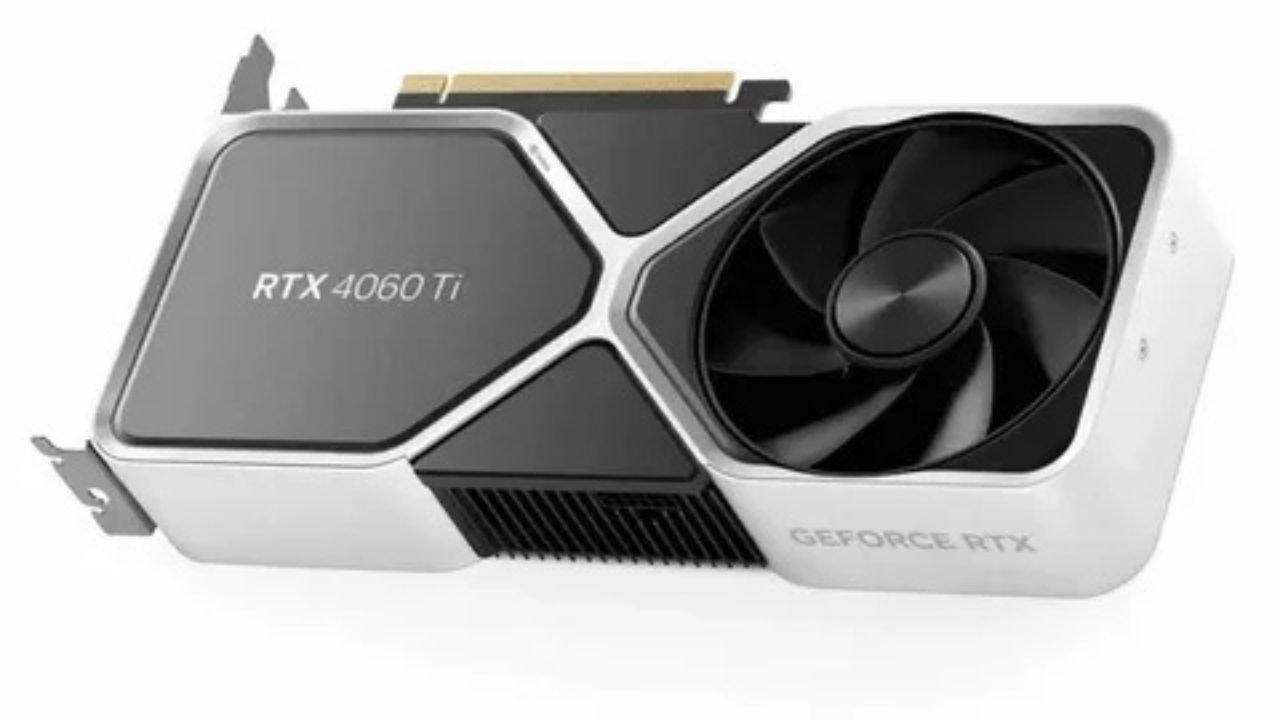
A fresh round of graphics-card rumors has landed, and it is exactly the kind of leak that makes PC builders delay upgrades. The nvidia rtx 60 specifi
A fresh round of graphics-card rumors has landed, and it is exactly the kind of leak that makes PC builders delay upgrades. The nvidia rtx 60 specifications leak points toward Rubin-based GeForce cards, wider memory interfaces for the RTX 6080 and RTX 6070, and a major push toward path-traced graphics.
There is plenty here to get excited about—and plenty that deserves a raised eyebrow. Nvidia has officially introduced Rubin for data-center AI systems, but it has not announced a Rubin-powered GeForce RTX 60 family or published gaming specifications. The numbers circulating online are early claims attributed mainly to YouTube channel RedGamingTech and repeated by hardware publications.
A leak can reveal a general direction without predicting final retail products. The useful approach is to separate plausible details from shaky ones and ask what the numbers would mean for gamers and creators.
Nvidia RTX 60 Leak at a Glance
The rumor describes three GPUs: an RTX 6090 using a GR202 chip, an RTX 6080 using GR203, and an RTX 6070 using GR205. These chips are said to belong to a consumer version of the Rubin architecture and may be manufactured on a TSMC 3nm-class process.
The headline performance target is up to twice the path-tracing performance of the RTX 50 series. Conventional rasterized gaming is generally reported as receiving a smaller 30% to 35% generational improvement, although one competitor interprets the claim differently. Other alleged changes include fifth-generation RT Cores, sixth-generation Tensor Cores, GDDR7 memory, and clock speeds between the high-2GHz and low-3GHz range. None of those GeForce details has been confirmed by Nvidia.
Rubin Is Real, but the Rubin GeForce Cards Are Not Confirmed
Rubin itself is not fictional. NVIDIA has publicly presented the Vera Rubin platform as the successor to Blackwell in its AI and data-center roadmap. That gives the leak a believable foundation because Nvidia has reused broad architecture families across professional, AI, and consumer products before.
Still, a data-center announcement does not confirm a gaming GPU. The alleged GR202, GR203, and GR205 product mapping remains unofficial, as does the reported use of a TSMC 3nm process for consumer cards. Process labels can also be used loosely in early rumors. Rubin-based gaming hardware is plausible, not proven.
That may sound overly cautious, but it is an important distinction. A confirmed architecture name is not the same thing as a finalized graphics card, and Nvidia could alter product names, memory layouts, or enabled core counts long before launch.
Rumored RTX 6090, 6080, and 6070 Specifications
Here is the clearest version of the leaked lineup currently circulating:
| Rumored GPU | Alleged chip | Rumored VRAM | Rumored bus | Current comparison |
| GeForce RTX 6090 | GR202 | 32GB GDDR7 | 512-bit | RTX 5090 already has 32GB and a 512-bit bus |
| GeForce RTX 6080 | GR203 | 20GB GDDR7 | 320-bit | RTX 5080 has 16GB and a 256-bit bus |
| GeForce RTX 6070 | GR205 | 16GB GDDR7 | 256-bit | RTX 5070 has 12GB and a 192-bit bus |
The GR202 die is also rumored to contain up to 192 Streaming Multiprocessors. That would exceed the 170 SMs enabled on the retail RTX 5090, but Nvidia often disables part of a full die to improve yields, control power,r or create another model.
A 192-SM chip, therefore, does not guarantee a 192-SM RTX 6090. Early leaks frequently describe the maximum capability of a complete chip rather than the cut-down configuration that eventually reaches store shelves.
The Wider Memory Buses Are the Real Story
Some headlines present the RTX 6090’s alleged 512-bit interface and 32GB capacity as a giant leap. It is notNVIDIA’s’s RTX 5090 already uses that exact bus width and memory capacity. The flagship could still gain bandwidth through faster memory or cache changes, but the basic configuration would remain unchanged.
The RTX 6080 and RTX 6070 are more interesting. Moving the 6080 from 256-bit to 320-bit represents a 25% wider interface. Moving the 6070 from 192-bit to 256-bit is roughly a 33% increase. Their proposed VRAM capacities rise by similar proportions.
That could reduce memory pressure at 4K and give creators more room for large scenes. It may also help games using high-resolution texture packs, detailed geometry, and demanding ray-tracing effects.
Bus width alone does not determine real bandwidth, though. GDDR7 data rate, memory compression, cache design,n, and controller efficiency will influence the final result.
Why Nvidia May Be Prioritizing Path Tracing
Path tracing models far more lighting behavior than traditional rasterization. It produces convincing reflections, shadows, and indirect light, but often relies on upscaling, ray reconstruction,n and frame generation.
A claimed twofold path-tracing improvement would therefore be more strategically important than another modest boost in ordinary frame rates. NVIDIA has spent years building the RTX ecosystem around RT Cores, Tensor Cores, DLSS, and neural rendering. A Rubin gaming architecture that dedicates more silicon and scheduling intelligence to those workloads would fit that strategy.
This also explains why raw CUDA-core comparisons may reveal only part of the story. Specialized acceleration, denoising, neural rendering, and improved ray-processing hardware could create large gains without simply doubling the number of traditional shader units.
There is a catch: “2x path-tracing performance” does not automatically mean twice the frame rate in every supported game. Results would depend on the title, resolution, CPU, DLSS mode, memory behavior, drivers, and how much of the workload can use the new hardware.
The Rasterization Claim Is Still Messy
This is where careful reporting beats a dramatic headline. Several publications describe the leak as predicting a 30% to 35% increase in pure rasterization performance over comparable RTX 50-series cards. One supplied competitor article instead says raster performance may drop by as much as 35% at similar frequencies.
Those statements are not interchangeable. The difference may come from a transcription error, confusion between clock-for-clock and total product performance, or a different interpretation of the original video. Without an Nvidia specification sheet or independent benchmarks, the exact figure should be treated as unresolved.
Clock-for-clock performance can also differ from the performance of a finished graphics card. A GPU could theoretically perform less work at an identical frequency but still become faster overall through higher clocks, additional processing units, larger cache,s or other architectural changes.
The safer conclusion is that the rumored architecture appears more focused on ray tracing, path tracing, and AI-assisted rendering than on maximizing conventional raster gains. Any article presenting one precise percentage as a fact is getting ahead of the evidence.
What the Leak Could Mean for Gamers and Creators
For gamers, the rumored RTX 6070 may be the most consequential card on the table. Sixteen gigabytes of VRAM and a 256-bit interface would be a healthier foundation for high-resolution textures, ray-traced games, and longer ownership than the RTX 5070’s 12GB configuration. The RTX 6080’s proposed 20GB capacity would also provide more breathing room at 4K.
Creators would care about the same changes for different reasons. Larger VRAM pools can support more complex Blender scenes, higher-resolution video timelines, bigger local AI models,s and heavier real-time previews before data spills into slower system memory.
Capacity is not the whole story; CUDA performance, Tensor throughput, software support, thermal, ls, and power limits also matter. A 20GB graphics card is not automatically faster than a 16GB model when the workload fits comfortably inside both cards’ memory.
The practical message is simple: the rumor suggests a stronger memory floor, but not enough verified information for a serious buying decision.
Should You Wait for the RTX 60 Series?
Probably not if your current GPU is failing, blocking paid work, or making the games you play miserable. There is no official GeForce RTX 60 launch date, final price list, board power target,t or confirmed performance data. Rumors have pointed to windows across 2027 and even 2028, which is far too broad to plan around confidently.
Waiting makes more sense for someone who already owns a capable card and is watching the next architectural jump. In that case, the Nvidia RTX 60 specifications leak works as a roadmap signal: Nvidia may be preparing wider memory interfaces below the flagship and directing more hardware toward path tracing.
Consider the practical side too. A future GPU may require a larger power supply, a roomier case, or a faster processor to deliver its full performance. The graphics card’s rumored specifications are only one part of the total upgrade cost.
Do not buy—or avoid buying—a current GPU because of one early table. Final silicon, enabled core counts, memory configurations and launch schedules can all change.
Final Verdict
The leak paints an interesting picture: Rubin-derived gaming chips, a possible TSMC 3nm process, improved memory configurations for the RTX 6080 and RTX 6070, and an aggressive focus on path-traced rendering. That direction aligns with Nvidia’s investment in neural graphics and real-time ray tracing.
The details are less secure. The RTX 6090’s rumored 32GB and 512-bit bus are not upgrades over the RTX 5090. The rasterization figure is reported inconsistently. Model mapping, clock speeds, enabled cores, launch timing and even final product names remain unconfirmed.
There are still no trustworthy retail prices, power specifications or independent game benchmarks. Those missing details will determine whether the RTX 60 generation is genuinely exciting or simply impressive on a rumor sheet.
In other words, this is a useful rumor—not a specification sheet. Watch the direction, question the precision, and wait for independent benchmarks before turning excitement into a purchase.
Frequently Asked Questions
Has Nvidia officially confirmed the RTX 60 series?
No. Nvidia has confirmed Rubin for data-center platforms, but it has not announced Rubin-based GeForce RTX 60 cards or the leaked GR202, GR203 and GR205 specifications.
How much VRAM could the RTX 6090 have?
The rumor points to 32GB of GDDR7 on a 512-bit interface. That sounds enormous, but it matches the official memory capacity and bus width of the existing RTX 5090.
Will the RTX 6070 have 16GB of memory?
The leak claims 16GB of GDDR7 and a 256-bit bus. It would be a meaningful upgrade from the RTX 5070’s 12GB and 192-bit interface, but Nvidia has not confirmed it.
Does twice the path-tracing performance mean twice the FPS?
Not necessarily. Frame rate depends on the game engine, resolution, CPU, DLSS settings, driver quality, memory performance and how much of the scene uses path tracing.
When will the RTX 60 series be released?
There is no official date. Reports have mentioned 2027, while other speculation stretches into 2028. Until Nvidia announces the products, any exact release window remains guesswork.
