
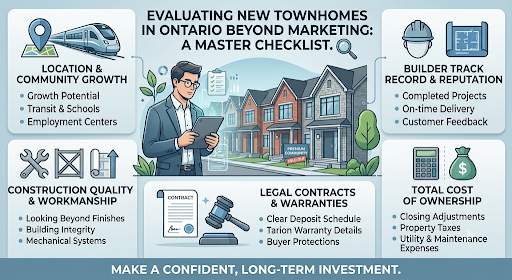
Purchasing new town house developments across Ontario is not nearly so easy as comparing floor plans or which builder has the best incentives. Profes
Purchasing new town house developments across Ontario is not nearly so easy as comparing floor plans or which builder has the best incentives. Professionally presented model homes and short-term offers can make a good first impression, but they don’t provide much information about the property’s performance, ownership expenses or potential resale value.
When you want to make an informed purchase, you will need to take a wider look. Many factors come into play when deciding if a townhome is a good investment for years.Location, construction, builder reputation, legal protections and planned townhome growth are among the many factors to consider when determining whether a townhome will be a sound investment for years to come. This guide describes the professional standards used by experienced buyers and industry professionals to review new townhomes in Ontario when going beyond marketing literature to make buying decisions.
Why Evaluating New Townhomes in Ontario Requires More Than Marketing Materials
The role of marketing in promoting new residential developments is crucial, but it must never be the basis for a buying decision. Builder promotions, model homes designed by builders and professional sales presentations are supposed to make the best of a project, rather than the full picture of what a prospective buyer will be getting. Model homes may have upscale features, custom finishes, and furnishings that are not necessarily the same as would be found with a standard home, and may even be a bit higher. Lovely aesthetics can mask important factors that impact on satisfaction over the long haul.
A comprehensive evaluation should consider questions such as:
- Does the surrounding community support long-term property appreciation?
- Has the builder consistently delivered projects on schedule?
- Are construction standards aligned with current industry expectations?
- Do ownership costs remain competitive over time?
Evaluate the Location Beyond Today’s Convenience
While location has always been a major concern when buying a real estate property, it is not enough to consider only the closest shopping centres or commute times when considering new townhomes in Ontario. Infrastructure investments, economic growth and municipal development plans will influence long-term value. Communities that are well served by transit, have expanding employment centres, have a quality school district, and have planned investments in roads, healthcare facilities, parks and recreation centres, commercial centers and other community amenities tend to have greater potential for sustained demand and for appreciating in resale value. All these factors combined give buyers an idea of whether the neighbourhood has long-term growth prospects or just short-term popularity.
Assess the Builder’s Reputation and Track Record
Every residential development is, to a large extent, the quality of its builder. When considering new townhomes in Ontario, buyers should also consider a builder’s history of completing projects on time, construction quality, and customer support after move-in. Past project performance, industry recognition, and feedback from homeowners will give you a good idea of a builder’s reputation and dedication to quality. A licensed expert builder is also more inclined to supply honest construction timelines, full documentation, and take homeowner concerns professionally. When purchasing a townhome from a reputable builder, buyers can feel more confident that their money is going toward a project where the builder has mastered their craft, and where they will not face any surprises. .
Look Beyond Finishes to Evaluate Construction Quality
A property may look a lot better with some premium finishes, but very little idea of the quality of the property’s construction. While considering a new townhome in Ontario, buyers need to keep in mind the quality of the work that goes into the back wall, because the quality of the structure, durability of materials and workmanship will have a more significant impact on the value of the home over the long-term than cosmetic changes.
Professionally, built townhome features quality materials and consistent construction standards. The overall structure, roofing, insulation, windows, plumbing, and mechanical systems all play a role in the house’s longevity, conserving energy, and maintenance needs. As good as the material is, it can fail to perform properly if it’s not installed properly, so it’s equally important that the workmanship and quality control are excellent.
Professionals typically assess several key aspects of construction quality, including:
- Structural framing and overall building integrity
- Roofing systems and effective water drainage
- Exterior cladding and building envelope performance
- Window and door installation quality
- Plumbing, electrical, and HVAC system installation
- Interior finishes and workmanship consistency
Review Contracts Warranties and Buyer Protections Carefully
- Before committing to a purchase agreement, carefully read through the agreement, and note the deposit schedule, when the house will be available to enter, when it will close, what upgrades will be installed, the cancellation options, and what the buyer and builder are obligated to do.
- Evaluate the warranty coverage by confirming what is protected, how long the coverage remains valid, and the procedures for reporting deficiencies or submitting warranty claims after possession.
- Assess the total closing costs, including legal fees, development charges, utility connection fees, land transfer taxes where applicable, and other administrative expenses that may affect the overall cost of ownership.
- Ensure the contract provides clear buyer protections, transparent builder obligations, realistic project timelines, and comprehensive documentation so you can make an informed purchasing decision with greater financial and legal confidence.
Understand the Full Cost of Ownership
When investing in new homes in Ontario, the purchase price is just part of the investment. Current costs include property taxes, maintenance costs, utility expenses, insurance, and long-term maintenance costs, while one-time expenses involve closing adjustments, development costs, legal fees, and utility connection fees. For developments offering shared amenities, maintenance costs may include common area upkeep, landscaping, and snow removal, and energy-efficient design can impact monthly utility costs. When viewed together, these costs give a more realistic picture of affordability and enable buyers to assess properties according to their financial worth, rather than just the purchase price.
Identify Risks Before Making a Final Decision
All real estate investments come with some risk. Buyers who have worked in this field will know these things early and assess whether they will impact ownership, financial results, and satisfaction once they become property owners.
Construction and Occupancy Risks
Construction timelines can change due to labour availability, material supply, regulatory approvals, or weather conditions. Delays may affect planned occupancy dates and create additional financial considerations for buyers coordinating existing housing arrangements. Large developments are often completed in multiple phases. Understanding how future construction may affect noise, traffic, and community access during the initial years of occupancy helps set realistic expectations. Reviewing projected completion schedules alongside the builder’s history of project delivery provides additional insight into potential construction delays and occupancy risks.
Financial and Contractual Risks
Financial obligations extend beyond the advertised purchase price. Deposit structures, closing adjustments, and escalation clauses can all influence the final cost of acquiring a property. Some agreements include provisions that allow adjustments under specific circumstances. Understanding these contract terms before signing helps buyers evaluate financial exposure and avoid unexpected obligations later in the process. Professional legal review provides valuable clarity regarding contractual language, financial commitments, and buyer responsibilities throughout the transaction.
Market and Community Risks
Residential markets continue to evolve based on economic conditions, housing supply, interest rates, and regional population growth. Evaluating these broader market influences helps buyers understand the long-term outlook for a particular community. Future supply is another important consideration. Significant volumes of new housing entering the same market within a short period may temporarily influence resale competition and pricing dynamics. Neighbourhood growth should also align with municipal infrastructure planning. Sustainable development supported by transportation, schools, healthcare, and commercial investment generally creates stronger long-term investment security than rapid expansion without supporting services.
Why Professional Guidance Matters Throughout the Buying Process
- Purchasing new townhomes in Ontario involves legal, financial, and market considerations that extend well beyond selecting a floor plan or builder promotion. Working with experienced professionals helps buyers evaluate every aspect of the purchase with greater confidence.
- Real estate professionals offer the expertise of the market by studying the available information on the various properties available, analyzing the growth in the neighbourhood, interpreting the information that is currently in the market, and understanding and recognizing opportunities or threats that may not be apparent during the sale.
- Real estate attorneys will go over the purchase agreement, helping you to understand your contractual obligations, any critical clauses, protections to be afforded to you, and ensuring that everything you’ll read is understood before any commitment is made.
- Mortgage brokers discuss loan choices, offer education on mortgage products, determine borrower capacity, and provide insight into the effects of interest rates, loan terms and conditions and lending standards on long-term affordability.
- Market analysis is a great tool for getting a feel for what has happened recently, how much housing inventory is coming to market, how infrastructure has been invested in the market, and the local economic activity of a property, which means that buyers can use it to analyze a property’s value beyond what is being provided by the marketing materials.
Conclusion
When it comes to selecting a new townhomes in Ontario, there is more to consider than gimmicks and builder promotions. Design, finishes and incentives can create a first impression yet only contribute a small component of a property’s value. A full evaluation takes into account the quality of the site, the builder’s track record, building standards, legal safeguards, overall ownership costs and the long-term trajectory of nearby community development. All these factors play a role in the property’s lifestyle and investment potential. Those who view the process from a long-term perspective are more likely to spot developments that have long-term appeal than those with more short-term thinking. With proper due diligence and professional guidance, they can make their buying decisions with clear, confident and financially secure understanding.
FAQs
How do I compare different new townhomes in Ontario fairly?
A good comparison doesn’t just focus on price, floor plans or all the promotions it offers. It is important for buyers to consider the builder’s reputation, the quality of the construction, the development of the neighbourhood, the builder’s guarantees on the work, the expected maintenance costs to the house, and the expected future infrastructure enhancements.
What should I look for when researching a home builder?
A builder’s history often provides the strongest indication of future performance. Review completed communities, project delivery timelines, customer satisfaction, warranty history, construction quality, and overall industry reputation.
Are builder promotions a good reason to choose a new townhome?
Builder incentives do make a property more affordable in the short term, but they shouldn’t be the main factor to consider when choosing to purchase a property. No matter how many free upgrades, lower prices, or lower deposits are offered, it cannot make up for the fact that the home is in the wrong neighbourhood, poorly built, has no safeguards in place, or the costs of owning the home are too high.
Why is future neighbourhood development important when buying a new townhome?
Planned investments in transportation, schools, healthcare facilities, parks, shopping centres, and employment hubs often influence both quality of life and future property values. Communities supported by well-planned infrastructure typically experience stronger buyer demand and greater long-term stability.
