
Retainers look simple, but anyone who has worn one knows the truth, they can get gross fast. A few days of neglect, and suddenly there is a weird smel
Retainers look simple, but anyone who has worn one knows the truth, they can get gross fast. A few days of neglect, and suddenly there is a weird smell, cloudy surface, or sticky buildup that makes you question everything. Knowing how to clean retainers properly is not just about hygiene; it is about protecting your teeth, your breath, and even your long-term oral health.
Retainers sit in your mouth for hours or even overnight, which means they collect bacteria, saliva, and plaque constantly. If not cleaned correctly, they can become a breeding ground for germs. And here is the part most people do not realize: putting a dirty retainer back into your mouth is like brushing your teeth with a dirty toothbrush. Not ideal at all.
The good news is that cleaning retainers is simple once you understand the right routine
Why Cleaning Retainers Is More Important Than People Think
Most people assume rinsing a retainer with water is enough. It is not. Retainers are exposed to bacteria all night long, especially during sleep when saliva flow decreases. That creates the perfect environment for plaque buildup.
If not cleaned properly, retainers can cause bad breath, gum irritation, and even reintroduce bacteria into your mouth after brushing. Over time, this can affect overall oral hygiene.
Another issue is odor. A neglected retainer often develops a sour or musty smell that does not go away with a simple rinse. That smell is bacterial buildup.
Cleaning retainers regularly is not just about appearance; it directly impacts oral health and comfort. A clean retainer feels better, smells better, and lasts longer.
Daily Routine For How To Clean Retainers Properly
The easiest way to keep retainers clean is to build a daily routine. It does not need to be complicated or time-consuming.
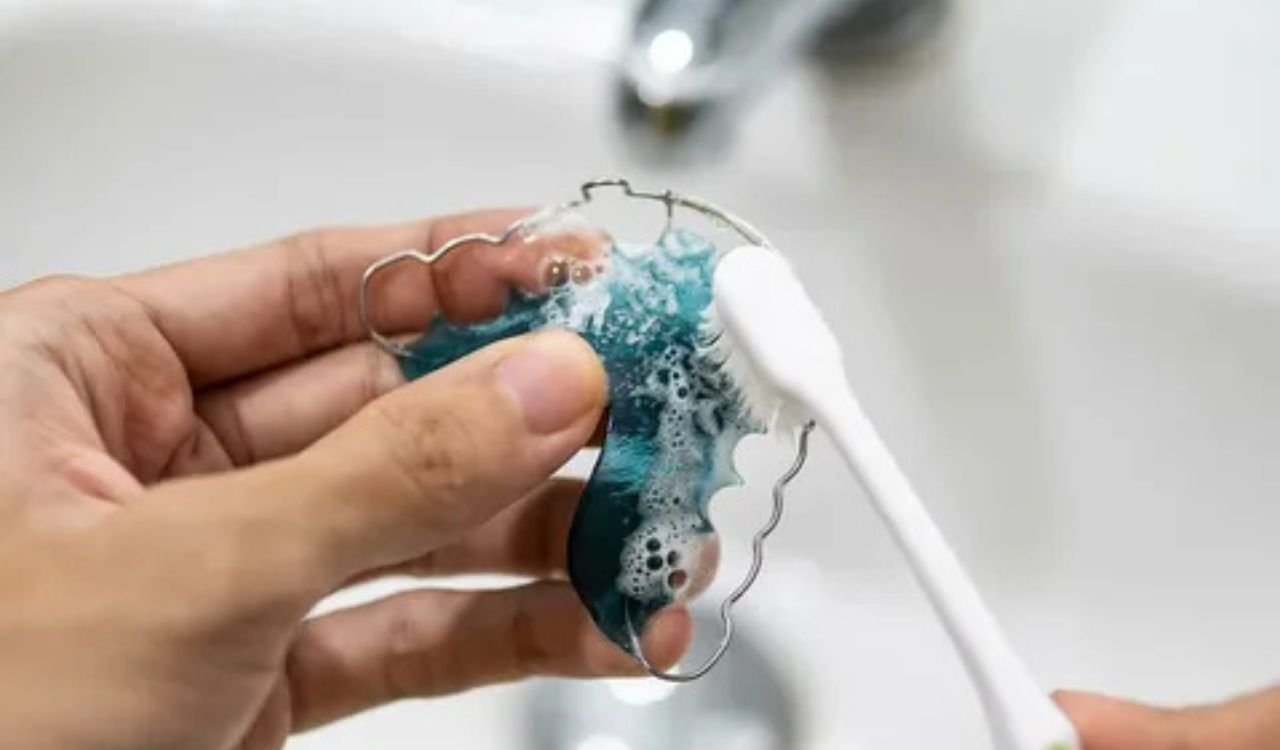
After removing your retainer, rinse it immediately with lukewarm water. This helps remove fresh saliva and prevents early buildup. Then gently brush it using a soft toothbrush. No toothpaste needed, because toothpaste can sometimes scratch the surface.
Once cleaned, store it in a dry, ventilated case. Avoid wrapping it in tissue because that leads to contamination or accidental damage.
At night, repeat the process before wearing it again. Consistency is key. A few minutes daily prevents heavy buildup that becomes harder to clean later.
This simple habit keeps retainers fresh and reduces long-term odor problems.
How To Clean Retainers At Home Safely
Many people search for how to clean retainers at home because professional cleaning is not always practical. The good news is that home cleaning works very well when done correctly.
One of the safest methods is using lukewarm water with gentle brushing. You can also use mild soap occasionally for deeper cleaning. Just make sure to rinse thoroughly afterward so no residue remains.
Another home method is soaking the retainer in a cleaning solution recommended by dentists. These are designed specifically for dental appliances and help remove bacteria without damaging the material.
What you should avoid is hot water. Heat can warp plastic retainers and ruin their fit permanently. Also, avoid harsh chemicals that are not intended for oral use.
Home cleaning is effective as long as it is gentle and consistent.
How To Clean Retainers With Baking Soda Safely
Baking soda is often used as a natural cleaning agent, and it can work well for retainers when used correctly. It helps neutralize odors and remove mild plaque buildup.
To use it safely, mix a small amount of baking soda with water to form a light paste. Gently brush the retainer with a soft toothbrush using this mixture. Do not scrub aggressively because that can scratch the surface.
After cleaning, rinse thoroughly under lukewarm water until no residue remains. This step is important because leftover baking soda can leave a gritty feeling in the mouth.
While baking soda is effective, it should not be used daily. Overuse can slowly wear down the retainer surface over time. It is best used occasionally as a deeper cleaning method.
How To Clean Retainers With Plaque Build-Up
Plaque on retainers usually looks like cloudy patches or feels slightly sticky. It forms when saliva minerals and bacteria accumulate over time.
To remove plaque, soaking is often more effective than brushing alone. A gentle dental cleaning solution or warm water soak helps loosen buildup.
After soaking, use a soft toothbrush to gently remove remaining residue. Focus on small areas where plaque tends to collect, especially edges and grooves.
If plaque buildup is heavy or hardened, it may require multiple cleaning cycles. However, avoid using sharp tools or scraping, as this can permanently damage the retainer surface.
Regular cleaning prevents plaque from becoming a serious problem in the first place.
Real Life Example Of A Dirty Retainer Problem
A university student once noticed a strange smell coming from her retainer, even though she brushed her teeth regularly. She assumed it was normal until she visited her dentist.
The dentist found heavy bacterial buildup on the retainer surface. The issue was not her oral hygiene, but improper cleaning habits. She was only rinsing it with water and not brushing it properly.
After switching to a proper cleaning routine with daily brushing and occasional soaking, the smell disappeared completely within a week.
This shows how something as small as a retainer can affect overall mouth freshness if ignored.
Mistakes People Make When Cleaning Retainers
One of the most common mistakes is using toothpaste. Toothpaste contains abrasive particles that can scratch retainers and make them cloudy over time.
Another mistake is using hot water. Many people think it helps clean better, but it can permanently change the shape of plastic retainers.
Skipping daily cleaning is also a big issue. Retainers that are not cleaned regularly develop buildup quickly, making them harder to restore later.
Lastly, storing retainers in closed, damp containers without cleaning them first can trap bacteria inside.
Avoiding these mistakes keeps retainers in good condition for longer.
How Often Should You Clean Retainers
Ideally, retainers should be cleaned every time they are removed. A quick rinse and light brushing daily is enough for routine maintenance.
A deeper cleaning can be done a few times per week, depending on usage and buildup.
Consistency is more important than intensity. A little cleaning every day is far more effective than occasional deep cleaning.
This routine helps maintain both hygiene and comfort.
Conclusion
Learning how to clean retainers is not complicated, but it is often overlooked. A retainer sits in your mouth for hours, which means it collects bacteria and buildup faster than most people realize.
With simple daily care, proper home cleaning methods, and occasional deep cleaning, retainers can stay fresh, odor-free, and long lasting.
The key is consistency. Once cleaning becomes a habit, it stops feeling like a chore and becomes part of your normal oral care routine.
FAQs
How do I clean retainers daily?
Rinse with lukewarm water and gently brush with a soft toothbrush
Can I use toothpaste on retainers?
No toothpaste can scratch and damage the surface
How often should retainers be cleaned?
They should be cleaned every time you remove them
What removes smell from retainers?
Proper brushing and occasional soaking helps remove odor
Can dirty retainers affect teeth?
Yes they can introduce bacteria and affect oral hygiene
