
Running an ecommerce business today is honestly more competitive than ever. Customers have countless choices just sitting there at their fingertips,
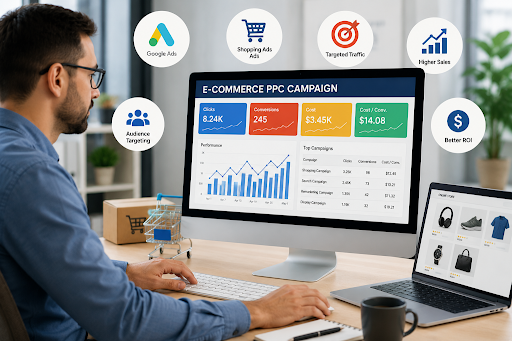
Running an ecommerce business today is honestly more competitive than ever. Customers have countless choices just sitting there at their fingertips, and a lot of brands are fighting for the same audience. Even if you’ve got great products and a clean online store, getting the right visitors can feel surprisingly hard, like you’re doing everything and still not landing where you want.
This is exactly where paid advertising starts to matter. Pay-per-click, or PPC, lets ecommerce brands show products and offers to people who are already looking for something similar. If it’s managed the right way, PPC can boost website traffic , drive sales, build stronger brand awareness and even help with long term business growth.
But here’s the thing, managing ecommerce PPC campaigns isn’t just “create an ad” and then set a budget. You really need good keyword research , the right audience targeting, product feed optimization, ongoing campaign management, accurate conversion tracking and constant performance reviews. Otherwise, it can turn into wasted spend pretty fast.
That’s why partnering with an experienced ecommerce PPC agency can be a big advantage. They can help you design and run paid advertising campaigns that actually perform, while also reducing those areas where money leaks out. Instead of juggling every tiny piece of PPC in-house , you can lean on specialists who get the odd, specific challenges of ecommerce marketing.
What Is Ecommerce PPC?
Ecommerce PPC is basically a paid digital marketing approach that helps online stores get their products in front of people , using platforms like Google Ads, Microsoft Advertising, and a bunch of other ad networks. Most of the time businesses pay when someone clicks on their ad, but depending on the campaign style, the billing can switch to other bidding ways, or it can lean into conversion based setups.
An ecommerce PPC campaign might include search ads , shopping ads, display campaigns, remarketing ads, video advertising, and performance oriented campaigns. Each kind of campaign can play a slightly different role, depending on what you sell, who you’re trying to reach, where customers are in the sales funnel, and the actual business objectives you care about.
Say someone is searching for a specific product, they might get shown a shopping advertisement with an image, a product title, a price, and store details. Then, another person who already stopped by your website may later see a remarketing ad , kind of nudging them back toward the products they checked out earlier.
A good PPC strategy basically ties these different ad moments together, so the whole customer path feels more seamless , and not like separate, random stops.
Reach Customers With Strong Purchase Intent
One of the biggest benefits of paid advertising for ecommerce businesses is that it helps you reach customers when they are actively searching for products,or something basically close to it.
If someone is looking for a specific product or solution,they might already be pretty close to making a purchase decision. When your ad shows up at the right time with a relevant product and a strong offer, there is a real chance to turn that search into an actual sale.
Professional ecommerce PPC services usually start by spotting high intent keywords and audiences that are more likely to convert. Instead of throwing ads at everyone, campaigns can be arranged to connect with users based on search behavior, interests, demographics, location, and even their previous interactions with your brand.
This kind of focused approach can help ecommerce businesses make better use of their advertising budget,without wasting money on the wrong people.
Increase Qualified Website Traffic
Traffic matters, but honestly not every kind of traffic is the same, like some are just passing by… and some actually care. For ecommerce brands the visitors that count are the ones with a real interest in what you sell.
Paid ads can bring in that more relevant crowd to your online store. If targeting is done right, your ads can show up when people search for products, weigh different options, or try to solve a problem that matches your offering.
An experienced ecommerce PPC company can dig into keywords and actual search terms, so they can spot new chances to attract meaningful traffic. And then the team can review campaign data too, checking which keywords and audiences are producing the best outcomes.
Over time, this kind of evidence should help you sharpen performance, and also lower what you spend on searches that don’t really support your business goals.
Improve Product Visibility With Shopping Campaigns
Product-based advertising is weirdly valuable for ecommerce businesses, because shoppers can usually spot key product details before they even click an ad, which sort of makes the whole experience more direct.
Shopping campaigns are able to show product images, prices, product names, and other relevant information straight inside search results. This visual layout helps people get a feel for what you’re offering and it can pull in customers who are actively weighing options, not just browsing.
A skilled PPC squad can help, optimize your product feed, and in the process organize campaigns, enhance product titles and descriptions, and spot little chances to boost your overall visibility.
Product feed quality matters a lot. When the data is accurate and richly detailed, ad platforms can better interpret your offerings, then connect them with matching searches, rather than guessing.
Build a Data-Driven Advertising Strategy
Successful PPC efforts basically hinge on data. Each click, impression, conversion and then purchase can hand over useful clues about how customers actually behave, and what they respond to.
A professional ppc ecommerce agency can sift through that information to see which campaign parts run strong, and which little areas need tweaking. You know, the stuff that usually feels “off” but nobody can quite pinpoint.
For instance, an agency might notice that one product category delivers a solid return on ad spend, while another ends up eating a big chunk of the budget but still doesn’t bring enough sales. Then, using that insight, the team can tune budgets, bids, audience targeting, and even rework campaign structures, so everything fits better.
Overall, this kind of evidence led method helps companies make marketing choices off real results rather than guesswork or assumptions.
Optimize Your Advertising Budget
One of the biggest concerns for ecommerce businesses is wasted ad spend. Like, when campaigns are kinda poorly structured or they’re targeted wrong, it’s easy for a business to spend money on clicks that just never turn into sales, even if they “look” promising at first.
A professional agency can help lower that waste, by keeping an eye on search terms, adding negative keywords, adjusting bids, tightening the targeting, and shifting budgets toward what’s working better. Basically , more control, less guesswork.
And the goal isn’t always to spend more money. The real goal is to use your advertising budget in a more effective way, even if the spend stays the same.
With a well-managed campaign you can often figure out which products, which audiences, which locations, which devices, and even what times of day bring the strongest results. Then those findings can steer your next advertising decisions, so you’re not repeating the same mistakes.
Improve Conversion Rates
Getting people to your site is only the first bit of ecommerce marketing, after all. You also have to turn those visitors into actual customers, not just clicks.
A solid PPC team can look at the whole customer journey , from that initial ad moment all the way to the final purchase. If users tap your ads but do not buy, that usually hints at something off somewhere—maybe the landing pages are not doing their job, or the product descriptions feel too thin , pricing looks wrong, the checkout process is a hassle, or the overall user experience is just not smooth enough.
In other words, a PPC specialist can spot likely pressure points, then collaborate with your team to build a sharper conversion plan.
For instance, an ad that promotes one specific product should ideally send people straight to the relevant product page, not to some generic homepage. That way the experience feels more seamless, and there are fewer extra steps sitting between the ad and the purchase.
Use Remarketing to Reconnect With Potential Customers
Not every visitor purchases on their first visit, it happens sometimes they just look around, compare prices , or just bounce from the website before completing the purchase.
Remarketing helps ecommerce brands reconnect with these potential customers. For instance, someone who checked a product but didn’t buy might later see an advertisement showing that exact item, or a related deal that fits better.
Remarketing also keeps your brand in sight during the whole decision journey, not just at the beginning. It can be used for highlighting special offers, introducing fresh arrivals, seasonal events, or even complementary products.
A skilled PPC ecommerce agency can build remarketing campaigns based on how people act on the site, and what pages they engage with. That way it’s easier to send more relevant advertising messages to different audience groups, instead of the same generic content for everyone.
Scale Successful Campaigns
Once a campaign starts bringing consistent results, the next hard part is scaling it, without ending up with lower profitability and you know that feeling.
Most of the time simply upping the budget is not the best fix. Real scaling needs some careful observation of how the campaign is performing, what the product margins look like, the customer acquisition costs and even what inventory is actually available.
A solid PPC team can spot which campaigns are truly profitable and then add more investment bit by bit, all the while keeping an eye on performance trends. In the same flow, they can also test new keyword sets, refine audience segments, push different products, and try other advertising channels that you might not have considered yet.
That kind of approach, even if it sounds a bit methodical, helps ecommerce brands expand their paid ads without doing random changes that could quietly mess things up for performance.
Access Specialized PPC Expertise
Managing PPC campaigns takes specialized know how, and honestly it can be a bit of a moving target. Ad platforms are always rolling out new features, different campaign types, fresh bidding options, plus more detailed targeting abilities.
But staying on top of all that gets rough for ecommerce business owners who are already juggling a lot, like products, customer support, inventory, shipping logistics, and a dozen other responsibilities.
That’s where working with an ecommerce PPC agency really helps. You get access to professionals who focus on paid advertising, day after day. They can handle campaign setup, optimization, reporting, ongoing testing, and performance analysis, so your own team can stay on the rest of the operation.
In the end, this saves time and helps you dodge some common PPC blunders, because the whole system tends to drift if nobody is watching it closely, all the time.
Get Better Reporting and Performance Insights
A professional ecommerce PPC company should be giving clear reporting, that kind of explains how your campaigns are doing in real terms, not just vibes.
Reports can include info like impressions, clicks, click through rates, conversions, cost per acquisition, return on ad spend and also the revenue that’s generated through advertising.
But getting one of those huge spreadsheet full of numbers, yeah that alone isn’t really enough. A solid agency should be interpreting the data for you, and also outlining what actions you should take next , based on what they found.
For example, if your cost per purchase starts going up, your PPC team should look into it, and don’t shrug it off. The cause could be higher competition, shifts in customer behavior, reduced conversion rates, or maybe a targeting issue within the campaign itself.
Consistent review sessions help businesses make smarter decisions, and improve their advertising blueprint little by little, over time.
Support Omnichannel Ecommerce Growth
Customers don’t usually take some straight easy route from seeing an ad to actually buying something. They can bump into your brand through search, or land on your site, scroll through your social media profiles, weigh up products, then come back later, to finish the purchase.
PPC can sit together with SEO, social media marketing, email marketing, and content marketing so it forms a more robust overall digital plan, not just one channel doing everything.
For instance, paid search gives you quick exposure while SEO builds that long run organic traffic. Remarketing helps you reconnect with earlier visitors, and email marketing can nudge existing customers into doing another buy, kind of a repeat cycle.
Put together, these pieces can open up multiple moments for customers to engage with your brand.
Why Choose a Professional PPC Agency for Ecommerce?
Trying to handle ecommerce advertising in-house might feel like a smart, cost-saving move, but it can get messy pretty fast as your business grows. Once you have a big catalog, plus more campaigns , and several audiences floating around, not to mention ad platforms that keep shifting, managing everything starts to feel like a juggling act with different rules every week.
That’s where professional ecommerce PPC services usually help, because they bring a more organized , structured way of running paid campaigns. These specialists can take care of campaign structure, keyword research, product feed optimization, audience targeting, conversion tracking, continuous testing and the ongoing optimization that keeps performance from slipping.
Still, the “right” agency isn’t just about having skills on paper. You also want them to recognize that every ecommerce business is different. A strategy that performs for a fashion store might flop for an electronics retailer, or even a subscription-based ecommerce brand where customer behavior is a whole different story.
And if you’re operating in a specialized industry , it can be worth picking an agency with actual experience in that same market, not just generic ecommerce know-how. For example, brands working in competitive adult industries may prefer partnering with an Adult SEO Company that understands the specific digital marketing needs and the search challenges that come with that segment.
How to Choose the Right Ecommerce PPC Partner
Picking the right PPC partner can really sway how well your campaign runs, like a lot. Before you hire an agency, try to gauge things like how long they’ve worked with ecommerce brands , how well they actually understand paid advertising platforms, what their reporting looks like , how they communicate day to day, and how they optimize campaigns once things start rolling.
Also ask, very directly, how they measure success. Do they track outcomes that matter to the business—sales, revenue, profit, ROAS, and customer acquisition costs— or do they just talk about clicks, impressions, and “engagement” as if that’s the whole story.
Transparency is a big deal too. A solid agency should plainly show where your ad budget is landing, and share usable, understandable insights about campaign performance , not just vague dashboards that feel good.
Try to avoid teams that promise wildly optimistic results, or that say they can guarantee sales without taking time to understand your products, your market , your pricing, and the competitive landscape. PPC performance depends on a bunch of moving factors, and any professional partner should be setting realistic expectations from the start.
Final Thoughts
Paid advertising can be a pretty potent growth tool for ecommerce businesses,as long as the campaigns get planned ,managed , and tuned the right way. It can help with product visibility, sure, but also bringing in shoppers with real intent. And once you’re past that, PPC can support conversions,then scaling what’s already working. So yeah, it can fit a lot of stages in the customer journey, not just one.
Partnering with a professional ecommerce PPC company can also mean you get access to specialized know-how, more advanced campaign management, real data analysis ,and the kind of ongoing optimization most teams struggle to keep up with. Instead of just guessing where to sink your ad budget, you can look at performance data and make more sensible calls.
Whether you’re rolling out a fresh online store,or you’re trying to grow an established ecommerce brand, paying for professional PPC management can help you reach more potential customers. Plus it can open up new paths for growth that you might not see otherwise.
Really, the main thing is selecting a dependable ecommerce PPC agency that actually understands your business goals, and who keeps their focus on sustainable results that can be measured. With the right approach, paid advertising can turn into a key part of your ecommerce growth plan, and help your online business stand stronger in a digital marketplace that feels more crowded every year.
