
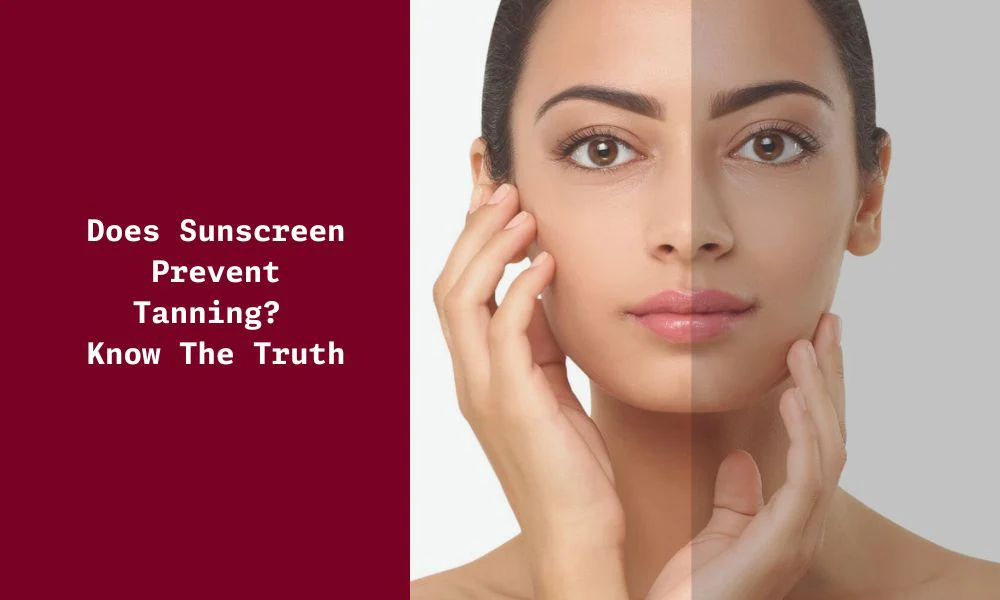
If you've ever spent a sunny afternoon at the beach wearing sunscreen and still noticed your skin getting a little darker, you're definitely not alon
If you’ve ever spent a sunny afternoon at the beach wearing sunscreen and still noticed your skin getting a little darker, you’re definitely not alone.
It leaves many people asking the same question: Does sunscreen prevent tanning, or is it just protecting me from sunburn?
The short answer is that sunscreen significantly reduces and slows tanning, but it doesn’t prevent it entirely. No sunscreen can block 100% of the sun’s ultraviolet (UV) rays. Even high-SPF products allow a small amount of UVA radiation to reach your skin, and those rays are largely responsible for triggering melanin production, the pigment that causes your skin to tan.
Understanding how sunscreen works can help you set realistic expectations. It’s designed to reduce UV damage and lower your risk of sunburn, premature aging, and skin cancer—not to create an invisible shield against every ray of sunlight.
Let’s break down why tanning still happens, even when you’re doing everything right.
How Does Sunscreen Actually Work?
Many people think sunscreen acts like a solid barrier that completely blocks sunlight. In reality, it’s a bit more complicated.
Sunscreen contains active ingredients that either absorb, scatter, or reflect ultraviolet radiation before it can damage your skin. These ingredients help reduce the amount of UV energy that reaches skin cells, minimizing sunburn and long-term damage.
Two main types of UV rays matter when discussing sun protection:
- UVA rays penetrate deeper into the skin and are mainly responsible for tanning, premature aging, and long-term skin damage.
- UVB rays primarily affect the skin’s surface and are the leading cause of sunburn.
A broad-spectrum sunscreen protects against both UVA and UVB rays, which is why dermatologists recommend choosing one whenever you spend time outdoors.
Even the best sunscreen doesn’t create perfect protection. A small percentage of UV rays still reaches your skin, especially if sunscreen isn’t applied generously or reapplied throughout the day.
Why You Can Still Tan While Wearing Sunscreen
This is probably the biggest surprise for many people.
You apply SPF 50, spend the afternoon outside, avoid getting sunburned—and yet your skin develops a noticeable tan.
How is that possible?
The answer lies in melanin.
Your body naturally produces melanin as a defense mechanism whenever it detects UV exposure. Melanin helps absorb and disperse some of the sun’s radiation, reducing damage to skin cells. A tan is actually your skin responding to ultraviolet exposure by producing more pigment.
Since no sunscreen blocks every single UVA ray, some UV radiation continues reaching your skin. The amount is much smaller than if you weren’t wearing sunscreen, but it can still be enough to stimulate melanin production over time.
That’s why sunscreen usually delays tanning instead of completely preventing it.
If you’re spending several hours outdoors, repeated exposure adds up, even with diligent sunscreen use.
Does a Higher SPF Stop Tanning Completely?
It’s tempting to assume that using SPF 100 means tanning is impossible.
Unfortunately, that’s not how SPF works.
SPF, or Sun Protection Factor, mainly measures protection against UVB rays, which cause sunburn. While higher SPF products do provide increased protection, the difference isn’t as dramatic as many people expect.
For example:
- SPF 15 filters most UVB rays.
- SPF 30 blocks even more.
- SPF 50 offers slightly greater protection.
- SPF 100 increases protection further but still doesn’t block all ultraviolet radiation.
Even with very high SPF, a small amount of UV radiation still reaches your skin. Over several hours—or several days—that exposure may gradually lead to tanning.
More importantly, higher SPF doesn’t mean you can stay in the sun indefinitely. Sweating, swimming, rubbing your skin with towels, and simply spending time outdoors all reduce the effectiveness of sunscreen unless it’s reapplied regularly.
The best sunscreen is the one you’ll actually use consistently and correctly.
Common Mistakes That Make Sunscreen Less Effective
Sometimes people blame sunscreen for tanning when the real issue is how it’s being used.
One of the most common mistakes is simply not applying enough.
Most adults need approximately one ounce, about the amount that fits in a shot glass—to cover their entire body. In reality, many people use less than half that amount, significantly reducing the SPF protection listed on the bottle.
Other common mistakes include:
- Forgetting to reapply every two hours
- Skipping sunscreen after swimming or heavy sweating
- Missing easy-to-forget areas like ears, neck, feet, hands, and scalp
- Applying sunscreen only after reaching the beach instead of 15–30 minutes beforehand
- Using expired sunscreen
Even small gaps in application allow more UV rays to reach the skin.
Building good sunscreen habits is often just as important as choosing a high-SPF product in the first place.
How to Reduce Tanning Even More While Enjoying the Outdoors
If your goal is to keep your natural skin tone while spending time outside, sunscreen should be your first line of defense, but it shouldn’t be your only one.
Think of sunscreen as one layer of protection rather than a complete solution.
Simple habits can dramatically reduce UV exposure throughout the day. For example, wearing a wide-brimmed hat helps shield your face, ears, and neck, while UV-protective sunglasses protect your eyes and the delicate skin around them. Lightweight, long-sleeved clothing made with UPF (Ultraviolet Protection Factor) fabric offers another effective barrier against the sun.
It’s also worth paying attention to the time of day. UV radiation is typically strongest between 10 a.m. and 4 p.m., so limiting direct sun exposure during those hours can help reduce tanning and lower the risk of sun damage.
Whenever possible, seek shade under umbrellas, trees, or covered areas. Combining these protective habits with regular sunscreen use gives your skin the best chance of staying healthy while minimizing unwanted tanning.
Choosing the Right SPF for Your Skin
Standing in front of a shelf full of sunscreen can feel surprisingly overwhelming. SPF 15, SPF 30, SPF 50, SPF 70, does choosing the highest number automatically mean better protection?
Not necessarily.
For everyday activities like walking, commuting, or running errands, many dermatologists recommend using a broad-spectrum sunscreen with at least SPF 30. It provides strong protection against UVB rays while remaining comfortable enough for daily wear.
If you’re planning to spend extended periods outdoors, swimming, hiking, or visiting the beach, SPF 50 combined with frequent reapplication is often a better choice.
No matter which SPF you choose, look for features such as:
- Broad-spectrum protection against UVA and UVB rays
- Water-resistant formulas if you’ll be sweating or swimming
- A texture that suits your skin type, whether lotion, cream, gel, or mineral sunscreen
Remember, the best sunscreen isn’t simply the one with the highest SPF—it’s the one you’ll apply generously and reapply consistently.
Does Sunscreen Affect Vitamin D Production?
A common concern is whether sunscreen blocks your body’s ability to produce vitamin D.
Theoretically, sunscreen can reduce the amount of UVB radiation that reaches your skin, which may lower vitamin D production. However, in real life, most people don’t apply sunscreen perfectly or cover every inch of exposed skin.
As a result, small amounts of UV radiation often still reach the skin, allowing some vitamin D synthesis to occur.
For many people, vitamin D also comes from food sources such as:
- Fatty fish
- Egg yolks
- Fortified milk
- Fortified cereals
- Dietary supplements, when recommended by a healthcare professional
If you’re concerned about your vitamin D levels, it’s better to discuss testing or supplementation with your healthcare provider than to intentionally skip sunscreen. Protecting your skin from excessive UV exposure remains one of the most effective ways to reduce the long-term risk of premature aging and skin cancer.
Myths vs. Facts About Sunscreen and Tanning
Sun protection is surrounded by misconceptions, and believing them can lead to unhealthy habits.
Myth: If I’m wearing sunscreen, I can’t tan.
Fact: Sunscreen greatly reduces tanning, but no product blocks 100% of UV rays.
Myth: A base tan protects my skin.
Fact: A tan is a sign that your skin has already been exposed to UV damage. It offers only minimal protection.
Myth: Darker skin tones don’t need sunscreen.
Fact: While darker skin contains more melanin, it can still experience sun damage, premature aging, and skin cancer.
Myth: I only need sunscreen on sunny days.
Fact: UVA rays can penetrate clouds, meaning your skin is still exposed even when it’s overcast.
Understanding these facts helps you make smarter decisions whenever you spend time outdoors.
Conclusion
So, does sunscreen prevent tanning? Not completely—but it does make a significant difference.
A quality broad-spectrum sunscreen helps reduce and slow the tanning process by limiting the amount of UVA and UVB radiation that reaches your skin. However, because no sunscreen blocks every UV ray, a small amount of melanin production can still occur, especially during extended periods in the sun.
The most effective approach combines sunscreen with other protective measures such as seeking shade, wearing sun-protective clothing, using hats and sunglasses, and avoiding peak sunlight hours whenever possible.
Rather than viewing sunscreen as a way to eliminate tanning entirely, think of it as an essential tool for protecting your skin’s long-term health. Consistent sun protection today can help reduce premature aging, lower the risk of skin cancer, and keep your skin looking healthier for years to come.
Frequently Asked Questions
1. Can you still get a tan with SPF 50?
Yes. SPF 50 significantly reduces UV exposure, but it doesn’t block all UVA rays. With enough time in the sun, some tanning can still occur.
2. Is tanning while wearing sunscreen safer?
Using sunscreen helps reduce UV damage compared to tanning without protection. However, any tan indicates that your skin has been exposed to ultraviolet radiation.
3. Should I wear sunscreen if I don’t burn easily?
Absolutely. Even if your skin rarely burns, UVA and UVB rays can still contribute to premature aging and increase the risk of skin cancer.
4. How often should I reapply sunscreen?
Reapply sunscreen at least every two hours and immediately after swimming, sweating heavily, or towel drying, even if the product is labeled water-resistant.
5. Does sunscreen completely block UVA rays?
No. Broad-spectrum sunscreen greatly reduces UVA exposure, but no sunscreen can completely block every UVA ray. That’s why additional sun-protection measures are still recommended.
