
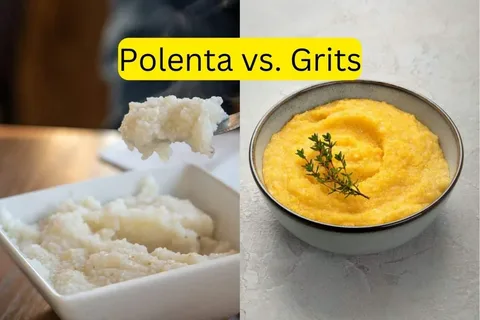
You're in front of a bin of grits just as you're in front of a package labeled polenta. Both of these resemble ground corn. They'll both bake in a de
You’re in front of a bin of grits just as you’re in front of a package labeled polenta. Both of these resemble ground corn. They’ll both bake in a delicious, warm, creamy bowl. One may be white, the other yellow, but no one could say that either will necessarily be the case. So what then makes them different?
The hominy grits vs polenta dilemma can be confusing due to the allegorical definitions of the traditional food labels. Some varieties of grits are simply ordinary ground corn, and true hominy grits originate from a special, alkaline-treated corn. Polenta is, however, another word for ground corn and also the Italian dish that is made with it.
Aesthetically, the variations might appear negligible. However, when processing, flavors, grind size, and cultural tradition are considered, these two comfort foods take on distinct personalities. While they can sometimes be used interchangeably in recipes, they are not always tasty and can’t always be the same consistency.
Are Hominy Grits and Polenta the Same Thing?
Even though hominy grits and polenta are members of the same general family of ground corn porridges, they are not considered the same.
The traditional hominy grits consist of dried corn treated with an alkaline solution (process of “nixtamalization”). Polenta is typically prepared from dried corn, which has not been processed in that manner. It has a close relation with the cooking of northern Italy.
The good news is there’s a caveat: not all pasta labeled “grits” is hominy pasta. Lots of products today are somewhat coarsely ground dried corn and really not very different from cornmeal or packaged polenta.
The one thing that you can almost always do with either product is create a nice cream side dish. The finished product can still vary in aroma, sweetness, smoothness, and firmness between the different types of corn used and how the corn was milled.
What are Hominy Grits?
Hominy starts as dried field corn. The kernels are soaked and cooked in an alkali solution, which mostly uses food-grade lime or other appropriate alkali material. This process, called nixtamalization, softens the outer hull and alters the structure, aroma, taste, and nutritional value of the corn. Corn thus treated may be dried and milled to hominy grits.
The outcome is more earthy and complex flavored than plain ground corn. Some say it has a nut-like taste, others taste a newly made corn tortilla.
Hominy grits are awesome when cooked slowly. They go well with butter or cheese or with butter, cheese, gravy, seafood, eggs, or slow-cooked meat.
Not all grit packages have nixtamalized corn. When that’s the common flavor you’re seeking, scan the list of ingredients for the presence of “hominy” or “lime” or another alkaline ingredient.
What Is Polenta?
Polenta is a food ingredient and dish that can be eaten in itself. The word can be found on a package of ground corn in an American grocery store or on a refrigerated tube of fully cooked polenta. However, in Italian cooking, the term “polenta” is more generally used to describe the finished porridge.
Today, polenta is typically made by cooking ground dried corn slowly and gradually in water, broth, milk,k or an equal mix of the above fluids. Yellow corn is popular; ar, however, “polenta” isn’t just yellow. There’s also a white polenta and regional varieties of polenta using other types of grains or corn.
Freshly cooked polenta can be enjoyed as loose, creamy polenta, under mushrooms, roasted vegetables, sausage, ragù, or braised meat. Also spreads on a pan and cools. When set, it can be chopped up and grilled, baked, or fried.
The grind will greatly affect its texture. The coarser products retain the pleasant grain quality, and the finer will be softer and more uniform.
Key differences between hominy grits and polenta.
Processing is the most obvious. The grits that are made from nixtamalized corn are the true hominy grits, while the corn that is used for polenta is usually untreated and does not undergo the alkaline process. This difference in processing affects the flavor, aroma, texture, re and nutritional availability.
Cultural identity is also a factor. The grits are very much a part of Southern US cuisine, Lowcountry cuisine, and Indigenous corn practices dating back much further. This acquired popularity and became a staple in the northern regions of Italy, where it is usually accompanied by a variety of other foods, such as sauces, cheese, vegetables, and meat.
Many articles say that the size of the grinding particles is more reliable, but that’s not the case. Polenta is coarse, and grits are fine, but mills make both types of products in a number of textures. The same issue with colour is applicable. Grits can be white or yellow, and polenta isn’t necessarily golden yellow.
That’s why you have to not only look at what the product looks like, but also understand it. Ingredients, process, and grind are more accurate answers.
What’s your Taste and Texture opinion regarding yours and theirs?
Set out two bowls side by side, one filled with hominy grits and the other with polenta, and these two ingredients might be barely distinguishable. The difference is apparent after a few handfuls.
The traditional hominy grits are usually characterized by the mellow, earthy flavor they have and just a little bit of nutty flavor thanks to the nixtamalization process. Can be extremely smooth if very slowly cooked in adequate water. Cheese grits work well on that creamy base – just add butter and cheese.
Polenta tends to have a more true corn taste. It could have a slightly sweet or toasty flavor, or might be slightly grassy per variety. Particularly coarse polenta will still have a bit of bite, and the grains will be more prominent.
However, this can get mixed up when it comes to the cooking process. Either dish may be silky or coarse, loose or firm. The consistency depends on the quantity of liquid, the temperature of cooking, the way it is stirred, and how long it is cooked.
The Perfectly Cooked Grits and Polenta
Both come from a gradual cooking of ground corn in liquid, but the instructions on the package will be the first step. Rough ground or pulled through stone ground product will take 30 to 60 minutes; quick or instant grind will be quicker.
When using water, stock, or milk, bring to a gentle simmer, then gradually whisk in the grain. Don’t dump too much, or it makes the pecs flow lumps. When the mixture starts to thicken, reduce the heat a bit and stir every so often to prevent burning.
Grits are typically topped with butter, cheddar cheese, cream, black pepper, and/or hot sauce. They can be included in breakfast or with eggs and can even be added underneath shrimp and gravy.
Polenta is typically filled with butter, parmesan cheese, mushrooms, ragù, semolina, tomato, sausage, or braised beef. Leftovers can be refrigerated and cut up. The uses of grits are almost as limitless, and they can be treated just as much as grit cakes.
Is it possible to substitute Grits for Polenta?
Grits and polenta can be interchanged the majority of the time. It pairs best in creamy bowls, cheesy side dishes, casseroles, and under vegetables, seafood, and slow-cooked meat.
The secret is not to assume that both products take the same amount of liquid in the same amount of time. The liquidity of a fine-groundproduct can gel rapidly, whereas a coarse stone-ground product may require more liquid and cooking time. Copy the recipe according to the directions on the replacement package and not as printed out.
When a recipe calls for the cooked mixture to solidify into hard slices, it’s less predictable to substitute. A fine product in particular may continue to be softer than desired. The instant grits can also act differently from what is traditional polenta.
Substitute by weight, if possible, and add liquid slowly. A thick pot will easily loosen with some warm stock (or water). A pot of water may require a lot more patience to repair.
Which is Healthier?
Just because a dish is fish or vegetarian doesn’t necessarily make it healthier. It depends on the product and what you put into the product.
The structure of corn is altered, and the availability of some nutrients may be enhanced through nixtamalization. It is also a source of calcium, where lime may be added during processing. But the nutritive value of a final product is dependent upon whether it is whole grain, degerminated, enriched, or highly refined.
Look for fiber, sodium, iron, calcium, and serving size on the food label. Take the entire recipe into account as well. The difference between the plain grits that are cooked in water and the creamy ones that have bacon, cream, cheese, and salted butter is quite different. The same holds for polenta with rich sauce and Parmesan.
Corn appears to be gluten-free, but can become cross-contaminated during the production process. If you have celiac disease or are severely sensitive to gluten, however, it is best to select a product that states it is gluten-free, instead of just the ingredient.
Buying at the store (How to choose the best product)
For a minute, forget about the hype on the front, and flip over the bag.
Traditional hominy grits should be those containing the words “nixtamalized corn” or “alkaline processing agent. Guidance in the recent culinary document also suggests the search for ingredients like calcium hydroxide, potassium hydroxide, lime, or “cal” when determining whether a grits product actually was prepared from hominy.
Next, check the grind. The smaller the grit, the faster it will cook, and the smoother the texture will be. Coarse grits or course grounded grits typically leave a bit more grit and character and will take a longer time. This is the same with polenta.
Do not expect “instant” and “traditional” products to yield the same results. Conveniences such as instant varieties are available, but typically are less textured and less corn-flavored.
Select a product with a recent milling date, transparent sourcing, and clear instructions for a bowl that is the most flavorful for the time you have available.
Conclusion
There’s really no need for a dramatic winner in the hominy grits vs polenta showdown. Either will result in a hearty, satisfying soup, and both have a place in the pantry.
For a smoother texture with an earthy, tortilla-like flavor, opt for true hominy grits. If you’re looking for a hands-on corn flavor or a meal that will turn to firm “slices” for grilling or frying, use polenta.
Most importantly, read the pack. Colour won’t tell you what you’re buying, and the product name may not tell you the whole story. However, after familiarizing yourself with the processing method, the grind size, and the time it takes to cook them, it is easy to select between the two options—and it will be fun as well.
Frequently Asked Questions
Are all grits made from hominy?
No. Some traditional grits are made from nixtamalized hominy, while many modern products are simply made from ground dried corn. Check the ingredient list if you specifically want hominy grits.
Can I use grits instead of polenta?
Yes. Grits can replace polenta in most creamy side dishes and savory bowls. Adjust the liquid and cooking time according to the grind and package instructions.
Is polenta always made from yellow corn?
No. Yellow polenta is common, particularly in US supermarkets, but white and other regional varieties are also available. Color does not provide a strict definition.
Which is creamier, grits or polenta?
Grits are often smoother, while coarse polenta can be more toothsome. However, grind size, liquid ratio, cooking time, and stirring technique influence texture more than the product name alone.
Are hominy grits the same as cornmeal?
Not exactly. Hominy grits traditionally come from nixtamalized corn. Cornmeal is a broader term for dried ground corn and is commonly used for baking, breading, cornbread, and other recipes.
