
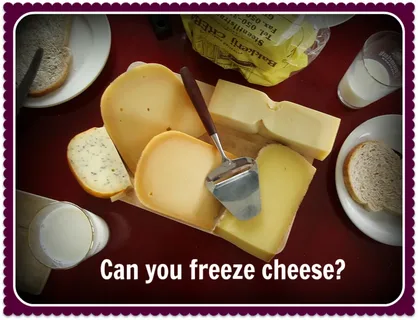
There's that one cheese in the back of the fridge. You purchased it for a recipe, but used half of it and now the other half is almost at the end of
There’s that one cheese in the back of the fridge. You purchased it for a recipe, but used half of it and now the other half is almost at the end of its shelf life. While discarding it seems wasteful, eating grilled cheese sandwiches for three straight days isn’t exactly appetizing either!
So, is it possible or not to freeze cheese before it expires? Most varieties of cheese freeze well! The real issue is if you’ll like how it feels after thawing.
Freezing is especially effective if the cheese is subsequently grated, melted or used in a cooked application. It’s less successful if you are looking for slices to serve on a cheeseboard or a creamy spread for crackers. With the knowledge of what freeze easily—and how to package them properly—you can save money without losing dinner!
Can You Freeze Cheese Without Ruining It?
Yes, cheese can be frozen, but be prepared to find some differences in consistency. Cheese is a fine textured arrangement of water, fat, protein and salt. If its moisture freezes then the ice crystals develop in the structure. As the cheese warms up, those crystals will melt, and tiny openings will result.
This can lead to a cheese that feels a bit drier, grainier or crumbly after freezing, rather than before. Generally, flavor will hold up better than the texture, as long as the cheese is wrapped properly and consumed within a reasonable time.
It’s why frozen cheese is typically the best choice for cooking. Some people might think that a bit crumbly cheddar doesn’t make a tasty cracker, but it would be easier to tell if it didn’t melt into macaroni, an omelet or a casserole.
Why Does Frozen Cheese Become Crumbly or Mealy?
Imagine water bottle expands inside the refrigerator. Much the same thing occurs with the water inside cheese, but on a much smaller scale. The water changes to ice and crystals exert pressure on the protein structure of the cheese.
The water and fat may not return to the honeycomb pattern after the cheese has been thawed. Moisture levels can split, the protein matrix can get weaker and the cheese may crumble and/or break. Larger ice crystals are likely formed during slower freezing times, and are likely to cause more apparent damage.
Humidity is also a factor. The more water content in a very soft cheese, the more extensive the changes to the structure of the cheese will be. The tougher the cheese, the less water it has and the better it will stay in its form.
The cheese may be safe even if it is frozen. It just makes your meal more different. I think this is a useful compromise in the sense that with otherwise good food being discarded, it’s a helpful adjustment to make.
Which Cheeses Freeze Best?
Firm, low moisture cheeses make good freezer cheese. May be a bit more brittle, but flavor is usable and melting is good.
Good options include:
- Cheddar
- Low-moisture mozzarella
- Monterey Jack
- Colby
- Swiss
- Gouda
- Provolone
- Edam
- Parmesan
- Pecorino Romano
One day old, or moderately aged cheeses may work better than very mature cheeses. For instance, an aged cheddar has a naturally crumbly texture, and it can be further enhanced by freezing.
Shredded cheese is very convenient as you can remove just what is required. Frozen grated mozzarella simply can be put onto a pizza, and cheddar can be sprinkled on a baked potato, or added to a sauce.
Fresh cheese increases the flavor for snacking and cheeseboards. Frozen hard cheese is typically excellent for melting and cooking.
Which Cheeses Should You Avoid Freezing?
Generally high-moisture and fresh cheeses do not freeze well. After thawing, they tend to turn watery, grainy, separated or rubbery due to their smooth creamy texture.
The best kept in the refrigerator are typically:
- Cottage cheese
- Ricotta
- Cream cheese
- Brie
- Camembert
- Fresh goat cheese
- Mascarpone
- Queso fresco
- Fresh mozzarella that’s stored liquidly.
Blue cheese and feta can be frozen (but will be crumbly). That might be fine, if they are going to be going into a sauce, stuffed pastry or cooked filling.
There’s also a handy workaround. Branch out from the plain freezing method by using ricotta in lasagna made and freezing the whole thing. Cream cheese also works best in baked casseroles, cheesecakes, frosting or cooked filling, as opposed to a plain spread.
How to Freeze Block, Shredded, and Sliced Cheese
Use fresh cheese to begin with. Freezing does not halt the deterioration of the cheese, it merely slows it down; nothing can make cafeteria cheese that has been smelly and unpalatable for some time taste or smell good.
If making block cheese, cut in into portion of meal size. Smaller packages will freeze quicker, and you won’t have to thaw the whole block if you are only using part of it for a recipe. Place each in a layer of plastic wrap, reusable freezer wrap or foil and put in an airtight freezer bag. Exhale all of the air out.
If using shredded cheese, fill freezer bag and flatten each bag out to a thin layer. This allows your food to freeze faster, and it will be easier to break off a small portion later. If cheese needs to be freshly grated, it may be helpful to add a teaspoon of cornstarch, but this is not necessary.
Use parchment paper to separate cheese slices prior to freezing. If not, you can end up with one tenacious brick of cheese.
Last, date each package with the variety, quantity and date frozen.
How to Thaw Frozen Cheese Correctly
Ideally, the quality and taste of frozen cheese will improve if it is consumed within three to six months. The shorter end of this range should be tried for delicate varieties and up to six months is often acceptable for adequately packaged hard cheese.
If cheese is held constantly at 0°F/−18°C it can be safe for more than that period, but safety is not synonymous with quality. With time, air may enter into the packaging, moisture may be lost from the cheese, and the cheese may get freezer burn and take on flavors of other foods in the freezer.
Freezer burn looks like whitish, frozen, or measures of the product. Not necessarily harmful, but may reduce the quality of eatability of the cheese.
Having a “first in first out” routine helps. Store the older packages in front and use them first before the newly frozen. If not, it could be a discovery archaeologists make next year, in the form of a perfectly wrapped cheddar!
Methods of thawing frozen cheese
Thawing cheese in the refrigerator is the best option. By thawing the cheese slowly, at a cold temperature, the moisture is allowed time to redistribute, while the cheese maintains a safe and consistent temperature.
Store wrapped product in refrigerator and thaw overnight! Shredded cheese and thin slices will freeze faster than a large block, which may take 24 hours or more to freeze. When thawing, use the packaging in such a way that condensation doesn’t form on the cheese as it thaws.
Avoid to sit soft/half-hard cheese on counter for hours. At room temperature the outside is thawed much faster than the inside.
Shredded cheese doesn’t always have to be thawed. Sprinkle directly on pizza or in soups, sauces, pasta bake or casserole. This saves everyone time, and will make any size adjustment of a texture meaningless.
Best Ways to Use Cheese After Freezing
However, thawed cheese works well in combination with other ingredients, such as heat, moisture and condiments—conditions which can help camouflage the altered texture. An elegant cheese platter just isn’t the time. Time for some comfort food!
Try it in:
- Macaroni and cheese
- Pizza and flatbreads
- Lasagna
- Grilled cheese sandwiches
- Omelets and scrambled eggs cooked with flour or rice.
- Cheese sauces
- Soups
- Casseroles
- Quesadillas
- Baked potatoes
- Savory muffins
- Pasta dishes
Crumble the cheddar and add it to mashed potatoes. When it comes to pizza, there’s nothing quite like a good melting mozzarella. Parmesan can go in pasta sauce or Swiss or gouda can be part of a hot sandwich.
Sliceability is not always maintained as well as taste and melting performance. Choose thawed cheese by what it looks like after it’s melted over something delicious, rather than how it looks in your hand.
Common Cheese-Freezing Mistakes to Avoid
The mistake which is most commonly made is overcoming a large block of stock and freezing without any consideration at how it will be used. After unfreezing, you might feel compelled to use it all up quickly. Portioning first is much more convenient.
Other mistakes include:
- You can use thin sandwich bags instead of freezer-grade because they can be OPD sachets.
- Having surplus air in the bag
- Freezing cheese after it has passed its expiration date or started to get mouldy
- Failure to label package
- Thawing it uncovered
- This description refers to the soft type of cheese, and you can expect that it will remain creamy as it is in its original form.
- Repeatedly freezing and thawing the same portion
- Placing cheese near pungent food items that aren’t wrapped carefully
Never use the manufacturer’s original wrapper as the sole storage container if the wrapper has been opened. Include an airtight outside coating to limit the uptake of odours and the evaporation of moisture.
Bad packaging and unrealistic expectations cause most disappointing results; rarely freezing is the problem.
Is It Better to Freeze Cheese or Refrigerate It?
When you anticipate using the cheese before it becomes spoiled, refrigeration is the preferred method. It maintains original texture and does not freeze dry or crumble moist like does freezing.
Cheese can be stored long periods in the refrigerator if wrapped properly. Ordinary plastic wraps seal too airtight for weeks – try cheese paper, waxed paper or parchment for the outer plastic wrap. This will permit a small amount of air movement in and out, but keep the cheese from drying out.
Freezing can be a good option if you’ve purchased cheese in bulk; obtained it as a good buy; made too much for an event; or is aware that they will not be able to use the excess in the near future.
Keep in the refrigerator for short-term use. The freezer is a convenient reserve. That easy and logical separation can account for the food waste while ensuring that food doesn’t freeze.
Conclusion
Repeat: Is it a possibility to freeze cheese? Why, yes—particularly if cheddar, mozzerella, Swiss, gouda, parmesan and other firm cheese types are being used. The cheese can be a little more crumbly and/or dry, however, it should be flavorful and melt well in casseroles, soups, etc.
Cut into portions you can use, squeeze out every bit of air, use freezer-proof packaging and date. Best quality will be obtained if it is used within 3 to 6 months, and thawing large items should be done slowly in the refrigerator.
But beware of less processed cheeses; these are easily affected and should only be frozen when prepared as part of a recipe.
Frozen cheese might not come out of the freezer in the same condition as it went in. Add it to a pizza, pasta or melt it into a sauce, and you’ll likely thank yourself for saving it!
Frequently Asked Questions
Is it ok to freeze shredded cheese in the bag?
If you can freeze the food in its original packaging that is airtight, freeze it, but if not, put the opened containers into an airtight freezer bag. Squeeze out any air and freeze the cheese flat to make it easily portionable.
Are cheddar cheese slices freezable?
Yes. Before freezing, put parchment or waxed paper between slices to prevent sticking together. Slices may turn a little crispier when thawed but will definitely be serviceable in burgers, sandwiches and hot cooked dishes.
Is it possible to freeze mozzarella cheese?
Mozzarella is suitable for freezing, especially shredded low moisture mozzarella. Percent moistures are much higher in fresh mozzarella packed in liquid, and will cause it to be watery or rubbery when frozen and product will not be as desirable.
Is it safe to freeze thawed cheese?
Cheese thawed in the refrigerator may be refrozen, although each time the product is frozen and thawed additional quality losses occur. Freeze smaller amounts to only thaw as needed.
What are the signs that frozen cheese has gone bad?
If the cheese has any unusual slime, discoloration or signs of spoilage, or has an unpleasant odor, after it’s thawed, throw it out. Although freezer burned areas do not always result in quality, care must be taken to not overlook or taste for spoilage indicators.
