
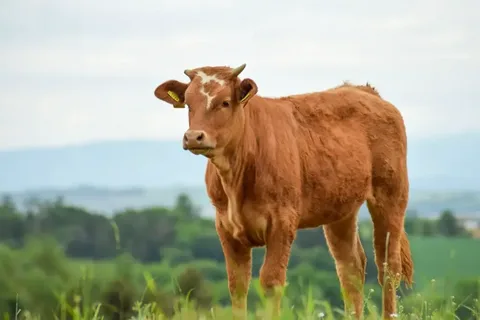
A cow looks heavy from the other side of a fence, but just how heavy are we talking? The simple answer is that an average mature cow usually weighs b
A cow looks heavy from the other side of a fence, but just how heavy are we talking? The simple answer is that an average mature cow usually weighs between 1,000 and 1,500 pounds, or roughly 450 to 680 kilograms. Many common beef cows fall near the middle of that range, while smaller dairy breeds can weigh considerably less and large-framed cattle may exceed it.
That answer comes with an important catch. Breed, age, sex, genetics, diet, health, pregnancy and body condition can all change the number. A compact Jersey cow and a muscular Charolais cow are both cattle, yet putting them under one “average” would hide a very noticeable difference.
The terminology matters too. People often use cow as a general word for any bovine, but farmers use it more precisely. A cow is an adult female that has produced a calf. Bulls, steers, heifers and calves belong to different weight groups, so comparing them without labels can quickly become confusing.
How Much Does a Cow Weigh on Average?
Most mature adult cows weigh approximately 1,000 to 1,500 pounds, although plenty of healthy animals sit outside that range. A practical working average for many commercial beef cows is around 1,200 to 1,400 pounds, equal to about 545 to 635 kilograms.
Smaller breeds may remain below 1,000 pounds. Large-framed beef and dairy breeds, on the other hand, can pass 1,500 pounds when fully mature. Individual genetics also matter, which is why two cows of the same breed and age may not weigh exactly the same.
It is best to treat any online average as a reference point rather than a target. Healthy weight depends on the animal’s frame, body condition, stage of production and environment. A smaller cow is not automatically underweight, just as a large cow is not necessarily overweight.
Cow, Bull, Steer or Heifer: What Is the Difference?
Much of the confusion surrounding cattle weight begins with everyday language. People say “cow” when they may actually be looking at a bull or steer, both of which are usually heavier than an adult female.
A calf is a young bovine. A heifer is a female that has not yet produced a calf. Once she calves, she is generally called a cow. A bull is an intact adult male, while a steer is a castrated male commonly raised for beef.
These distinctions make a big difference. Mature bulls often have broader frames and considerably more muscle than cows of the same breed. A finished steer sent for processing is also not a useful comparison for a mature breeding cow. Whenever someone gives an “average cattle weight,” check which class of animal the number actually describes.
Average Cow Weight by Breed
Breed is one of the strongest predictors of mature size. The following ranges describe typical adult females, not bulls. They are deliberately broad because bloodlines, management systems and regional breeding goals can produce substantial variation.
| Cattle breed | Typical mature cow weight |
| Jersey | 800–1,000 lb / 360–450 kg |
| Highland | 900–1,300 lb / 410–590 kg |
| Texas Longhorn | 900–1,200 lb / 410–545 kg |
| Angus | 1,100–1,400 lb / 500–635 kg |
| Hereford | 1,200–1,500 lb / 545–680 kg |
| Guernsey | 1,000–1,200 lb / 450–545 kg |
| Holstein | 1,300–1,600 lb / 590–725 kg |
| Brown Swiss | 1,300–1,600 lb / 590–725 kg |
| Simmental | 1,300–1,700 lb / 590–770 kg |
| Charolais | 1,400–1,800 lb / 635–815 kg |
These figures work well for general comparison, but a rancher should rely on actual herd records when making feeding, breeding or transportation decisions.
Do Beef Cows Weigh More Than Dairy Cows?
Not always. Beef cattle are selected for muscle development and meat production, while dairy cattle are selected primarily for milk production. That difference affects body shape, but it does not mean every beef cow outweighs every dairy cow.
Angus and Hereford cows commonly have thick, muscular bodies. Jersey dairy cows are much smaller and lighter. Holsteins, however, are tall, large-framed dairy animals and may outweigh cows from several beef breeds. Brown Swiss cattle can also become surprisingly large.
The better comparison is therefore breed against breed, not simply beef against dairy. Purpose influences body structure, but mature weight still depends on genetics, frame size and management. This is one reason a single universal cow-weight figure can only be an approximation.
How Much Do Calves, Heifers and Bulls Weigh?
A newborn calf commonly weighs somewhere around 60 to 100 pounds, although breed, sex, genetics and gestation length influence birth weight. Small dairy breeds may produce lighter calves, while larger beef breeds often produce heavier ones.
Growth after birth depends on milk intake, forage quality, supplemental feed, health and environmental conditions. By weaning, a beef calf may weigh several hundred pounds. Replacement heifers are commonly managed according to a percentage of their expected mature weight rather than one universal number.
Bulls are at the opposite end of the scale. A mature bull may weigh 1,500 to more than 2,500 pounds, depending on breed and condition. This explains why articles that mix bull weights with cow weights often make the “average cow” appear much heavier than it really is.
What Factors Affect a Cow’s Weight?
Breed may set the general framework, but it is only one part of the picture. Age matters because young females continue growing after their first calf. Sex affects muscle development, explaining why bulls are typically heavier. Nutrition influences growth and body condition, especially when forage quality changes through the seasons.
Pregnancy can add noticeable weight, while lactation may cause a cow to lose body reserves if her diet does not meet her energy requirements. Health problems, parasites, dental condition and lameness can also reduce weight.
Then there are temporary changes. A cow weighed after eating and drinking may be heavier than the same animal after transport or a period without feed. For useful records, cattle should be weighed under reasonably consistent conditions rather than at random times.
How Can You Weigh a Cow Accurately?
A properly maintained livestock scale provides the most dependable measurement. The animal enters a chute or platform, remains still briefly, and receives an actual live-weight reading. For medication, sale, transport or performance records, that direct measurement is preferable.
When a scale is unavailable, farmers may use a cattle weight tape. The tape is placed around the heart-girth area, immediately behind the front legs and shoulder blades. Breed-appropriate tapes convert that circumference into an estimated weight.
Some producers combine heart girth with body length in a calculation. These estimates can be useful, but body shape varies between dairy and beef animals, so one formula may not suit every breed. Measure in the same position each time, keep the tape snug without pulling it excessively tight, and record that the result is an estimate.
Live Weight, Hanging Weight and Packaged Beef
These terms are related, but they are not interchangeable. Live weight is the weight of the entire living animal, including the hide, organs and digestive contents. Hot carcass weight, sometimes called hanging weight, is measured after slaughter and removal of the hide, head, blood, feet and internal organs.
The percentage of live weight remaining as a carcass is known as the dressing percentage. Finished beef animals frequently dress at roughly 60% to 64%, although breed, fatness, digestive fill and processing practices affect the outcome. Cull cows may produce a lower percentage.
Packaged beef weighs less again because bones, excess fat and trimming losses are removed. As a rough planning estimate, take-home beef may equal around 40% of live weight. Therefore, a 1,200-pound animal does not produce 1,200 pounds—or even 750 pounds—of packaged meat.
Why Knowing a Cow’s Weight Matters
Accurate weight is not merely an interesting farm fact. It affects medication dosage, feed planning, growth monitoring, breeding decisions, stocking rates, transportation limits and market value. Guessing can become expensive, and in the case of animal-health products, an incorrect estimate may lead to underdosing or overdosing.
Weight records are most valuable when combined with body condition scoring. A cow can lose fat without appearing dramatically smaller, while pregnancy or digestive fill can temporarily increase scale weight. Looking at both measurements gives a clearer picture of her condition.
Regular records also reveal trends. One reading may not mean much, but a steady decline can signal inadequate nutrition, disease, parasites, dental trouble or another management problem that deserves attention.
Conclusion
So, how much does a cow weigh? Most mature cows weigh between 1,000 and 1,500 pounds, or approximately 450 to 680 kilograms, but no single number fits every animal. Jersey cows tend to sit near the lighter end, while large Holstein, Simmental and Charolais females may weigh considerably more.
The most reliable answer comes from identifying the animal’s breed, age, sex and production stage, then measuring it with a livestock scale. Breed charts are useful for quick comparisons. Actual measurements are better when health, feeding, transport or financial decisions depend on the result.
Frequently Asked Questions
How much does a full-grown cow weigh?
A full-grown cow commonly weighs between 1,000 and 1,500 pounds. Smaller breeds may remain under 1,000 pounds, while large-framed cows can exceed 1,500 pounds.
How heavy is a cow in kilograms?
Most mature cows weigh approximately 450 to 680 kilograms. Breed and sex must be considered because large cows and mature bulls may weigh much more.
How much does a Holstein cow weigh?
A mature Holstein cow often weighs around 1,300 to 1,600 pounds, or approximately 590 to 725 kilograms. Individual animals may fall outside that range.
Can you estimate a cow’s weight without a scale?
Yes. A cattle weight tape placed around the heart girth can provide a practical estimate. Body measurements and formulas may also be used, but a livestock scale remains more accurate.
What is the difference between cow weight and hanging weight?
Cow weight usually means the animal’s live weight. Hanging or hot carcass weight is measured after slaughter and removal of the hide, head, blood, feet and internal organs, so it is substantially lower.
