
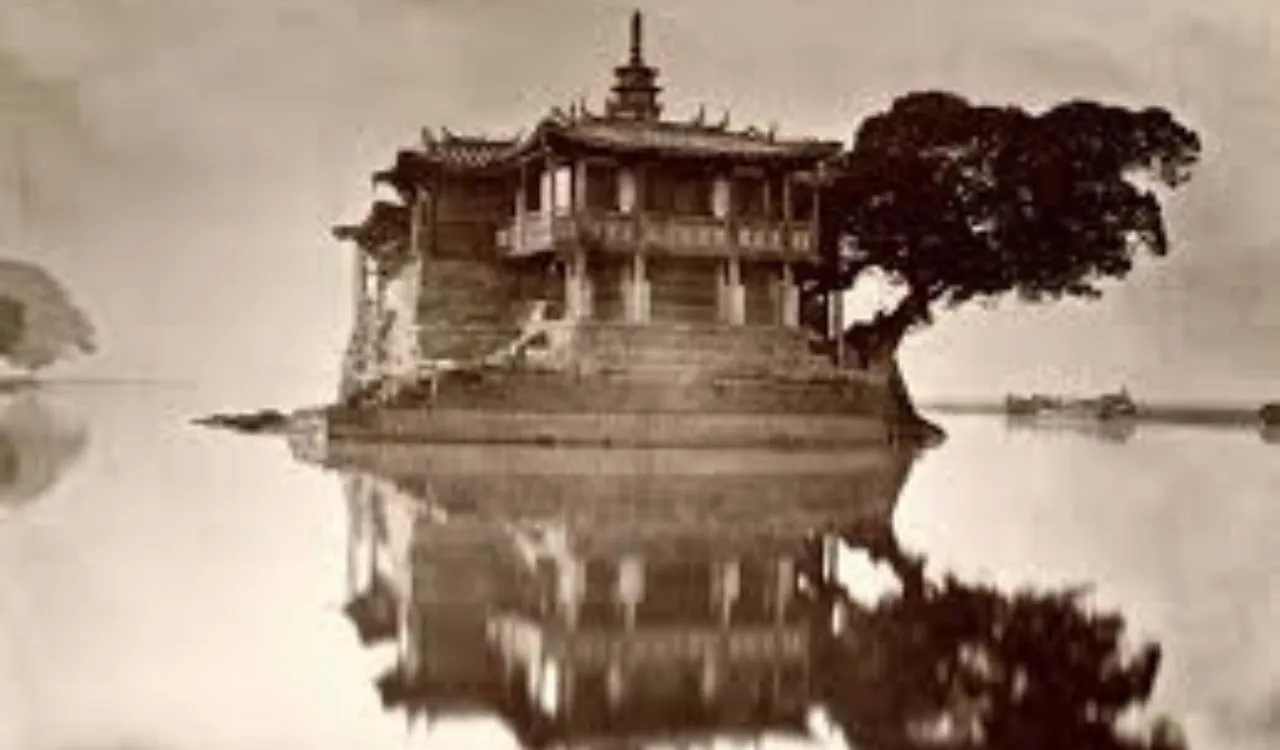
Chinese Photography was at a crossroads in 1899, where it was no longer dominated by foreigners, but it became Chinese. Foreign photographers already
Chinese Photography was at a crossroads in 1899, where it was no longer dominated by foreigners, but it became Chinese. Foreign photographers already had an impact on the commercial world, yet the local presence was increasing at a fast pace. This was a critical year, the year before the Boxer Rebellion, when documentation of a fast-changing nation intensified, with the beginning of the establishment of photography studios outside the international treaty ports. The process of transitioning to more genuine and regionalized visual depiction of reality was gaining traction in the shift from solely commercial Photography, and this is where the history of Chinese Photography 1899 actually starts.
By the end of the 19 th century, the industry was still being dominated by such giants as Lai Fong, who died in 1890, but whose studios were still functioning even after their deaths. These initial studios, such as Hong Kong, Shanghai and Canton, were frequently the first to record the rich culture, landscape and social transformations in China. This article will discuss the development of Chinese Photography in this era, and it will give us a good idea of the metamorphosis of the nation in the late Qing dynasty and the eve of the political upheaval of the Boxer Rebellion.
Chinese Photography in 1899 is not just a history of technology or art; it is a history of people, a history of culture, and a history of the nation becoming itself visually for the first time. These photographers not only photographed the faces of China, which were changing, but also shaped the way China was going to be perceived by the rest of the world. It is an interesting insight into the process of turning a medium created in a foreign land into the reflection of the soul of a nation at the threshold of a significant historical transformation.
The Foreign Influence: The Early Days of Photography in China
The Photography in China before 1899 was mainly dominated by foreign photographers and studios. Foreigners, especially Europeans and Americans, had already settled in the treaty ports of China, including Hong Kong, Shanghai, and Canton. Their pictures were generally commercial in quality and centered around Chinese landscapes, local portraits, and pictures that would appeal to the Western interest in the exotic East. Nevertheless, these photographs were popular but, in most cases, one-dimensional, and their purpose was to reinforce stereotypes about China and its people.
The responsibility of these pioneer photographers was, to a large extent, to produce images for a foreign audience. Their work did not necessarily reflect the richness of Chinese cultural or social life, and their motives were usually confined to landscape paintings or artificial portraits. However, these constraints did not stop the exposure to Photography, and the resultant development of an interest in Photography became evident among the local Chinese artists, resulting in the progressive development that we witnessed by 1899.
Lai Fong and the Birth of Chinese Photography 1899 Studios
Lai Fong is considered one of the most influential personalities in early Chinese Photography, and his studio (Afong Studio) in Canton was the center of the new photography movement in Chinese cities. Being active in the late 1800s, Lai Fong was a genius in terms of his skill to combine Western photographic techniques with Chinese culture. His studio flourished even after he died in 1890, representing the movement towards local involvement in Photography.
The photographs of Lai Fong were not just commercial portraits. He photographed the everyday life, marriages, family pictures, and even the evolving urban environment with a very Chinese eye. His work was distinguished by its genuineness, and it was a break with the stereotypical portraits that were created by the foreign photographers. The studio of Lai Fong was among the first to record not only the people, but the spirit of China, and it was the beginning of the photography revolution that was to follow.
China, 1899: Nation at the Crossroads
The year 1899 was a significant one in the history of China. It was a period of great political, social, and economic transformation. The Qing dynasty was falling, and the Boxer Rebellion was a mere stone’s throw away. The role of Photography was even more important as China was experiencing internal strife. It was not merely a documentation tool; it was a propaganda, resistance, and change tool.
The work of photographers such as Lai Fong, who worked during the late 1800s, started to change towards the more traditional portraiture and started to concentrate on the chaos in China. It was also the time when Photography was first used significantly to capture the lives of the Chinese people, especially in reaction to the increasing foreign influence.
The pace of modernization of Chinese cities at this period was also recorded through photos, and this is a priceless visual document of what China used to be like at the most turbulent period of its history. Photographers helped in documenting these changes, as they provided a different source of information compared to the written history, where the ordinary life of people was mostly not taken into account.
The Boxer Rebellion and the role of Photography in the recording of the struggle in China
One of the greatest events in modern Chinese history was the Boxer Rebellion (18991901). It was an era when anti-foreign and anti-Christian sentiments were the causes of violent uprisings. Local and foreign photographers were quick to portray the violence and chaos that ensued during the rebellion. These images played a crucial role in how the Chinese and Western viewers interpreted the event.
What is interesting is the way photographers dealt with the rebellion. Most of the Western photographers were busy concentrating on taking the drama at a distance, but the Chinese photographers, such as Lai Fong, had a more personal and subtle approach. They wrote the tales of common men who were in the crossfire, which provided a more human view of the rebellion.
With the help of these photos, we can observe the suffering, fear, and opposition of the Chinese people. The photos are not only historical documents but also strong emotional records that express the soul of the struggle of the nation.
Commercial to Cultural Photography: The Change in 1899
By 1899, Photography in China was becoming different. Previously, the medium was commercially exploited to make portraits of foreign tourists or to generate images that were appealing to a Western audience. But with the increased participation of local photographers, they started to see Photography as not only a means of commerce, but also as a means to express a culture.
This change can be traced in the works of such photographers as Lai Fong and others who started taking photographs of local Chinese celebrations, architecture, and life. These photos were not ordinary pictures, but windows into the Chinese culture that showed the richness of the local tradition and the beauty of ordinary life. Photography in China was not only making the art to be viewed by Western eyes, but it was also a preservation of Chinese culture for the coming generations.
The Photography Studios in Treaty Ports
China had a thriving photography industry in the treaty ports, such as Hong Kong, Shanghai, and Canton. These cities became the global centers, and the foreign influences mixed with the local traditions. These treaty ports were where the first photography studios in China started to prosper.
Not only did the photographers in these cities meet the demands of the foreign tourists, but they also started attending to the increasing number of the local Chinese population. Photography studios were created to allow people in the locality to keep their memories, just like modern photography studios do. These initial studios played a vital role in the visual Chinese culture because they enabled ordinary citizens to immortalize their image and celebrate significant life events.
The Change in Technology and Its Effects on Photography
By 1899, China had witnessed high levels of technological advancement in Photography, especially the wet-plate collodion process. This process enabled photographers to take sharper shots and larger negatives, which enhanced the quality of photographs. It also enabled a faster production time, and Photography became more available to the masses.
The place of Photography in China also changed with the further development of technology. Photographers started to experiment and to make portraits with dramatic light and complex compositions. The emergence of this new way of Photography prepared the ground for the emergence of more artistic forms in the early 20th century, as the photographic industry of China was still modernizing.
Cultural Implications of Photography in the Chinese Identity
The influence of Photography on China was immense in its perception both locally and internationally. To the Chinese, Photography was a way of capturing their identity in a fast-changing world. It enabled them to document their daily lives, their traditions, and their festivals, and to save the elements of Chinese culture that otherwise could have been erased.
To the external world, Chinese Photography served as a window into a misunderstood or even misrepresented society. The images taken by the local photographers in 1899 were a more realistic depiction of China as opposed to the stereotypes that the Western photographers were propagating. This change in presentation served to rebrand the perception of China in the world.
Conclusion
The effect of Chinese Photography in 1899 is still experienced to date. The modern Chinese Photography developed its foundation through the efforts of the photographers of that time. Their work did not just leave a visual memory of a shifting society, but it also set the stage for new creative possibilities to be explored by future generations of Chinese photographers 1899.
Chinese Photography is considered today as a blend of tradition and modernity as an art form. It is inspired by the abundant history of Chinese photographers of the early years and adopts modern techniques and themes. The heritage of the 1899 photographers is still present, and it is reflected in the work of artists who are still trying to find the intricacies of Chinese culture and identity through the lens.
Frequently asked questions
Which were the most important photographers in China during 1899?
The period saw the emergence of the most prominent photographer in China, Lai Fong, whose studio in Canton had a significant impact on Photography in China. His work contributed greatly to the recording of Chinese life and culture.
How did Photography impact the Boxer Rebellion?
The Boxer Rebellion was captured by photographers, and this was a strong visual testimony of the conflict and violence. Chinese photographers especially captured a personal and human approach to the rebellion, featuring the lives of common people.
What was the role of foreign photographers in early Chinese Photography 1899?
Foreign photographers played a significant role in bringing Photography to China, especially in the treaty ports. They photographed images of China for the western audience, and they tended to view the country from a foreign perspective, which was at times restrictive in its accuracy.
What was the development of Photography in China in the late 19 th century?
By 1899, Chinese Photography was already moving away towards commercial portraiture, to a more cultural and documentary photography. Chinese Photography took a new turn as photographers such as Lai Fong started concentrating on the daily lives and culture, and this trend altered the trend of Photography in China.
What was the technological development in Chinese Photography by 1899?
The wet-plate collodion process was a significant development of Chinese Photography as of 1899. It enabled better images and quicker production durations that democratized Photography and made it more approachable to common people.
