
You finally get your freshwater aquarium looking exactly the way you imagined. The plants are thriving, your fish are active, and the water is crysta
You finally get your freshwater aquarium looking exactly the way you imagined. The plants are thriving, your fish are active, and the water is crystal clear. Then, almost overnight, tiny pest snails begin appearing on the glass, decorations, and even your plants. Sound familiar?
That’s when many aquarium hobbyists discover the assassin snail, a fascinating freshwater snail that’s famous for hunting unwanted snails instead of eating your plants.
Unlike common aquarium snails that spend their days grazing on algae, this small carnivore behaves more like a patient predator. It buries itself beneath the substrate, waits for the perfect moment, and then ambushes unsuspecting prey. Watching one hunt is surprisingly entertaining, making it one of the most interesting invertebrates you can add to a freshwater tank.
But here’s the thing, not every aquarium is suitable for assassin snails. They have specific dietary needs, compatible tank mates, and water requirements that beginners often overlook.
Let’s explore everything you need to know before adding one to your aquarium.
What Is an Assassin Snail?
The assassin snail (Anentome helena) is a freshwater snail native to rivers, streams, and lakes throughout Southeast Asia, particularly in Thailand, Indonesia, Malaysia, and Cambodia. Unlike most aquarium snails that survive mainly on algae and leftover plant matter, this species evolved as an active predator.
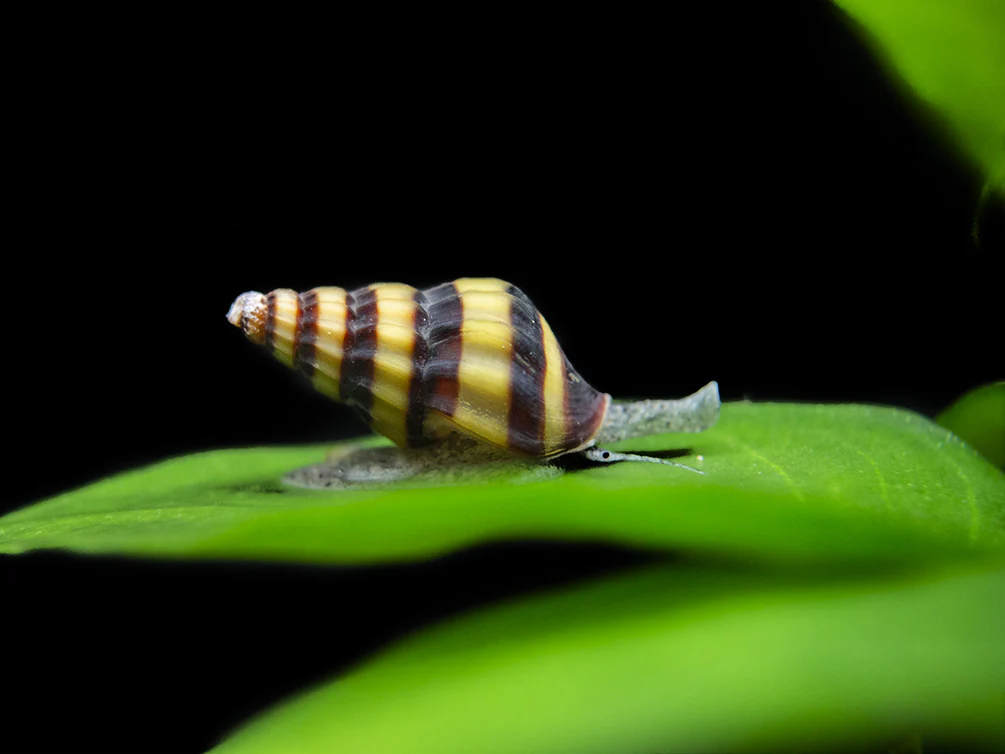
Its shell is easy to recognize thanks to alternating dark brown and yellow bands that resemble the stripes of a bumblebee. Combined with its elongated cone-shaped shell, the pattern makes it one of the most attractive snails in the aquarium hobby.
Although they’re best known for controlling pest snail populations, assassin snails are much more than biological pest control. They also scavenge leftover food, consume dead organisms, and contribute to a cleaner aquarium environment.
One reason aquarists appreciate them is their relatively slow reproduction. Unlike bladder snails or ramshorn snails that seem to multiply overnight, assassin snails reproduce at a manageable pace, giving you far more control over their population.
Why Are Assassin Snails So Popular in Freshwater Aquariums?
There are plenty of reasons experienced fish keepers recommend assassin snails, especially when pest snails become overwhelming.
For starters, they provide a natural solution. Instead of relying on chemical snail treatments that may stress fish or damage beneficial bacteria, assassin snails quietly reduce pest snail numbers over time.
Another advantage is that they rarely damage healthy aquarium plants. Many beginner hobbyists worry that introducing another snail will simply create another problem. Fortunately, assassin snails have very little interest in eating live plants because their diet is primarily protein-based.
Their behavior also keeps aquariums interesting. Rather than crawling aimlessly around the glass all day, they often disappear beneath the substrate, only emerging when they detect food or prey nearby.
Aquarium enthusiasts also appreciate their hardy nature. Once acclimated properly, they’re generally easy to care for and adapt well to stable freshwater aquariums.
Assassin Snail Appearance and Size
At first glance, assassin snails may look similar to several cone-shaped snail species, but a closer inspection quickly reveals their unique appearance.
Most adults reach around 0.75 to 1.25 inches (2–3 cm) in length, although individuals raised under ideal conditions occasionally grow slightly larger.
Their shell features alternating chocolate-brown and golden-yellow spiral bands that provide natural camouflage among rocks and sand. The shell tapers into a sharp point, giving it a sleek, elongated profile.
Their muscular foot is usually light gray or cream-colored with darker speckles. Extending from the head is a long siphon, a tube-like structure that helps them detect food hidden beneath the substrate. This highly developed sense of smell allows them to locate prey even when it isn’t visible.
Young assassin snails often display brighter shell colors, while older individuals may develop darker or slightly worn shells as they age.
Natural Habitat and Behavior
Understanding where assassin snails come from makes caring for them much easier.
In the wild, they inhabit slow-moving rivers, freshwater streams, ponds, and lake systems with sandy or muddy bottoms. These environments contain plenty of hiding places among leaves, driftwood, rocks, and submerged vegetation.
One of their most fascinating behaviors is burrowing.
Instead of remaining visible throughout the day, assassin snails frequently bury themselves beneath fine sand or smooth gravel, leaving only the tip of their siphon exposed. From there, they patiently wait until prey wanders close enough to attack.
Despite their dramatic name, they aren’t aggressive toward healthy fish. Their hunting instincts are almost entirely focused on slow-moving snails and weakened invertebrates rather than fast-swimming aquarium inhabitants.
They’re generally peaceful with one another as well. In fact, it’s common to see several assassin snails gathering around the same food source without much conflict.
Because they’re more active during low-light conditions, many aquarium owners notice increased movement in the evening after the aquarium lights switch off.
Ideal Tank Setup for Assassin Snails
Creating the right environment isn’t complicated, but a few details make a significant difference.
A tank of 10 gallons or larger provides enough room for stable water conditions and a sustainable food supply. While a single snail can survive in smaller aquariums, larger tanks offer greater environmental stability.
Fine sand is usually considered the best substrate because it allows natural burrowing behavior without damaging their soft foot. Smooth gravel also works, although coarse gravel can make digging more difficult.
Decorations such as driftwood, caves, rocks, and live plants help create a more natural habitat while giving snails additional areas to explore.
Stable water quality is far more important than chasing exact numbers.
Aim for:
- Temperature: 72–82°F (22–28°C)
- pH: 7.0–8.0
- Moderate water hardness
- Ammonia: 0 ppm
- Nitrite: 0 ppm
- Low nitrate through regular maintenance
Like nearly all freshwater snails, assassin snails are sensitive to copper-based medications. Always check aquarium treatments carefully before adding them to a tank containing snails.
Maintaining clean water, consistent parameters, and adequate calcium helps keep their shells healthy and reduces stress over the long term.
What Do Assassin Snails Eat?
One of the biggest misconceptions about assassin snails is that they’ll only survive if your tank is full of pest snails. That’s simply not true.
While they earned their reputation by hunting nuisance snails like bladder, pond, and ramshorn snails, they’re opportunistic carnivores. Once the snail population declines, they’ll happily switch to other protein-rich foods.
A balanced diet may include:
- Frozen bloodworms
- Brine shrimp
- Sinking carnivore pellets
- Shrimp pellets
- Fish flakes that reach the substrate
- Leftover meaty foods
- Dead fish or shrimp (if removed promptly afterward)
They aren’t efficient algae eaters, so don’t expect them to clean green glass or remove algae from decorations. If your primary goal is algae control, other snail species are better suited for that role.
If you keep several assassin snails together, make sure enough food reaches the bottom of the aquarium. Otherwise, they’ll spend more time searching than feeding, which can slow their growth.
The Hunting Behavior That Makes Them So Fascinating
Watching an assassin snail hunt is unlike watching any other aquarium snail.
Instead of constantly roaming around the tank, it often waits beneath the substrate with remarkable patience. Using its long siphon, it detects chemical signals released by nearby prey. Once a target is within reach, the snail emerges, grabs its victim, and uses a specialized feeding organ called a proboscis to consume the soft tissue inside the shell.
This process isn’t fast. Depending on the size of the prey, a single meal may take several hours.
Despite their hunting skills, they won’t wipe out a pest snail population overnight. Think of them as long-term maintenance rather than an instant solution. Their steady approach often works better because it avoids sudden imbalances in the aquarium ecosystem.
Many hobbyists actually enjoy observing this natural behavior. It adds another layer of activity to the tank and showcases how even small invertebrates can have surprisingly complex instincts.
Best Tank Mates for Assassin Snails
Assassin snails are peaceful toward fish, making them compatible with many freshwater community aquariums.
Good companions include:
- Tetras
- Rasboras
- Corydoras
- Gouramis
- Angelfish
- Guppies
- Mollies
- Platies
- Cherry barbs
- Most peaceful shrimp species
The biggest concern isn’t fish, it’s other snails.
If you keep ornamental snails like Nerite, Mystery, Rabbit, or Japanese Trapdoor snails, remember that assassin snails may eventually attack smaller or weakened individuals. Larger healthy snails are generally safer, but there’s still some risk over time.
Avoid housing assassin snails with aggressive snail-eating fish such as pufferfish or loaches, as these species may prey on them before they have a chance to settle into the aquarium.
A peaceful, well-maintained community tank usually provides the best environment for long-term success.
Breeding Assassin Snails
Unlike many freshwater snails that reproduce rapidly, assassin snails breed at a much slower and more manageable rate.
They have separate males and females, although it’s almost impossible to tell them apart by appearance alone. Successful breeding requires at least one male and one female, which is why many aquarists purchase a small group instead of a single individual.
After mating, the female lays individual square-shaped eggs on hard surfaces such as rocks, driftwood, aquarium glass, or decorations. Each egg contains only one developing snail.
The young hatch after several weeks and spend much of their early life hidden beneath the substrate. Because juveniles remain buried for extended periods, many aquarium owners don’t realize breeding has even occurred until tiny snails begin appearing months later.
Their slow reproductive cycle is one of the reasons they’re preferred over many other aquarium snail species.
Common Health Problems and How to Prevent Them
Healthy assassin snails are surprisingly hardy, but poor aquarium conditions can quickly affect their well-being.
Shell erosion is one of the most common issues. Soft, acidic water may gradually dissolve the shell, causing pitting, cracks, or rough surfaces. Maintaining stable pH levels and ensuring adequate calcium helps support healthy shell growth.
Lack of food is another concern, especially after the pest snail population has been eliminated. Without an alternative protein source, assassin snails may become inactive or lose weight over time.
Copper-based medications are particularly dangerous. Even small amounts can be toxic to snails and other invertebrates. Always read medication labels before treating a community aquarium.
Regular water changes, stable parameters, and a varied diet remain the best defense against most health problems.
Are Assassin Snails Worth Adding to Your Aquarium?
For many freshwater hobbyists, the answer is yes.
If you’re struggling with an exploding pest snail population, few natural solutions are as effective and low-maintenance. Rather than relying on chemicals, assassin snails restore balance gradually while adding a unique and attractive invertebrate to your aquarium.
That said, they aren’t the right choice for every setup. Aquariums focused on collecting rare ornamental snails may want to avoid introducing a predator. Likewise, tanks with very little protein available may require supplemental feeding.
Overall, they’re hardy, fascinating to observe, easy to care for, and useful beyond simple pest control. Their striking appearance, interesting hunting behavior, and manageable breeding make them one of the most rewarding freshwater snails available to aquarium enthusiasts.
Conclusion
The assassin snail is far more than a natural pest controller. It’s an intriguing freshwater predator that brings both function and personality to a tropical aquarium. From its distinctive striped shell to its patient hunting style, every aspect of this species makes it stand out from ordinary aquarium snails.
With stable water conditions, a protein-rich diet, suitable tank mates, and routine aquarium maintenance, assassin snails can thrive for years while helping maintain a healthier aquatic environment. Whether you’re dealing with unwanted pest snails or simply want to add an unusual invertebrate to your tank, this species offers an excellent balance of beauty, usefulness, and fascinating behavior.
Frequently Asked Questions
1. How many assassin snails should I keep together?
One assassin snail is often enough for small aquariums with a light pest snail problem. Larger tanks or heavy infestations usually benefit from keeping three to six individuals.
2. Will assassin snails eat live aquarium plants?
No. Assassin snails are carnivores and rarely damage healthy aquatic plants. Their diet mainly consists of snails, worms, carrion, and other protein-rich foods.
3. How long does an assassin snail live?
With proper care and stable water conditions, most assassin snails live between 2 and 5 years, although some may live even longer in well-maintained aquariums.
4. Can assassin snails live without pest snails?
Yes. They can thrive on frozen foods, sinking carnivore pellets, shrimp pellets, bloodworms, and other meaty foods once pest snails become scarce.
5. Are assassin snails safe with shrimp?
Generally, yes. Healthy adult shrimp are usually ignored. However, weak, injured, or freshly deceased shrimp may be scavenged, which is a normal part of their natural feeding behavior.
