
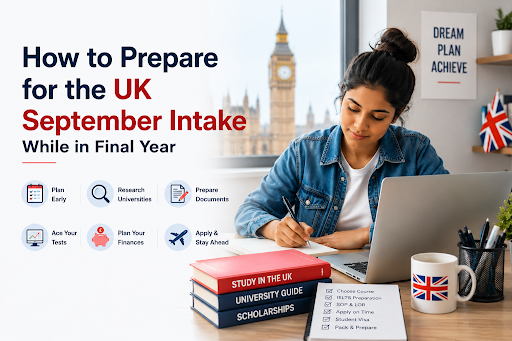
If you're in your final year of graduation and dreaming of studying in the UK, the September 2026 intake should already be on your radar. This is the
If you’re in your final year of graduation and dreaming of studying in the UK, the September 2026 intake should already be on your radar. This is the biggest and most popular intake in the UK, offering the widest range of courses, universities, and scholarships. But since you’re still completing your final year, planning everything alongside your exams can feel overwhelming. Here’s a simple, easy-to-follow guide to help you prepare smartly without missing any important deadline.
Why the September Intake Matters
The September intake in the UK, also known as the fall intake universities in the UK , is when most universities open admissions for undergraduate and postgraduate programs. It offers more course options, higher scholarship availability, and better hostel or accommodation choices compared to the January or May intakes. Since competition is high, starting your preparation early – while you’re still in your final year – gives you a real advantage.
Step 1: Start Researching Universities and Courses Early
Begin researching UK universities and course options at least 12 to 15 months before the intake starts. Shortlist 4 to 6 universities based on:
- Course curriculum and specialization
- University ranking and reputation
- Tuition fees and scholarship availability
- Location, campus life, and post-study work opportunities
Since most postgraduate applications follow rolling admissions, applying early increases your chances of getting a seat and being considered for merit-based scholarships.
Step 2: Take Your English Proficiency Test Early
Most UK universities require proof of English language proficiency through IELTS, PTE Academic (UKVI), or TOEFL iBT. Since exam slots and results can take time, it’s best to take this test during your final year itself, ideally 6 to 9 months before your intended intake, so you have your scores ready before applications open.
Step 3: Prepare Your Academic Documents in Advance
While managing your final-year coursework, keep collecting the documents you’ll need for your UK university application:
- Academic transcripts and mark sheets
- Provisional degree certificate or bonafide letter (since your final results may not be out yet)
- Statement of Purpose (SOP)
- Letters of Recommendation (LORs) from professors
- Updated resume or CV
- English proficiency scores
Many universities accept applications with predicted grades or provisional marksheets, so you don’t need to wait for your final results to apply.
Step 4: Apply Through UCAS or University Portals
For undergraduate courses, applications go through UCAS (Universities and Colleges Admissions Service), which allows you to apply to up to five universities at once. Postgraduate applications, on the other hand, are usually submitted directly through the university’s own portal and follow rolling deadlines rather than one fixed date.
A general application timeline looks like this:
- 12+ months before intake: Shortlist universities and start test preparation
- 8–10 months before: Submit applications with predicted grades
- 6 months before: Receive offers, prepare SOP and financial documents
- 3–4 months before: Apply for your student visa
- 1 month before: Finalize accommodation, travel, and pre-departure formalities
Step 5: Plan Your Finances and Scholarships
Along with tuition fees, you’ll need to show proof of funds for your UK student visa, usually covering tuition and living costs for at least 28 consecutive days before applying. Look into scholarships early, since many close well before the intake begins. Options like the Chevening Scholarship, university-specific merit scholarships, and country-specific grants can significantly reduce your financial burden.
Step 6: Apply for Your Student Visa on Time
Once you receive your Confirmation of Acceptance for Studies (CAS) from your university, you can begin your UK student visa (Tier 4/Student Route) application. It’s best to apply 3 to 4 months before your course start date to avoid the peak rush during July and August. Visa processing usually takes a few weeks, but applying early gives you a safety buffer for any document verification delays.
Step 7: Prepare for Credibility Interviews
Some applicants, especially from Asia and Africa, may be asked to attend a credibility interview as part of the visa process. Be ready to clearly explain your choice of course, university, and career goals. Genuine, well-researched answers always make a stronger impression than rehearsed ones.
Final Tips for Final-Year Students
- Don’t wait for your final results to start applying – most universities accept provisional or predicted grades
- Keep a checklist and calendar for every deadline, from UCAS submission to visa application
- Balance your final-year exams and application work by setting weekly goals
- Stay in touch with your university’s international office for updates on documentation
Conclusion
Preparing for the UK September intake while managing your final year isn’t easy, but with early planning, the right documents, and a clear timeline, it becomes completely manageable. Start your research now, keep your paperwork ready, and apply well ahead of deadlines to secure your seat at your dream UK university without last-minute stress.
