
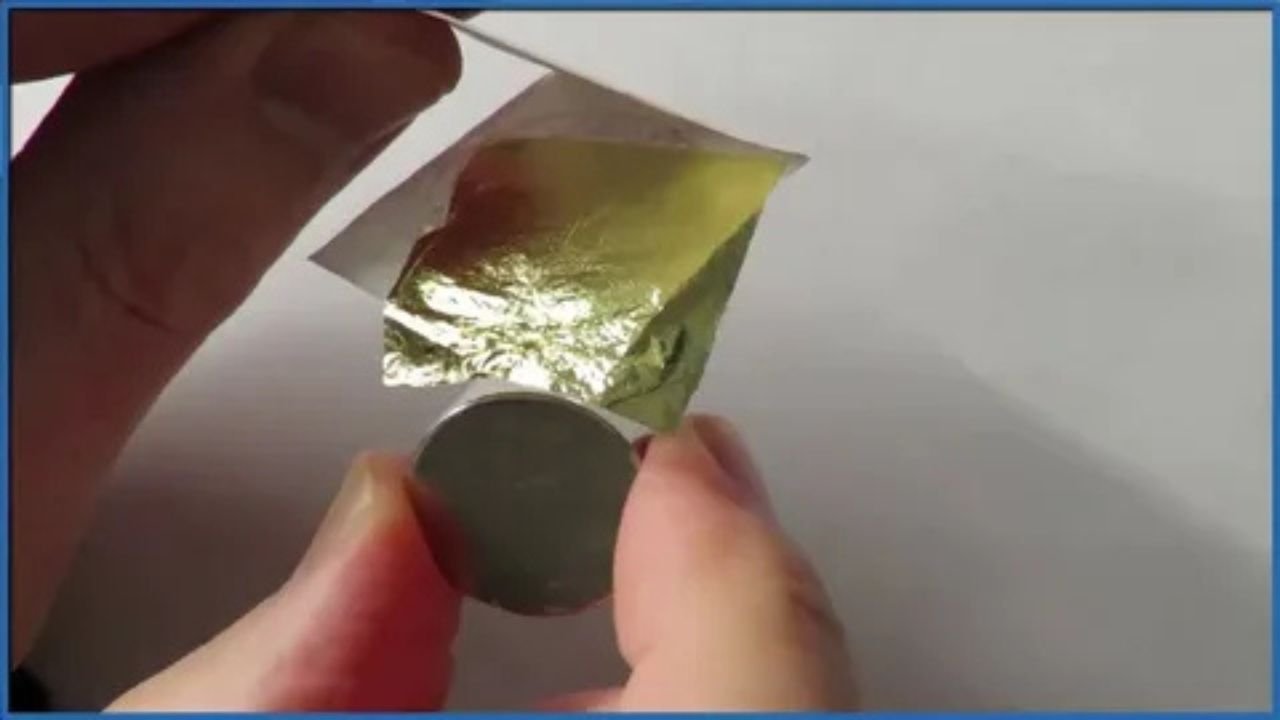
You find an old chain at the back of a drawer. It has the right colour, a tiny stamp near the clasp, and enough weight to make you wonder whether it m
You find an old chain at the back of a drawer. It has the right colour, a tiny stamp near the clasp, and enough weight to make you wonder whether it might be real gold. Then someone suggests the classic home experiment: hold a magnet against it.
Simple, right? Well, mostly.
So, is gold magnetic? Pure gold is not attracted to an ordinary magnet. It is classified as diamagnetic, which means it responds to a magnetic field with an extremely weak repelling effect. That response is far too small for someone to notice while testing a ring, coin, or necklace at home.
A strong attraction is therefore a warning sign. However, an item that does not stick to a magnet is not automatically genuine. The magnet test is useful for spotting certain obvious problems, but it cannot confirm gold purity by itself.
Is Gold Magnetic? The Quick Answer
Pure gold does not stick to magnets. Place an ordinary magnet beside a genuine piece of 24-karat gold, and the gold should not jump toward it, cling to it, or move with it through direct attraction.
Technically, gold does have a magnetic response. It is diamagnetic, so an external magnetic field produces an incredibly weak opposing response within the metal. In everyday language, it slightly repels the field rather than being attracted to it. The effect is so subtle that normal household testing will not reveal it.
This is why the practical answer to “Is gold magnetic?” is no. A gold bar, coin, or piece of high-purity jewellery should not behave like iron or steel. Still, the result becomes more complicated when gold is mixed with other metals or attached to magnetic components.
What Does Diamagnetic Actually Mean?
Materials do not all respond to magnetic fields in the same way. Ferromagnetic materials, including iron, cobalt, and nickel, can show strong attraction. Paramagnetic materials respond weakly in the direction of an applied field. Diamagnetic materials produce a weak response in the opposite direction.
Gold belongs to that final category under ordinary bulk conditions.
The underlying physics is more complicated than the familiar image of tiny bar magnets lining up inside a material. A solid metal’s magnetic behaviour comes from several electronic effects acting together. In bulk gold, the overall result is a small negative magnetic susceptibility, which is the scientific way of describing its weak diamagnetic response.
Do not expect to feel gold pushing away from a fridge magnet. The force is vastly weaker than gravity and everyday friction. Detecting it properly requires sensitive laboratory instruments rather than a kitchen-table experiment.
Why Pure Gold Does Not Stick to a Magnet
A magnet strongly attracts a material only when that material has the right internal magnetic structure. Iron is the familiar example because groups of magnetic moments within it can align, producing a noticeable force. Gold does not develop that type of strong alignment under normal conditions.
This gives pure gold a useful identifying characteristic. A 24-karat bar or coin should not snap onto a magnet. If an item advertised as nearly pure gold reacts strongly across its main body, it probably contains a significant amount of another material.
That conclusion needs one important qualification: “not attracted” and “confirmed as gold” are completely different statements. Copper, brass, lead, and numerous other substances also fail to stick strongly to a magnet. A counterfeiter could cover a nonmagnetic core with a thin gold layer and still pass a basic magnet check.
Why Some Real Gold Jewellery May React to a Magnet
Jewellery is rarely made from pure gold because 24-karat gold is soft and can scratch or bend relatively easily. Manufacturers mix it with other metals to improve durability, adjust colour, or make it more suitable for daily wear. The finished product may therefore respond differently from pure gold.
White gold may contain nickel, which can produce a weak magnetic reaction. Small steel springs are also sometimes used inside clasps because they need to flex and return to position. A necklace might therefore react near the clasp while the chain itself remains nonmagnetic.
Test several areas before concluding. When only a fastener, pin, or decorative component responds, the entire piece is not necessarily fake. Strong attraction throughout the body is more concerning, especially when the item is labelled 24K, 999, or 999.9 fine gold.
Does Gold Karat Affect the Magnetic Result?
Karat describes the proportion of gold within an alloy. Twenty-four-karat gold is close to pure gold, while 18K contains 75 percent gold and 14K contains approximately 58.3 percent. The remaining material consists of alloying metals selected for colour, strength, hardness, and manufacturing performance.
Yellow and rose gold commonly contain varying amounts of copper and silver, neither of which should create the dramatic attraction associated with iron or steel. White gold may contain palladium, nickel, silver, zinc, or other metals, depending on the formulation. Nickel-containing jewellery has a greater chance of showing a slight response.
Lower-karat gold is not automatically magnetic, and genuine 14K jewellery may show no attraction at all. Conversely, a small magnetic response does not reveal the exact karat. A magnet can suggest that magnetic metal is present, but it cannot calculate how much gold the object contains.
How to Perform a Gold Magnet Test at Home
Begin with a reasonably strong magnet. A small neodymium magnet is more useful than a decorative refrigerator magnet, but it should be handled carefully because strong magnets can pinch fingers and affect nearby electronic items.
Place the jewellery, coin, or suspected gold object on a clean, non-metallic surface. Bring the magnet toward several parts of the item slowly. Watch for obvious movement rather than forcing the magnet directly against the surface.
A strong pull, sudden jump, or firm attachment suggests the presence of iron, steel, nickel, cobalt, or another responsive material. Test clasps and detachable pieces separately when possible.
Do not scrape the item or swing a heavy magnet against it. Valuable coins and polished jewellery can be damaged surprisingly easily. Record what happens, but treat the test as an initial screening step—not a final verdict on authenticity or value.
What Does It Mean When Gold Sticks to a Magnet?
When an object sold as pure gold sticks firmly to a magnet, something is wrong. The piece may be gold-plated steel, contain a magnetic core, or have much more magnetic alloy than its description suggests. An item marked 24K should not show strong attraction across its body.
For lower-karat jewellery, interpretation requires more care. A magnetic clasp or spring may be a legitimate functional component. White gold containing nickel may react slightly. Repairs performed with different metals can also create an isolated magnetic spot.
The strength and location of the attraction provide useful clues. A chain that leaps toward a magnet along its entire length is more suspicious than a chain that reacts only at its clasp.
Even then, a magnet cannot identify the hidden metal or measure the gold content. It tells the owner that further testing is needed; it does not deliver a complete laboratory analysis.
Why Passing the Magnet Test Does Not Prove Gold Is Real
This is the most important limitation. Many counterfeit materials are nonmagnetic, so they will not stick to a magnet. Copper, brass, and certain dense metals can be plated or coated to resemble gold while passing this simple experiment.
An object can also contain some real gold without being solid gold. Gold-plated jewellery has a thin outer layer over a base metal. Gold-filled and vermeil products use different constructions and gold quantities, but none should be described as solid high-karat gold.
The magnet test is better at rejecting certain fakes than confirming authenticity. Strong attraction can expose a problem. No attraction merely means the object did not contain enough easily detectable magnetic material to react.
Think of it like checking whether a note has an obvious printing mistake. Finding one proves there is a problem. Not finding one does not prove the note is genuine.
Better Ways to Test Gold Authenticity and Purity
Start with a visual inspection. Look for karat or fineness marks such as 10K, 14K, 18K, 22K, 24K, 375, 585, 750, 916, 999, or 999.9. Hallmarks can provide useful information about fineness, origin, or the organisation responsible for testing, although stamps themselves can be copied.
Weight and dimensions are valuable when checking recognised bullion coins or bars. Genuine products should match the mint’s published specifications closely. Density testing can also reveal metals that are much lighter than gold, although shaped jewellery and hollow pieces make the method less straightforward.
Professional jewellers and precious-metal dealers may use touchstone and acid testing, electrical conductivity instruments, ultrasound, or X-ray fluorescence analysis. XRF can examine surface composition without cutting the piece, although professionals may combine methods when a plated surface or hidden core is suspected.
For anything valuable, expert testing is worth the small inconvenience.
Can Gold Ever Become Magnetic?
Ordinary bulk gold used in rings, coins, and investment bars is diamagnetic. At extremely small scales, however, researchers have observed more complicated behaviour. Gold nanoparticles, nanoclusters, special coatings, and carefully engineered gold-containing alloys may display paramagnetic or other unusual responses.
That fascinating research does not mean a regular gold wedding band should stick to a magnet. Nanometre-scale materials can behave differently because surface effects, particle size, bonding, disorder, and electron structure become much more influential than they are in a large piece of metal.
The distinction prevents a common misunderstanding. Scientific articles describing “magnetic gold” usually discuss specially prepared materials under controlled conditions—not ordinary 24-karat jewellery.
For practical buying and testing, the rule remains reliable: pure bulk gold should not show strong magnetic attraction. When a supposed gold item does, investigate before paying for it or assuming it is genuine.
Frequently Asked Questions
Does real gold stick to a magnet?
Pure gold does not stick to a magnet. Some genuine gold jewellery may show a small response because it contains alloy metals, steel clasp components, or materials added during repair. Strong attraction throughout the main item is a warning sign.
Is 14K gold magnetic?
Most 14K gold is not strongly magnetic, but its reaction depends on the metals used in the alloy. A nickel-containing alloy or steel component may respond slightly. A magnet cannot confirm that an item is 14K or measure its purity.
Can fake gold pass a magnet test?
Yes. A counterfeit made from a nonmagnetic base metal can pass the test. Gold-plated copper or brass, for example, may not be attracted to a magnet. That is why professional authentication uses multiple tests.
Is white gold attracted to magnets?
Some white gold can show weak attraction when nickel is part of the alloy. White gold made with different metals may show no noticeable response. The test result alone does not establish whether the jewellery is real or fake.
Will gold trigger a metal detector?
Yes, gold can be detected by suitable metal detectors even though it is not ferromagnetic. Metal detectors respond to electrical conductivity and electromagnetic effects, not simply to whether an object sticks to a permanent magnet.
