
Deepfakes have quickly outgrown their role as an internet frivolity, and become an actual danger to the internet. Deepfakes, driven by modern artifici
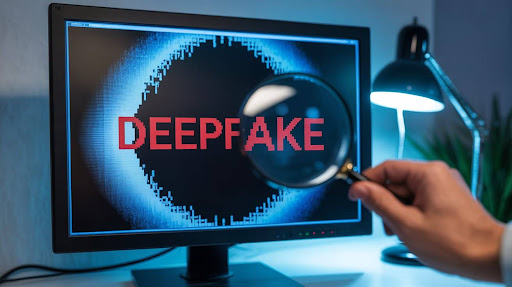
Deepfakes have quickly outgrown their role as an internet frivolity, and become an actual danger to the internet. Deepfakes, driven by modern artificial intelligence, are capable of authentic video, picture, and audio manipulation that could make fake content look and sound like a real person. Deepfakes are increasingly a concern to businesses, governments, and individuals as what used to be a complex task and required skills on par with professionals can now be done with easily accessible tools. Deepfake detection is now an essential part of the digital ecosystem as the misuse of this technology spreads through fraud, misinformation, and identity theft.
What Deepfakes Are.
Deepfakes are artificial media produced by the machine learning approach, especially deep neural networks. These systems pass large amounts of real images, videos or voice samples and are educated on how to mimic a persons facial expression, move, or talk pattern. The outcome is media, which seems to be genuine to human eye and ear, but is completely made or severely modified. Deepfakes nowadays are widely used in forged CEO video conferences, doctored political addresses, and scams that avoid using their true identities.
The reason why Deepfakes are a dangerous phenomenon.
The threat of deepfakes is the possibility of undermining credibility. Deepfake audio has been applied to impersonate executives and authorize fraudulent transactions in the financial services industry. Manipulated videos have the power to disseminate disinformation and control the opinion of the masses in politics. In the case of digital platforms and businesses, deepfakes destroy the identity-checking features, facilitating account-takeovers and synthetic identity fraud. With the enhancement of realism, the human judgment is no longer good enough to determine what is real and what is fake.
The Deepfake Detection role.
Deepfake detection is a concept describing the software and methods of determining whether the content in the media is man-made or doctored. It is not only the intention to flag fake content but to do it correctly and in large volumes. Detectors examine subtle anomalies not always noticeable to humans, e.g. unnatural facial movements, pixel-level artifacts or non-uniform voice patterns. Fraud prevention, content moderation, and digital identity verification processes are the areas where these systems are currently being incorporated into workflows.
The Deepfake Detection Technology Process.
Weak deepfake detection software is based on artificial intelligence. Machine learning systems are trained using massive data of real and fake media. These models are able to detect the differences between real and fake material by learning the dissimilarity in the structure of the facial geometry, movement of the eye, light, and texture. Detection systems can be used in the analysis of videos to analyze frame-by-frame inconsistencies, unnatural blinking rates, or mismatched lip-syncing.
Deepfake audio detection is concerned with voice biometrics. Artificial speech is detected by AI models through analyzing the pitch, tone, cadence, and background noise. Synthetic audio frequently does not have the micro-variations that are present in real human speech even when a voice is natural, and detection algorithms are designed to pick up the micro-variations.
Deepfake Detection in Identification Checking.
Identity verification and KYC are some of the most important uses of the deepfake detection. The problem of fraudsters bypassing facial recognition systems during the onboarding process has been on the rise lately, through the use of deepfake video or images. In response, more sophisticated detection systems are a mix of liveness detection, behavioral analysis, and deepfake classifier. These systems do not just ensure that a face is in line with an identity documents, but also the face is that of a real and present human being.
Organizations can use the deepfake detection directly embedded in the biometric verification to substantially mitigate the threat of impersonation and synthetic identity fraud, particularly in remote and digital-first settings.
Possibilities of Detecting Deepfakes.
Though this has been achieved greatly, deepfake detection continues to be a challenge. The high rate of advancement of generative AI models is one of the biggest problems. Detection methods that are old are soon rendered obsolete as the deepfakes get real. This leads to an endless arms race between those making deepfakes and detectors.
The other issue is bias in data sets. The good or bad of detection models is dependent on the quality of the data they have been trained on. Poor diversity of training data may decrease the accuracy level among the various ethnicities, lighting conditions or recording environments. One of the major concerns of developers of detection systems is the fairness, accuracy, and scalability.
What the Future of Deepfake Detection Holds.
Multi-layered and adaptive methods are the way to go in the future of deepfake software. Rather than using one signal, the next-generation systems use integration of visual, audio, behavioral, and contextual analysis. On-the-fly continuous learning models are becoming mandatory to stay abreast with the emergent deepfake methods.
Industry co-operation and regulation will also be significant. Technology providers and governments are collaborating more to set standards regarding synthetic media labeling, detection standards and responsible use of AI. The deepfake detection is going to become a common part of the digital trust infrastructure as the awareness increases.
Conclusion
One of the most difficult issues brought about by the new AI is deepfakes, which is designed to bridge the gap between reality and fake content. As the deepfakes technology keeps improving, deepfake detection has become a formidable counter-mechanism. Detection systems are being used to safeguard identities, eliminate fraud, and ensure confidence in digital interactions by relying on artificial intelligence, biometric analysis, and constant innovation. It is true that in the age of no longer believing what you see, deepfake detection is what will keep the future of digital communication safe.
