
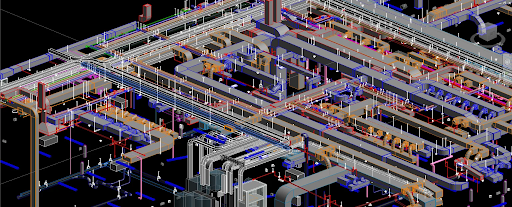
Construction in the United States has never been easy, but in recent years it has become even more complex. Buildings are larger, systems are more adv
Construction in the United States has never been easy, but in recent years it has become even more complex. Buildings are larger, systems are more advanced, and project timelines are tighter than ever. Mechanical, electrical, and plumbing systems are no longer simple add-ons. They are deeply integrated into how a building functions. When these systems are not properly coordinated, even small issues can cause major disruptions on site.
Anyone who has worked on a U.S. construction project understands how fast problems can escalate. One clash above a ceiling can delay multiple trades. One missed clearance can force redesigns during construction. This is why digital coordination has become such an important part of modern building delivery. Not because it sounds innovative, but because it solves real problems teams face every day.
Why coordination matters more now
Buildings today are dense. Even a standard commercial project can include extensive ductwork, piping, conduit, and cable trays, all competing for limited space. These systems must fit around structural elements that cannot move, often in very tight zones. When coordination is handled late, conflicts almost always appear in the field.
In the past, teams relied heavily on 2D drawings to manage this complexity. While those drawings provided guidance, they left too much room for interpretation. Problems often remained hidden until installation began. By then, fixes were expensive and time-consuming. Digital coordination changed this by allowing teams to see and resolve issues before construction started.
How digital workflows changed coordination
The biggest change BIM introduced was visibility. Instead of guessing how systems might interact, teams could see it clearly. Models could be rotated, reviewed, and checked for spacing and access. This alone reduced many common coordination issues.
Across the U.S., many teams now rely on MEP BIM Services to support this early coordination. These services focus on how systems work together in real space, not just how they look on drawings. When systems are coordinated digitally, teams can avoid surprises on site and move into construction with more confidence.
Supporting codes and compliance
U.S. building codes are strict, and for good reason. BIM coordination helps teams review compliance early by checking clearances, access requirements, and system routing before construction begins. This reduces the risk of failed inspections and last-minute design changes.
From a risk perspective, coordinated models also provide better documentation. Designers, contractors, and owners all benefit from having a clear digital record of how systems were planned and installed.
Reducing conflicts before construction
Field conflicts are expensive. They slow down crews, increase stress, and often lead to disputes. Fixing a problem in a model is far cheaper than fixing it in the field. This is one of the main reasons early coordination has become standard on many U.S. projects.
By identifying clashes between systems early, teams can adjust layouts while changes are still easy to make. This proactive approach reduces rework and keeps schedules more predictable. It also improves trust between teams, since fewer issues appear unexpectedly during installation.
Real impact on us projects
The benefits of BIM-based coordination are no longer theoretical. Many U.S. projects have seen measurable improvements in schedule reliability and cost control after adopting coordinated digital workflows. Fewer RFIs. Less rework. Smoother installations.
Research and industry reports consistently show that coordinated BIM workflows lead to better outcomes, especially on complex projects. As labor and material costs continue to rise in the U.S., these efficiency gains are becoming increasingly important.
Role of detailed modeling tools
Coordination works best when models are detailed and accurate. Many teams use Revit BIM Modeling Services to create models that reflect real installation conditions. These models include precise dimensions, elevations, and system data that help teams make better decisions.
Because Revit models are data-driven, changes are easier to track and understand. When one system moves, the impact on other systems becomes immediately visible. This clarity supports better collaboration between engineers, contractors, and fabricators.
Improving team collaboration
One underrated benefit of BIM coordination is better communication. When everyone is working from the same model, discussions become clearer. Issues are easier to explain. Decisions happen faster.
This shared understanding is especially valuable on large U.S. projects with many stakeholders. Revit-based workflows help keep everyone aligned by ensuring that updates are visible and consistent across teams.
Managing costs more effectively
Construction costs in the U.S. continue to climb. Labor shortages, material price fluctuations, and tight schedules put constant pressure on budgets. BIM coordination helps manage these challenges by reducing waste and improving planning accuracy.
Accurate models support better quantity takeoffs and installation sequencing. Crews spend less time waiting or reworking tasks. Over time, these small improvements add up to meaningful cost savings.
Value beyond construction
The usefulness of coordinated BIM models does not end at project closeout. Many U.S. owners now use these models for facility management, maintenance planning, and future renovations. Having accurate system information readily available saves time and reduces risk long after construction is complete.
As more owners focus on lifecycle value, BIM coordination is becoming a long-term asset rather than just a design tool.
Becoming the new standard
What was once considered advanced practice is quickly becoming normal. Public agencies, healthcare organizations, and large developers across the U.S. increasingly expect BIM-based coordination as part of project delivery.
Firms that adapt to this shift tend to perform better. Those that rely solely on traditional methods often struggle to keep up.
Final thoughts
Coordinating building services has always been challenging. BIM did not remove that challenge, but it made it manageable. Through digital coordination, teams can reduce conflicts, improve collaboration, and deliver better results.
By using MEP BIM Services alongside Revit BIM Modeling Services, construction teams across the United States are finding smarter ways to plan, build, and manage complex buildings. In an industry where clarity matters, BIM coordination provides it.
Short faqs
Why is MEP coordination difficult?
Because systems share tight spaces and often overlap.
Does BIM help smaller projects?
Yes. Even simple buildings benefit from fewer conflicts.
When should coordination start?
As early as possible, before construction documents are finalized.
Is BIM useful after construction?
Yes. It supports maintenance and future changes.
Is BIM coordination common in the U.S.?
It is quickly becoming standard practice.
